













Robinson Cole LLP
High Contrast Mode

Annecca H. Smith concentrates her practice on bankruptcy and corporate restructuring matters and has cultivated a successful practice that offers clients a broad range of representation and services in those areas.

Annecca’s work involves representation of debtors, creditors, and committees in chapter 11 reorganizations and out-of-court workouts. Her experience in bankruptcy litigation includes fraudulent transfer disputes, injunctive relief, and adversary proceedings. Annecca’s achievements include the representation of mass tort creditor committees in multiple chapter 11 proceedings involving adversary proceedings and contested estimations concerning section 524(g) channeling injunctions; serving as co-counsel to a chapter 11 debtor in Connecticut bankruptcy court; and representing an unsecured creditor in the successful dismissal of a chapter 11 case.  In state court, Annecca has represented a distressed investment company client in  strict foreclosure proceedings, obtaining a six-figure deficiency judgment. 

Annecca is a well-regarded author and presenter, having published several legal updates for the firm and articles on topics in her practice areas and related litigation in the ABI Journal, the member publication of the American Bankruptcy Institute.  She served as a panelist for the Connecticut Bar Association’s (CBA) 2025 Connecticut Legal Conference and 2023 Connecticut Bankruptcy Conference.

Annecca’s professional associations and affiliations include active membership in the ABI; the Turnaround Management Association; the International Women’s Insolvency & Restructuring Confederation, where she is secretary of the Connecticut chapter; and the CBA, where she serves on the executive board of the Commercial Law and Bankruptcy Section and is a member of the Planning Committee for the Connecticut Bankruptcy Conference. She also participates in Robinson+Cole’s pro bono program, where she has represented applicants seeking restraining orders as protection from domestic violence and abuse and assisted with criminal appellate briefs.

  • Washington University in St. Louis School of Law (Juris Doctor, cum laude)
    • Law Review
    • Dean's List
  • Smith College (Bachelors, cum laude)
    • Comparative Literature
    • Dean's List

  • State of Connecticut
  • U.S. District Court, District of Connecticut
  • U.S. District Court, Southern District of New York

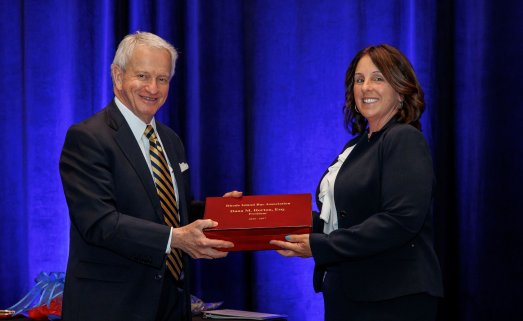
Class II Recipient of the 2025 American Bar Association, Business Law Section, Business Bankruptcy Committee 20/20 Partners Award

Named to the Connecticut Coalition Against Domestic Violence First 100 Plus Class of 2022 for demonstrating leadership and commitment to improving the lives of domestic violence survivors throughout Connecticut

Presented with the Chapter 11 Restructuring of the Year in the “mega” category (value: above $5 billion) as part of the Global M&A Network’s 15th Annual Turnaround Atlas Awards in recognition of serving as co-counsel to the Official Committee of Unsecured Creditors (UCC) in the Mallinckrodt plc, et al. chapter 11 cases

American Bankruptcy Institute (2020)

Connecticut Bar Association (2021)
Executive Board, Commercial Law and Bankruptcy Section
Member, Planning Committee, Connecticut Bankruptcy Conference

International Women’s Insolvency & Restructuring Confederation (2022 - present)
Secretary, Connecticut Chapter

Turnaround Management Association (TMA) (2022 - present)

Experience


Multiple Chapter 11 Proceedings

Representation of mass tort creditor committees in multiple Chapter 11 proceedings involving adversary proceedings and contested estimations concerning section 524(g) channeling injunctions.

Chapter 11 Trustee Appointment

Representation of largest unsecured creditor in case involving appointment of a Chapter 11 Trustee.

Chapter 11 Debtor Counsel

Co-counsel to a Chapter 11 debtor in Connecticut bankruptcy court.


Publications


February 2026

Venue Transfer: Types of Jurisdiction and the Applicability of 28 U.S.C. § 1412

ABI Journal

In this article, Andrew and Annecca discuss a practical reality concerning bankruptcy venue transfer motions under 28 U.S.C. § 1412—while uniformity is the law’s desired result, outcomes have substantially varied due to judicial discretion and jurisdictional analysis. The blurred boundary between a strict ‘arising under’ requirement and an analysis of ‘core’ matters means districts ostensibly applying the same test might reach seemingly conflicting decisions. Andrew and Annecca highlight how this lack of predictability complicates strategic planning, but that there is an inherent flexibility of the ‘core’ and ‘related to’ tests which provides significant opportunities for creative legal arguments in court. Read the article.

August 16, 2024

Longstanding Debate: Touhy Regulations vs. the FRCP

ABI Journal

In this article, Annecca and Rick discuss how legal practitioners can navigate the disconnect between Touhy regulations and the Federal Rules of Civil Procedure (FRCP) relating to subpoena response by agency employees and liberal discovery procedures. “When evaluating this tension…practitioners should be cognizant of controlling the case law,” Annecca and Rick write. “In certain circumstances, discovery on a nongovernmental agency may provide a creative path for those parties seeking documents otherwise protected by a Touhy regulation.” Read the article.

May 2023

Pre-Petition Liens in ‘Accounts’ May Not Survive Post-Petition Sales

ABI Journal

In the article, Andrew and Annecca discuss the U.S. Bankruptcy Court for the Southern District of Texas and their recent addressing of the applicability of a secured creditor’s lien rights in the debtor’s “accounts” under Article 9 of the Uniform Commercial Code (UCC). The court concluded that under Texas UCC Law, proceeds from a real estate sale are accounts that could be subject to an Article 9 lien. Andrew and Annecca examine this case and compare it to two other decisions analyzing the interplay between the nature of the security agreement, the applicable state’s UCC definitions, and the timing of any sale or disposition of the collateral. View the article.

February 2026

Venue Transfer: Types of Jurisdiction and the Applicability of 28 U.S.C. § 1412

ABI Journal

In this article, Andrew and Annecca discuss a practical reality concerning bankruptcy venue transfer motions under 28 U.S.C. § 1412—while uniformity is the law’s desired result, outcomes have substantially varied due to judicial discretion and jurisdictional analysis. The blurred boundary between a strict ‘arising under’ requirement and an analysis of ‘core’ matters means districts ostensibly applying the same test might reach seemingly conflicting decisions. Andrew and Annecca highlight how this lack of predictability complicates strategic planning, but that there is an inherent flexibility of the ‘core’ and ‘related to’ tests which provides significant opportunities for creative legal arguments in court. Read the article.

August 16, 2024

Longstanding Debate: Touhy Regulations vs. the FRCP

ABI Journal

In this article, Annecca and Rick discuss how legal practitioners can navigate the disconnect between Touhy regulations and the Federal Rules of Civil Procedure (FRCP) relating to subpoena response by agency employees and liberal discovery procedures. “When evaluating this tension…practitioners should be cognizant of controlling the case law,” Annecca and Rick write. “In certain circumstances, discovery on a nongovernmental agency may provide a creative path for those parties seeking documents otherwise protected by a Touhy regulation.” Read the article.

May 2023

Pre-Petition Liens in ‘Accounts’ May Not Survive Post-Petition Sales

ABI Journal

In the article, Andrew and Annecca discuss the U.S. Bankruptcy Court for the Southern District of Texas and their recent addressing of the applicability of a secured creditor’s lien rights in the debtor’s “accounts” under Article 9 of the Uniform Commercial Code (UCC). The court concluded that under Texas UCC Law, proceeds from a real estate sale are accounts that could be subject to an Article 9 lien. Andrew and Annecca examine this case and compare it to two other decisions analyzing the interplay between the nature of the security agreement, the applicable state’s UCC definitions, and the timing of any sale or disposition of the collateral. View the article.

November 1, 2022

Person-Aggrieved Standing: Can the Possibility of Excessive Litigation Be Enough?

ABI Journal

Examining the holding by the U.S. Court of Appeals for the Eleventh Circuit in Valley National Bank v. Warren (In re Westport Holdings Tampa Ltd. P’ship), the authors write that “the possibility of litigation neither imparts ‘person-aggrieved’ standing to a liquidating trust­ee-adversary proceeding defendant nor implicates Bankruptcy Code protection.” Thus, if the only direct and pecuniary harm they can state is a fear of future litigation against them, “an adversary-proceeding defendant cannot appeal bankruptcy court approval of a litigation funding agreement.” The future of person-aggrieved standing is unclear, especially in light of the doubt cast on the prudential standing doctrine following Lexmark Int’l Inc. v. Static Control Components Inc. “Although no circuit court has yet abrogated person-aggrieved standing in light of Lexmark, the issue remains one to watch,” they write. View the article.

March 2022

Litigation-Settlement Financiers, a Secured Claim Might Be Illusory

ABI Journal

The article offers a brief overview of the Bankruptcy Code sections related to property of the estate and exemptions, and presents a primer on litigation funding agreements. Patrick and Annecca also analyze the decision of the U.S. Bankruptcy Court for the Eastern District of New York in In re Reviss, in which the Court forewarns litigation-settlement financiers that their security interest in settlement proceeds could be in peril when the proceeds are not yet attached and a Chapter 7 debtor attempts to exempt the same proceeds from property of the debtor’s bankruptcy estate. View the article.

Legal Update: An ‘Affiliate’ of a Public Company Is Barred from Reorganizing Under the Bankruptcy Code’s New Subchapter V teaser
November 17, 2020

Legal Update: An ‘Affiliate’ of a Public Company Is Barred from Reorganizing Under the Bankruptcy Code’s New Subchapter V


November 1, 2022

Person-Aggrieved Standing: Can the Possibility of Excessive Litigation Be Enough?

ABI Journal

Examining the holding by the U.S. Court of Appeals for the Eleventh Circuit in Valley National Bank v. Warren (In re Westport Holdings Tampa Ltd. P’ship), the authors write that “the possibility of litigation neither imparts ‘person-aggrieved’ standing to a liquidating trust­ee-adversary proceeding defendant nor implicates Bankruptcy Code protection.” Thus, if the only direct and pecuniary harm they can state is a fear of future litigation against them, “an adversary-proceeding defendant cannot appeal bankruptcy court approval of a litigation funding agreement.” The future of person-aggrieved standing is unclear, especially in light of the doubt cast on the prudential standing doctrine following Lexmark Int’l Inc. v. Static Control Components Inc. “Although no circuit court has yet abrogated person-aggrieved standing in light of Lexmark, the issue remains one to watch,” they write. View the article.

March 2022

Litigation-Settlement Financiers, a Secured Claim Might Be Illusory

ABI Journal

The article offers a brief overview of the Bankruptcy Code sections related to property of the estate and exemptions, and presents a primer on litigation funding agreements. Patrick and Annecca also analyze the decision of the U.S. Bankruptcy Court for the Eastern District of New York in In re Reviss, in which the Court forewarns litigation-settlement financiers that their security interest in settlement proceeds could be in peril when the proceeds are not yet attached and a Chapter 7 debtor attempts to exempt the same proceeds from property of the debtor’s bankruptcy estate. View the article.

Legal Update: An ‘Affiliate’ of a Public Company Is Barred from Reorganizing Under the Bankruptcy Code’s New Subchapter V teaser
November 17, 2020

Legal Update: An ‘Affiliate’ of a Public Company Is Barred from Reorganizing Under the Bankruptcy Code’s New Subchapter V

News


February 17, 2026

Andrew DePeau + Annecca Smith Share Insights on Types of Jurisdictions for 28 U.S.C. § 1412

Bankruptcy + Reorganizations group lawyers Andrew DePeau and Annecca Smith authored an article titled “Venue Transfer: Types of Jurisdiction and the Applicability of 28 U.S.C. § 1412” published in the American Bankruptcy Institute Journal. Their article highlights a practical reality concerning bankruptcy venue transfer motions under 28 U.S.C. § 1412—while uniformity is the law’s desired result, outcomes have substantially varied due to judicial discretion and jurisdictional analysis. “Few courts are subject to binding authority, and the blurred boundary between a strict ‘arising under’ requirement and an analysis of ‘core’ matters means districts ostensibly applying the same test might reach seemingly conflicting decisions,” they write. “Although this lack of predictability complicates strategic planning, the inherent flexibility of the ‘core’ and ‘related to’ tests provides significant latitude opportunities for creative legal arguments.” To read the article, click here.

ABI Journal
October 9, 2025

Annecca Smith and Richard Willi Named 20/20 Partners Award Recipients by ABA

American Bar Association Business Law Section Business Bankruptcy Committee
Annecca Smith and Richard Willi Named 20/20 Partners Award Recipients by ABA teaser
August 16, 2024

Annecca Smith and Richard Willi Author ABI Journal article on Touhy Regulations in Bankruptcy Cases

ABI Journal
February 17, 2026

Andrew DePeau + Annecca Smith Share Insights on Types of Jurisdictions for 28 U.S.C. § 1412

Bankruptcy + Reorganizations group lawyers Andrew DePeau and Annecca Smith authored an article titled “Venue Transfer: Types of Jurisdiction and the Applicability of 28 U.S.C. § 1412” published in the American Bankruptcy Institute Journal. Their article highlights a practical reality concerning bankruptcy venue transfer motions under 28 U.S.C. § 1412—while uniformity is the law’s desired result, outcomes have substantially varied due to judicial discretion and jurisdictional analysis. “Few courts are subject to binding authority, and the blurred boundary between a strict ‘arising under’ requirement and an analysis of ‘core’ matters means districts ostensibly applying the same test might reach seemingly conflicting decisions,” they write. “Although this lack of predictability complicates strategic planning, the inherent flexibility of the ‘core’ and ‘related to’ tests provides significant latitude opportunities for creative legal arguments.” To read the article, click here.

ABI Journal
October 9, 2025

Annecca Smith and Richard Willi Named 20/20 Partners Award Recipients by ABA

American Bar Association Business Law Section Business Bankruptcy Committee
Annecca Smith and Richard Willi Named 20/20 Partners Award Recipients by ABA teaser
August 16, 2024

Annecca Smith and Richard Willi Author ABI Journal article on Touhy Regulations in Bankruptcy Cases

ABI Journal
June 1, 2023

Andrew DePeau and Annecca Smith Author ABI Journal Article on Why “Pre-Petition Liens in ‘Accounts’ May Not Survive Post-Petition Sales”

ABI Journal
November 14, 2022

Katherine Fix and Annecca Smith Author ABI Journal Article on Person-Aggrieved Standing

ABI Journal
April 19, 2022

Robinson+Cole Lawyers Named to CCADV’s First 100 Plus Class of 2022

March 7, 2022

Patrick Birney and Annecca Smith Co-Author ABI Journal Article on Litigation-Settlement Financiers

ABI Journal
June 18, 2019

Kevin Daly, Evan Seeman, and Brian Smith Publish Practice Notes on Inverse Condemnation for Thomson Reuters Practical Law™


June 1, 2023

Andrew DePeau and Annecca Smith Author ABI Journal Article on Why “Pre-Petition Liens in ‘Accounts’ May Not Survive Post-Petition Sales”

ABI Journal
November 14, 2022

Katherine Fix and Annecca Smith Author ABI Journal Article on Person-Aggrieved Standing

ABI Journal
April 19, 2022

Robinson+Cole Lawyers Named to CCADV’s First 100 Plus Class of 2022

March 7, 2022

Patrick Birney and Annecca Smith Co-Author ABI Journal Article on Litigation-Settlement Financiers

ABI Journal
June 18, 2019

Kevin Daly, Evan Seeman, and Brian Smith Publish Practice Notes on Inverse Condemnation for Thomson Reuters Practical Law™

Events


Past

Merchant Cash Advance Loans

Apr 7 2026
Connecticut Bar Association Young Lawyers Section Program
Past

Hot Topics in Bankruptcy Law

Feb 4 2026
MCLE 27th Annual Bankruptcy Law Conference 2026
Past

Merchant Cash Advance Loans

Apr 7 2026
Connecticut Bar Association Young Lawyers Section Program
Past

Hot Topics in Bankruptcy Law

Feb 4 2026
MCLE 27th Annual Bankruptcy Law Conference 2026
Past

Business Track: Litigation Panel

Jul 15 2025
ABI 2025 Northeast Bankruptcy Conference & Northeast Consumer Forum
Past

Commercial Law and Bankruptcy Year in Review

Jun 13 2025
2025 Connecticut Legal Conference
Past

Bad Faith Bankruptcy Filings

Sep 14 2023
2023 Connecticut Bankruptcy Conference
Past

Business Track: Litigation Panel

Jul 15 2025
ABI 2025 Northeast Bankruptcy Conference & Northeast Consumer Forum
Past

Commercial Law and Bankruptcy Year in Review

Jun 13 2025
2025 Connecticut Legal Conference
Past

Bad Faith Bankruptcy Filings

Sep 14 2023
2023 Connecticut Bankruptcy Conference