












Robinson Cole LLP
High Contrast Mode
Marquee

Environmental, Energy + Telecommunications

Our Environmental, Energy + Telecommunications group is one of the largest and most diverse in the Northeast. Robinson+Cole lawyers provide targeted, practical, and cost-effective advice to clients with all types of environmental, health and safety (EH+S), and utility (electricity, gas, steam, water, and telecom) needs in jurisdictions, and at sites, and facilities across the country.

Our team of lawyers and analysts is committed to helping you resolve the issues you face, no matter how complex. Working collaboratively, we bring our collective proficiency to the matter at hand, to help you achieve your goals.

Our Services

Our clients value the results we deliver through our diverse and results-oriented practice. When you retain our services, we prioritize understanding your business as well as your needs and goals. We use our proficiency in EH+S and utility law to help you meet these objectives.

We provide legal services for these matters and more:

  • Conducting project specific and transactional due diligences
  • Negotiating purchase and sale agreements
  • Obtaining permits and regulatory approvals
  • Providing risk management guidance and regulatory counseling
  • Remediating contaminated sites
  • Representing clients in federal and state courts
  • Resolving issues in business transactions
  • Responding to releases, government inspections, and major incidents
  • Siting power production and telecommunications facilities

Our Team

Many of our team members have degrees in relevant scientific and engineering disciplines, and prior employment with government agencies and consulting firms. Through our substantive experience, we cover all media under every major statute and regulatory program.  For each matter, experienced partners lead teams of associates and analysts. We put our collective knowledge and experience to work for our clients, through lean teams dedicated to handling matters efficiently. Our practice group lawyers also collaborate closely with our land use, real estate, general litigation, white-collar, business, and tax colleagues to provide comprehensive, creative, and effective advocacy and counseling.

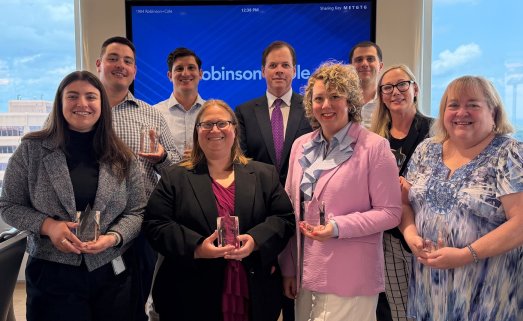
Our team’s performance often leads to recognition in Chambers USA – America’s Leading Lawyers for Business and other top-lawyer ranking services, and most recently, we were honored as Environmental Litigation Department of the Year at the New England Legal Awards for our exceptional depth, technical knowledge, and litigation success across a broad spectrum of environmental law.

We value our relationships with clients, and offer innovative and truly sustainable alternative fee arrangements. We welcome the opportunity to discuss  the billing and staffing arrangements that best serve your needs. 

Whatever challenges you are facing, our highly experienced Environmental, Energy + Telecommunications attorneys will provide legal services that support you in all EH+S, environmental and utility matters nationwide.
Experience


State Pier Terminal in the Port of New London - New London, Connecticut

Representation of a quasi-governmental agency in reviewing and editing request for proposals for engineering services and preparing and negotiating professional services agreement between client and engineer and subaward agreement between client and end-user for project management and engineering, permitting and construction administration services. The project consisted of purchasing and installing mobile shore power equipment to support shore power infrastructure and supplementing in-place electrical infrastructure installed in connection with the State Pier Infrastructure Improvements Project at the State Pier Terminal in New London, Connecticut. The project, which is mostly funded by a grant from the United States Environmental Protection Agency, represents the next phase of delivering shore power to vessels docking at the terminal, allowing marine vessels to connect to the local electric grid to power onboard services instead of running their diesel engines, thereby reducing their diesel emissions and carbon footprints and decreasing health risks and noise pollution.

Read More

Counsels Global Electrification + Automation Leader in Variety of Practice Areas

Represents a Fortune 50 global manufacturing and systems company headquartered in Zurich, Switzerland, in environmental litigation, remediation, and compliance counseling; bankruptcy and related disputes; government compliance matters; commercial litigation; and other related issues.

Read More

Market Entry + Participation

Advise client regarding the requirements for entry and participation in the distributed solar and battery storage markets in multiple states.


Events


Past

CBIA 2026 Energy & Environment Conference

May 14 2026
Hotel Marcel New Haven
Past

EPA’s Rescission of the GHG Endangerment Finding for Motor Vehicles: What Happened, Impacts, What May Be Next

Apr 1 2026
Connecticut Environmental Forum Meeting
Past

CBIA 2026 Energy & Environment Conference

May 14 2026
Hotel Marcel New Haven
Past

EPA’s Rescission of the GHG Endangerment Finding for Motor Vehicles: What Happened, Impacts, What May Be Next

Apr 1 2026
Connecticut Environmental Forum Meeting
Past

Further Bumpy Road Ahead? Outlook for Ozone Non-attainment Designations in Connecticut

Apr 1 2026
Connecticut Environmental Forum Meeting
Past

Underground Storage Tanks: Buried Hazards in Connecticut’s Revised UST Regulations

Feb 18 2026
Environmental Business Council of New England (EBC) Webinar
Past

From the Fields to the Courtroom: The Growing Battle Over PFAS in Organics

Feb 4 2026
COMPOST2026
Past

Spill Response 101

Jan 22 2026
An EBC Connecticut Webinar
Past

Further Bumpy Road Ahead? Outlook for Ozone Non-attainment Designations in Connecticut

Apr 1 2026
Connecticut Environmental Forum Meeting
Past

Underground Storage Tanks: Buried Hazards in Connecticut’s Revised UST Regulations

Feb 18 2026
Environmental Business Council of New England (EBC) Webinar
Past

From the Fields to the Courtroom: The Growing Battle Over PFAS in Organics

Feb 4 2026
COMPOST2026
Past

Spill Response 101

Jan 22 2026
An EBC Connecticut Webinar

Publications


Vol. 10.1

New UST Requirements (and Potential "Buried Hazards") in Connecticut Revised Underground Storage Tank Regulations

CEMA Aegis
November 15, 2024

Practices Steering Committee Report

Energy Law Journal, Vol. 45.2:1

View the article.

June 25, 2024

How Justices’ Chevron Ruling May Influence Wind Projects

Law360

The article covers recent challenges to offshore wind projects, and how an anticipated ruling by the U.S. Supreme Court may upend long-standing principles of deference to federal agency decision making. “The court’s decision could influence the agencies’ rulemaking process, how agencies interpret their statutory authority, and the deference that courts apply to those interpretations,” they write. “While the statutes and regulations governing the approval process for offshore wind projects will remain constant, at least for the time being, the federal courts’ framework for reviewing agencies’ decision making based on those rules could be subject to upheaval.” Read the article.

Vol. 10.1

New UST Requirements (and Potential "Buried Hazards") in Connecticut Revised Underground Storage Tank Regulations

CEMA Aegis
November 15, 2024

Practices Steering Committee Report

Energy Law Journal, Vol. 45.2:1

View the article.

June 25, 2024

How Justices’ Chevron Ruling May Influence Wind Projects

Law360

The article covers recent challenges to offshore wind projects, and how an anticipated ruling by the U.S. Supreme Court may upend long-standing principles of deference to federal agency decision making. “The court’s decision could influence the agencies’ rulemaking process, how agencies interpret their statutory authority, and the deference that courts apply to those interpretations,” they write. “While the statutes and regulations governing the approval process for offshore wind projects will remain constant, at least for the time being, the federal courts’ framework for reviewing agencies’ decision making based on those rules could be subject to upheaval.” Read the article.

Legal Update: First Circuit Rejects Challenges to Federal Permits for Vineyard Wind 1 teaser
May 21, 2024

Legal Update: First Circuit Rejects Challenges to Federal Permits for Vineyard Wind 1

November 2023

Report of the FERC Practice Sector of the Practices Steering Committee (2023)

Energy Law Journal, Volume 44 No. 2 (2023)

View the article.

Legal Update: Deadline Approaching for PFAS Suit Opt-Out teaser
October 25, 2023

Legal Update: Deadline Approaching for PFAS Suit Opt-Out

June 8, 2023

Breaking the Mold – Best Practices by Educational Institutions to Limit Mold Exposure and Loss

American School & University

Mold is one of the oldest life forms on the planet, and it continues to be a hot topic among health experts – as well as those operating and maintaining education facilities. Most types of mold grow in high-moisture areas. Mold plays an important part in our ecosystem and can have various beneficial uses, but prolonged exposure to elevated levels of certain mold types can cause allergic reactions and respiratory problems, which may be severe. Complaints about mold at education institutions may arise from students, employees or visitors. Unlike many contaminants, however, there may be few clear regulatory or health-based limits to define acceptable versus unacceptable levels for mold. Given that, plus the different types of mold and different levels of personal sensitivity, determining the risk from mold exposure can be complicated. Often, the initial response made following a mold complaint is immediate testing; however, the process, scope, and type of testing may raise more issues that must be addressed. To Test or Not Test Before a decision is made to test, several issues should be considered in consultation with technical and legal resources that are experienced in dealing with mold issues. Those issues include: Determining which test method(s) to use, and how best to carry out tests in a specific setting Ensuring that the selected test method(s) are carried out properly Interpreting test results Determining “action levels” (i.e., results that warrant follow-up action), and what such action should be Confirming that the institution is prepared to promptly commit the resources necessary for such action Testing for mold may be more complex than expected. Unlike most contaminants, mold is ubiquitous in nature as well as in built environments. The many different types of mold further complicate the picture. Some molds always produce toxins, other molds produce toxins only in certain environments and some molds do not produce toxins in any environment. Contributing to the problem, the U.S. Centers for Disease Control and Prevention does not recommend routine sampling for mold because there are no established standards for determining what constitutes a “normal” level. If a decision is made to proceed with testing for mold, the uncertainties potentially associated with such testing make it necessary to consider how to appropriately manage information and discussions resulting from such testing. Depending on the context, it also may be appropriate to consider whether and to what degree confidentiality or attorney-client privilege protections are warranted. Prevent, Detect and Abate The time and costs required for testing and the potential value of test results should be weighed against the value of prevention, detection and abatement strategies. These strategies include: Periodically checking for possible moisture sources that could create mold issues in interior spaces Conducting visual or odor checks for mold, and using enhanced cleaning regimens in potential problem areas For moisture sources, mold experts assess not only for potential sources of liquid water (e.g., plumbing leaks), but also for water vapor (e.g., hot, humid exterior air entering air-conditioned interiors, leading to condensation). Vapor is a particular challenge on college campuses at the beginning and end of the academic year when students or visitors prop doors open to facilitate move-in or move-out. When an institution identifies a mold problem or becomes aware of a mold complaint, it is important to promptly locate and abate moisture source(s) at the specific location as well as any surrounding areas that may also be affected. The immediate response should take into account how it will affect students or employees who report having allergies or other respiratory problems. Such persons should be relocated immediately until mold removal professionals can clean the affected areas. One prevention method schools should consider is educating students on the instrumental role they play in causing or preventing the growth of mold. Encouraging best practices for student spaces and common areas can help institutions lower the risk of significant mold growth. These best practices include preventing mold growth by: Hanging wet towels or sweaty clothes to dry Using exhaust fans when showering Mopping up spills immediately, whether on floors, on countertops, inside cabinets, or elsewhere Ensuring any rugs or carpets that receive spills or tracked-in rain, snow, or ice do not stay wet Immediately reporting any wet rugs or carpets that cannot be easily dried Immediately reporting any odors Another important prevention method is diligent building maintenance. One of the many dangers of deferred maintenance, particularly in older buildings, is the growth of mold. Delays in tasks like repairing window or roof leaks or insulating piping can lead to mold infestations. Although deferring seemingly minor repairs might save costs in the short term, it can necessitate future mold remediation that may be urgent and far costlier and could expose the institution to bad publicity or legal liability. For example, a 2019 class action lawsuit against Indiana University Bloomington cited widespread mold infestation in university residence halls because of chronically leaking pipes, condensate leaks from heating and cooling systems, roof leaks, and many other unaddressed maintenance deficiencies. The university’s response included installing air filtration systems, but those led to noise complaints and an expansion of the lawsuit. The university was ultimately successful on appeal, but not before compensating 2,458 students a total of $7.7 million and enduring high-profile negative publicity. Before significant mold problems occur, institutions can employ prevention methods such as: Performing regular building and HVAC inspections that include scrutiny of potential mold sources or hot spots Routing vents outdoors for all moisture-generating appliances Avoiding putting carpeting in high-humidity spaces such as basements Assessing and if necessary, controlling humidity levels in all interior spaces Although mold is ubiquitous, serious mold infestations and resulting class-action lawsuits do not have to be. With planning and preventive action, education institutions can limit mold-related exposure and loss.

May 2023

Report of the State Commission Practice Committee (2023)

Energy Law Journal, Volume 44 No. 1

View the article.

March 31, 2023

OSHA to Expand the Use of Instance-by-Instance Penalties

EHS Today

In the article, Megan discusses OSHA’s new policy expanding penalties for instance-by-instance (IBI) citations. Reinforcing OSHA’s stated commitment to increased enforcement in the years ahead, these new penalties have the potential to significantly increase the monetary penalty amounts associated with certain violations. Under the new policy, which went into effect on March 27, the IBI policy will now apply to high-gravity serious violations in areas including falls, respiratory protection, and permit required confined space. The new IBI policy will also apply to other-than-serious recordkeeping violations. Employers with certain types of recordkeeping violations could find themselves subject to significant penalties for failures to record or inaccuracies in the records. View the article.


Legal Update: First Circuit Rejects Challenges to Federal Permits for Vineyard Wind 1 teaser
May 21, 2024

Legal Update: First Circuit Rejects Challenges to Federal Permits for Vineyard Wind 1

November 2023

Report of the FERC Practice Sector of the Practices Steering Committee (2023)

Energy Law Journal, Volume 44 No. 2 (2023)

View the article.

Legal Update: Deadline Approaching for PFAS Suit Opt-Out teaser
October 25, 2023

Legal Update: Deadline Approaching for PFAS Suit Opt-Out

June 8, 2023

Breaking the Mold – Best Practices by Educational Institutions to Limit Mold Exposure and Loss

American School & University

Mold is one of the oldest life forms on the planet, and it continues to be a hot topic among health experts – as well as those operating and maintaining education facilities. Most types of mold grow in high-moisture areas. Mold plays an important part in our ecosystem and can have various beneficial uses, but prolonged exposure to elevated levels of certain mold types can cause allergic reactions and respiratory problems, which may be severe. Complaints about mold at education institutions may arise from students, employees or visitors. Unlike many contaminants, however, there may be few clear regulatory or health-based limits to define acceptable versus unacceptable levels for mold. Given that, plus the different types of mold and different levels of personal sensitivity, determining the risk from mold exposure can be complicated. Often, the initial response made following a mold complaint is immediate testing; however, the process, scope, and type of testing may raise more issues that must be addressed. To Test or Not Test Before a decision is made to test, several issues should be considered in consultation with technical and legal resources that are experienced in dealing with mold issues. Those issues include: Determining which test method(s) to use, and how best to carry out tests in a specific setting Ensuring that the selected test method(s) are carried out properly Interpreting test results Determining “action levels” (i.e., results that warrant follow-up action), and what such action should be Confirming that the institution is prepared to promptly commit the resources necessary for such action Testing for mold may be more complex than expected. Unlike most contaminants, mold is ubiquitous in nature as well as in built environments. The many different types of mold further complicate the picture. Some molds always produce toxins, other molds produce toxins only in certain environments and some molds do not produce toxins in any environment. Contributing to the problem, the U.S. Centers for Disease Control and Prevention does not recommend routine sampling for mold because there are no established standards for determining what constitutes a “normal” level. If a decision is made to proceed with testing for mold, the uncertainties potentially associated with such testing make it necessary to consider how to appropriately manage information and discussions resulting from such testing. Depending on the context, it also may be appropriate to consider whether and to what degree confidentiality or attorney-client privilege protections are warranted. Prevent, Detect and Abate The time and costs required for testing and the potential value of test results should be weighed against the value of prevention, detection and abatement strategies. These strategies include: Periodically checking for possible moisture sources that could create mold issues in interior spaces Conducting visual or odor checks for mold, and using enhanced cleaning regimens in potential problem areas For moisture sources, mold experts assess not only for potential sources of liquid water (e.g., plumbing leaks), but also for water vapor (e.g., hot, humid exterior air entering air-conditioned interiors, leading to condensation). Vapor is a particular challenge on college campuses at the beginning and end of the academic year when students or visitors prop doors open to facilitate move-in or move-out. When an institution identifies a mold problem or becomes aware of a mold complaint, it is important to promptly locate and abate moisture source(s) at the specific location as well as any surrounding areas that may also be affected. The immediate response should take into account how it will affect students or employees who report having allergies or other respiratory problems. Such persons should be relocated immediately until mold removal professionals can clean the affected areas. One prevention method schools should consider is educating students on the instrumental role they play in causing or preventing the growth of mold. Encouraging best practices for student spaces and common areas can help institutions lower the risk of significant mold growth. These best practices include preventing mold growth by: Hanging wet towels or sweaty clothes to dry Using exhaust fans when showering Mopping up spills immediately, whether on floors, on countertops, inside cabinets, or elsewhere Ensuring any rugs or carpets that receive spills or tracked-in rain, snow, or ice do not stay wet Immediately reporting any wet rugs or carpets that cannot be easily dried Immediately reporting any odors Another important prevention method is diligent building maintenance. One of the many dangers of deferred maintenance, particularly in older buildings, is the growth of mold. Delays in tasks like repairing window or roof leaks or insulating piping can lead to mold infestations. Although deferring seemingly minor repairs might save costs in the short term, it can necessitate future mold remediation that may be urgent and far costlier and could expose the institution to bad publicity or legal liability. For example, a 2019 class action lawsuit against Indiana University Bloomington cited widespread mold infestation in university residence halls because of chronically leaking pipes, condensate leaks from heating and cooling systems, roof leaks, and many other unaddressed maintenance deficiencies. The university’s response included installing air filtration systems, but those led to noise complaints and an expansion of the lawsuit. The university was ultimately successful on appeal, but not before compensating 2,458 students a total of $7.7 million and enduring high-profile negative publicity. Before significant mold problems occur, institutions can employ prevention methods such as: Performing regular building and HVAC inspections that include scrutiny of potential mold sources or hot spots Routing vents outdoors for all moisture-generating appliances Avoiding putting carpeting in high-humidity spaces such as basements Assessing and if necessary, controlling humidity levels in all interior spaces Although mold is ubiquitous, serious mold infestations and resulting class-action lawsuits do not have to be. With planning and preventive action, education institutions can limit mold-related exposure and loss.

May 2023

Report of the State Commission Practice Committee (2023)

Energy Law Journal, Volume 44 No. 1

View the article.

March 31, 2023

OSHA to Expand the Use of Instance-by-Instance Penalties

EHS Today

In the article, Megan discusses OSHA’s new policy expanding penalties for instance-by-instance (IBI) citations. Reinforcing OSHA’s stated commitment to increased enforcement in the years ahead, these new penalties have the potential to significantly increase the monetary penalty amounts associated with certain violations. Under the new policy, which went into effect on March 27, the IBI policy will now apply to high-gravity serious violations in areas including falls, respiratory protection, and permit required confined space. The new IBI policy will also apply to other-than-serious recordkeeping violations. Employers with certain types of recordkeeping violations could find themselves subject to significant penalties for failures to record or inaccuracies in the records. View the article.


News


February 27, 2026

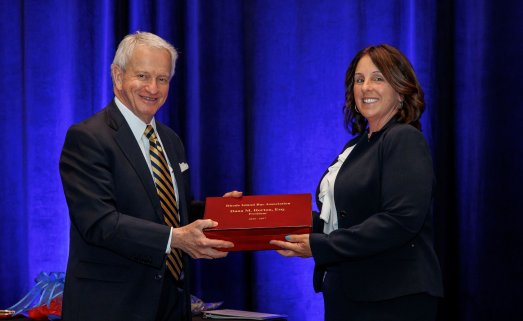
Megan Baroni Recognized as 2026 Nicholas A. Robinson Awardee

Environmental, Energy + Telecommunications group partner Megan Baroni was selected as the 2026 Nicholas A. Robinson Awardee, presented by the Elisabeth Haub School of Law at Pace University. The award, named in honor of Professor Nicholas A. Robinson, founder the Elisabeth Haub School of Law’s environmental program, recognizes alumni who have made outstanding contributions and achievements in the field of environmental law both in the U.S. and abroad. Megan’s recognition highlights her exceptional legal acumen in environmental law, where she frequently handles the investigation, remediation, and redevelopment of contaminated properties; chemical and waste management; issues related to emerging contaminants like PFAS; and risk management in crisis situations.  To learn more about the award, click here.

Elisabeth Haub School of Law at Pace University
January 5, 2026

Robinson+Cole Promotes New Partners and Counsel in Strategic Practices and Markets

Firm names three partners and eight counsel in New York, Boston, Hartford, Providence, and Stamford
December 15, 2025

Environmental, Energy + Telecommunications Group Volunteers to Provide Affordable Access to Food with Levo International

Environmental, Energy + Telecommunications Group Volunteers to Provide Affordable Access to Food with Levo International teaser
February 27, 2026

Megan Baroni Recognized as 2026 Nicholas A. Robinson Awardee

Environmental, Energy + Telecommunications group partner Megan Baroni was selected as the 2026 Nicholas A. Robinson Awardee, presented by the Elisabeth Haub School of Law at Pace University. The award, named in honor of Professor Nicholas A. Robinson, founder the Elisabeth Haub School of Law’s environmental program, recognizes alumni who have made outstanding contributions and achievements in the field of environmental law both in the U.S. and abroad. Megan’s recognition highlights her exceptional legal acumen in environmental law, where she frequently handles the investigation, remediation, and redevelopment of contaminated properties; chemical and waste management; issues related to emerging contaminants like PFAS; and risk management in crisis situations.  To learn more about the award, click here.

Elisabeth Haub School of Law at Pace University
January 5, 2026

Robinson+Cole Promotes New Partners and Counsel in Strategic Practices and Markets

Firm names three partners and eight counsel in New York, Boston, Hartford, Providence, and Stamford
December 15, 2025

Environmental, Energy + Telecommunications Group Volunteers to Provide Affordable Access to Food with Levo International

Environmental, Energy + Telecommunications Group Volunteers to Provide Affordable Access to Food with Levo International teaser
December 8, 2025

Emilee Mooney Scott Named Chair of CBIA’s E2 Council

CBIA
December 2, 2025

Eight Robinson+Cole Lawyers Named “Top Lawyers 2025”

Boston Magazine
Eight Robinson+Cole Lawyers Named “Top Lawyers 2025” teaser
November 14, 2025

Robinson+Cole Secures Top Rankings in 2026 Edition of Best Law Firms®

Firm earns 6 national and 46 first-tier rankings in Boston, Hartford, New York, Rhode Island, and Stamford Markets
Robinson+Cole Secures Top Rankings in 2026 Edition of Best Law Firms® teaser
November 6, 2025

Robinson+Cole Commends 62 Attorneys Recognized in 2025 Super Lawyers®

Recognition spans key regions and highlights the firm’s seasoned practitioners and emerging leaders in many business transactions and litigation practices
Robinson+Cole Commends 62 Attorneys Recognized in 2025 <i>Super Lawyers</i>® teaser
October 28, 2025

Robinson+Cole Lawyers Win 2025 New England Legal Awards

Law.com / Connecticut Law Tribune
Robinson+Cole Lawyers Win 2025 New England Legal Awards teaser
September 11, 2025

Emily Deans Steps Into Leadership Roles with EBC New England and NEWIEE


December 8, 2025

Emilee Mooney Scott Named Chair of CBIA’s E2 Council

CBIA
December 2, 2025

Eight Robinson+Cole Lawyers Named “Top Lawyers 2025”

Boston Magazine
Eight Robinson+Cole Lawyers Named “Top Lawyers 2025” teaser
November 14, 2025

Robinson+Cole Secures Top Rankings in 2026 Edition of Best Law Firms®

Firm earns 6 national and 46 first-tier rankings in Boston, Hartford, New York, Rhode Island, and Stamford Markets
Robinson+Cole Secures Top Rankings in 2026 Edition of Best Law Firms® teaser
November 6, 2025

Robinson+Cole Commends 62 Attorneys Recognized in 2025 Super Lawyers®

Recognition spans key regions and highlights the firm’s seasoned practitioners and emerging leaders in many business transactions and litigation practices
Robinson+Cole Commends 62 Attorneys Recognized in 2025 <i>Super Lawyers</i>® teaser
October 28, 2025

Robinson+Cole Lawyers Win 2025 New England Legal Awards

Law.com / Connecticut Law Tribune
Robinson+Cole Lawyers Win 2025 New England Legal Awards teaser
September 11, 2025

Emily Deans Steps Into Leadership Roles with EBC New England and NEWIEE


Environmental Law + Blog


The Release Report #10: The RBCRs Are Here!

This is the tenth in a series of blog posts discussing key features of Connecticut’s new release-based cleanup regulations (the “RBCRs”), R.C.S.A. § 22a-134tt-1 et seq.  At long last, the RBCRs are here! With a March 1, 2026, effective date, the RBCRs are now live. In this post, we will provide a brief refresher on what that... Continue Reading

Visit Blog

Federal Courts Unswayed by Administration Stop Work Orders

Echoing recent rulings from the District Court for the District of Columbia, on January 16, 2026, the District Court for the Eastern District of Virginia granted Dominion Energy’s request for a preliminary injunction, lifting the Trump administration’s suspension of the Coastal Virginia Offshore Wind project. Earlier that same week, two other judges in same district... Continue Reading

Visit Blog

Offshore Developers Wind Up Challenges To Latest Stop Work Orders

In response to the Trump administration’s latest suspension of offshore wind development, three of the five affected developers have filed lawsuits in federal court seeking to overturn the stop work orders: Dominion Energy on behalf of its Coastal Virginia Offshore Wind project; Ørsted on behalf of its Revolution Wind project; and Equinor on behalf of... Continue Reading

Visit Blog

The Release Report #9: Closure Documentation and DEEP Review

This is the ninth in a series of blog posts discussing key features of Connecticut’s new release-based cleanup regulations (the “RBCRs”), R.C.S.A. § 22a-134tt-1 et seq.  The final task in the remediation process is documenting that remediation is complete, and no further action is required. This post discusses the documentation requirements under the RBCRs, and how... Continue Reading

Visit Blog

Just When You Thought It Was Safe To Go Back Into The Water – Trump Administration Halts Offshore Wind Projects

On December 22, citing security concerns, the U.S. Department of the Interior (DOI) announced that it was pausing leases for all offshore wind projects currently under construction. The stop-work order blocks further construction of Vineyard Wind 1, Revolution Wind, Coastal Virginia Offshore Wind, Sunrise Wind, and Empire Wind 1. All five projects had obtained leases... Continue Reading

Visit Blog

The Release Report #8: Remediation Standards and Regulations

This is the eighth in a series of blog posts discussing key features of Connecticut’s new release-based cleanup regulations (the “RBCRs”), R.C.S.A. § 22a-134tt-1 et seq.  As remediation projects are planned and performed, the big question is: “How clean is clean enough?” This post discusses remediation standards under the RBCRs, and how those standards will... Continue Reading

Visit Blog

EPA Issues “Compliance First” Memo: Key Takeaways for Regulated Entities

On December 5, 2025, Craig J. Pritzlaff, Acting Assistant Administrator of the EPA’s Office of Enforcement and Compliance Assurance (OECA), issued an internal memorandum instituting a “Compliance First” approach, immediately effective for all civil enforcement and compliance activities. This memo claims to introduce a policy shift: prioritizing timely and effective compliance over punitive enforcement and... Continue Reading

Visit Blog

Court Knocks the Wind out of Trump Administration’s Offshore Ban

On December 8, 2025, a Massachusetts federal court ruled that the Trump administration’s ban on permit application review for offshore and onshore wind projects was illegal.  While the ruling will not necessarily result in the issuance of new permits, it lifts the moratorium on review and processing of applications. In May 2025, a coalition of 17... Continue Reading

Visit Blog

The Release Report #7: Oversight Tiers

This is the seventh in a series of blog posts discussing key features of Connecticut’s new release-based cleanup regulations (the “RBCRs”), R.C.S.A. § 22a-134tt-1 et seq.  Under the Transfer Act, the majority of site remediation efforts are led by licensed environmental professionals (LEPs).  For a minority of sites with especially serious contamination, remediation efforts are... Continue Reading

Visit Blog

Connecticut DEEP Reissues Stormwater and Pretreatment General Permits

The Connecticut Department of Energy and Environmental Protection (DEEP) has been busy reissuing its suite of general permits (GPs) for wastewater and stormwater discharges. In October, DEEP reissued the Commercial Stormwater General Permit, Industrial Stormwater General Permit, and Pretreatment General Permits for Significant Industrial Users and Non-Significant Industrial Users. Below are highlights of significant changes... Continue Reading

Visit Blog