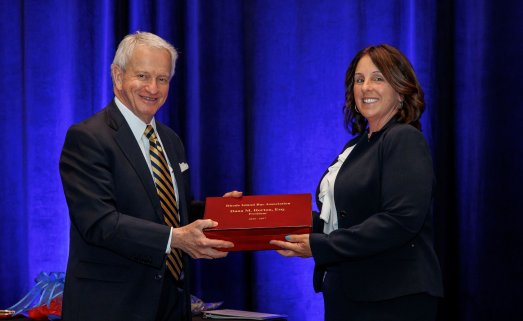














Bruce B. Barth has focused his practice on the representation of employers and fiduciaries with respect to retirement and welfare benefits, executive compensation, and benefits issues in corporate transactions.
Employee Benefits
Bruce has advised clients on the implications of tax, securities, labor, and other laws, including the Employee Retirement Income Security Act (ERISA). Drawing from over 30 years of employee benefits experience, Bruce partnered with clients to develop benefit plan design and compliance strategies that meet both their business objectives and the legal requirements applicable to their employee benefits plans. He has counseled clients with regard to the full spectrum of employee benefits matters, including qualified defined benefit and defined contribution plans, defined benefit plan funding and plan termination, deferred compensation, and other nonqualified plan programs and executive compensation arrangements, plan compliance and correction, health and welfare programs, participation in multiemployer plans, withdrawal liability, and mergers and acquisitions. Bruce frequently consulted and negotiated with the Internal Revenue Service, Department of Labor, and Pension Benefit Guaranty Corporation with regard to audits of plans, correction issues including voluntary correction and correction on audit, plan termination issues, and requests for advisory rulings and opinions.
Government Benefits
A substantial portion of Bruce’s practice has been dedicated to assisting governmental employers. As a result, he has an in-depth understanding of the unique challenges involved in the design, administration, and operation of governmental retirement plans. He has helped governmental clients ensure their benefit plans meet obligations to their citizens and employees and comply with all legal requirements applicable to governmental plans. He has assisted numerous governmental entities with a variety of pension plan compliance issues, including qualification issues under Section 401(a) of the Internal Revenue Code (Code), the applicability of various Code limitations to governmental plans, Section 414(h) “pick up” issues, constructive receipt concerns, and compliance with Section 415 of the Code. Bruce has significant experience assisting governmental employers with the creation, design, and administration of 457(b) plans, including fiduciary duties related to such plans. He also has represented a number of municipalities and related entities with respect to Length of Service Award Programs, and their creation, design, and administration.
Tax- Exempt Employers
Bruce also has represented numerous tax-exempt entities in connection with their employee benefit plans. His clients have included tax-exempt hospitals, health care organizations, private foundations, educational institutions, and other non-profit organizations. He routinely assists tax-exempt clients with the design, drafting, and implementation of defined contribution plans, including 403(b) plans, defined benefit plans, Section 457(b) and 457(f) programs, as well as other executive benefit programs and issues. He has assisted clients with the application of the excise tax rules associated with executive compensation under Section 4960 as well as the intermediate sanctions rules. Bruce has represented clients before the Internal Revenue Service, the Department of Labor, and the Pension Benefit Guaranty Corporation in connection with audits, qualification submissions, plan corrections, and other matters of these programs.
Health + Welfare Benefit Plans
Bruce has counseled clients on a wide range of health and welfare benefits matters, including issues related to the Affordable Care Act, self-funded health arrangements, wellness and disease management programs, HIPAA privacy and security rules, COBRA administration, and various state laws and regulations governing health and welfare plan design and administration.
Executive Compensation + Equity Arrangements
Bruce has significant experience in designing, implementing, and maintaining executive and outside-director compensation and incentive programs, including equity-based plans. He regularly has provided counsel on the tax consequences of such programs, as well as assisting in structuring those arrangements to comply with ERISA, Section 409A, and Section 457(f) (for tax-exempt organizations) in addition to Section 162(m), 280G and 4960 issues. In addition to designing executive compensation programs, he assists compensation committees of public companies on compliance with Securities and Exchange Commission disclosure and reporting requirements.
Fiduciary Advice
Bruce routinely has counseled boards of directors, trustees, investment committees, plan administrators, and plan fiduciaries regarding their duties and responsibilities under federal law. He counseled plan sponsors on all aspects of ERISA fiduciary compliance, including plan governance, plan administration issues, and the selection and monitoring of plan investment options. He also has assisted plan sponsors and fiduciaries with RFPs in connection with the retention of plan advisors including third party administrators, actuaries, and investment advisors.
He often has been asked to speak and publish about employee benefit plan issues, executive compensation matters, fiduciary duty obligations and health care reform.