Robinson Cole LLP
High Contrast Mode

Jacqueline Pennino Scheib has more than two decades of experience helping national and international companies preserve their intellectual property and achieve their business goals. She works with clients across a range of industries in the areas of intellectual property counseling, prosecution, and enforcement as well as on transactions related to intellectual property, technology, and corporate law. She has a particular depth of experience assisting clients in the technology, healthcare, manufacturing, consumer product, and food and beverage industries.

Intellectual Property  

  • Prosecuting, maintaining, and enforcing trademark and copyright registrations and rights worldwide, including work for very well recognized household brand names
  • Advising on the establishment of trade secret programs and counseling clients on packaging, labeling, promotional and advertising matters
  • Advising on and structuring mechanisms for the creation, exploitation, transfer, and protection of intellectual property to help companies protect their products and grow
  • Assisting with resolution of ownership and rights disputes including handling of proceedings before the U.S. Patent and Trademark Office’s Trademark Trial and Appeal Board

Technology

Jackie provides counseling on and negotiates technology licensing and development, acquisitions, outsourcing, management, maintenance, and servicing agreements. She is well-versed in the various mechanisms for provision of software products and services and has significant experience with various technology service and outsourcing models. Her work covers a wide range of technology fields, but she has particular depth of experience providing advice in the healthcare context, including in connection with the implementation of electronic medical record systems, counseling regarding medical devices, health information exchange platforms, claim processing and clinical information systems, and clinical trials including administration, research and development.

Corporate Transactions

Jackie provides counsel to clients on sophisticated joint ventures, strategic alliances, and mergers and acquisitions with a particular focus on intellectual property and technology components of such transactions. She has decades of experience assisting with all aspects of her clients' daily commercial contracting needs, including sales agreements and purchase contracts, distribution agreements, terms and conditions, service and consulting agreements, sales representative agreements, and nondisclosure agreements. Jackie serves as a trusted advisor to numerous businesses to coordinate legal services that help clients meet their needs.

 Prior to joining Robinson+Cole, Jackie served as a law clerk to the Connecticut Supreme Court.

  • University of Connecticut School of Law (Juris Doctor)
  • Franklin and Marshall College (Bachelors)
    • B.A., Experimental Psychology

  • State of Connecticut
  • State of New York

Received a Band 1 ranking in Chambers USA: America's Leading Lawyers for Business in the State of Connecticut in the area of Intellectual Property for 2025

Routinely recognized among "IP Stars" (2014 - 2025) in Managing Intellectual Property magazine as both a Copyright Star and a Trademark Star

Selected by her peers for inclusion in The Best Lawyers in America© in the areas of Trademark Law (2012-2026), Copyright Law (2015-2026), Information Technology Law for 2010 and 2011, and as Hartford Lawyer of the Year in the area of Trademark Law for 2022 and 2024

Recognized as an Intellectual Property Attorney of the Year Finalist as part of Law.com's 2024 New England Legal Awards

Presented with the 2024 U.S.A. Deal of the Year award, in the small markets category, as part of the Global M&A Network's 15th Annual Americas and Global Markets M&A Atlas Awards in recognition of the acquisition of Medacist Solutions Group by Bluesight, the Medication Intelligence™ Company

Connecticut Law Tribune, 2010, recognized in Women in the Law: High Achievers yearbook

Hartford Business Journal, 2006 "40 Under Forty" Inductee

American Red Cross
National Philanthropic Board (2025-present)
Board of Directors, Connecticut Chapter (2014 - Present)
Chair, Philanthropy Committee, Connecticut Chapter (2020 - Present)

American Intellectual Property Law Association
IP Transactions Committee, Trademarks Subcommittee, Chair (2025-present)

Connecticut Technology Council
Board of Directors (2015 - Present)

International Trademark Association (2005 - Present)
Past Member of several committees, including the INTA Bulletin Committee and the Online Resources Committee

American Bar Association
Business Law Section, Cyberspace Law Committee, Chair of Membership Development (2003 - 2005)
Business Law Section, Cyberspace Law Committee (2003 - Present)
Intellectual Property Law Section
Business Law Section

Connecticut Bar Association
Business Law Section
Intellectual Property Section (2013 - Present)
Former Member of IP Section Executive Committee

New York State Bar Association
Business Law Section
Intellectual Property Law Section

Experience


Represented Tradebe Life Sciences in Florachem Acquisition

Represented Tradebe Life Sciences, a global business group dedicated to sustainability, in connection with its acquisition of Florachem, a leading provider of naturally derived, high-value concentrated fractions, extracts, and natural ingredients. The acquisition expanded Tradebe’s life sciences business and marked its entrance into the U.S market.

Read More
Represented Tradebe Life Sciences in Florachem Acquisition

$70 Million Publication Sale

Conducted due diligence, drafted intellectual property assignment instruments, and drafted intellectual property provisions of the asset purchase agreement for an international media company's sale of four major print and online publications in a deal valued at $70 million.

Read More

Series B Preferred Stock Investment in Dynamics, Inc.

Representation of Bain Capital Ventures in connection with its Series B Preferred Stock investment in Dynamics, Inc., a producer of next-generation interactive payment cards.


Publications


November 7, 2025

A Checklist for Avoiding Disputes in Your IT Projects

Corporate Counsel

Information technology projects frequently fail to deliver on expectations. They routinely fall short of the expected deliverables and take longer and cost more than planned. To the extent there is “blame” to be placed for these failures, it is often shared by both the customer and the vendor. The good news is that a major source of these problems is miscommunication and that is an area where spending time to implement a detailed agreement can save you future heartache. The following are eight of the most critical clauses where I recommend spending your attention: Clear milestones and timelines—It is hard to overstate the importance of establishing clear milestones and then setting hard timelines for achieving those milestones. Each milestone should include expected deliverables in as much detail as possible. Of course, there are times when an element of the project may include evaluation and analysis to set goals and parameters for the project. When that is the case, the parties can still establish details for the analysis stage, accompanied by overall timelines for project completion. Additionally, the parties can include clear language regarding change order processes to allow for natural project evolution. Consider also whether the arrangement would benefit from provisions outlining project managers and a meeting schedule, and requiring documentation of understandings reached in such meetings. Intellectual Property Rights—Although it is counter-intuitive, the party paying is not the automatic owner of deliverables absent an agreement outlining specific assignment of intellectual property rights. Close attention should be paid to what exactly is being developed and/or delivered to the customer. From the customer's perspective, any deliverables that are uniquely developed for the customer should be owned by the customer. Conversely, if a deliverable is not unique, the customer should have clear license rights to use the deliverable in a manner that is consistent with the operation of its business. This should include the right, where appropriate, to create derivative works and to sublicense and/or transfer the license. Consideration should also be placed on when the assignment or license occurs. The vendor will want that to be upon payment in full. The customer will want the transfer or license to be automatic so that it will have the product done to date in the event the agreement is terminated prior to completion of the agreement (especially if it needs to transition the project to another vendor). Transition Services—Speaking of transition, consider whether transition services are needed in the event that the agreement is terminated. Include details on the length of time and acceptable price to be charged for those services. In the event key personnel are critical to the project, the transition services clause can specify the continued assistance of those personnel. To the extent that the project supports significant data or content that the customer needs, the transition services provisions should provide for a timely transfer of those materials in a manner that is reasonably agreed upon by the parties. In some circumstances, a data dump is not an effective transfer and, for those situations, the customer should consider whether it needs to insist upon continued access to an archived instance of the vendor’s software or platform so that it can properly read and use its data post-termination. Use of Third-Party Materials—It is increasingly common for IT solutions to be composed of a hybrid of vendor-owned proprietary materials and third-party materials/resources. Vendors will often seek to remove any warranties or liability for such third-party materials but the vendor is typically the only party in the transaction that has privity of contract with the third party. At a minimum, vendors should be required to pass through the representations they obtained from the third party. Ideally, they are pushed to provide ordinary course representations as if it is their product and to hold liability for failures of those representations. Access to Source Code—In some cases, the technology being licensed or otherwise provided as a service is either unique in the marketplace (such that replacements are not easily found) or is mission-critical for the customer. In those instances, customers should consider whether they want to insist that the source code underlying the technology be escrowed and released to the customer on the occurrence of certain events, such as the vendor going bankrupt or deciding to no longer support the technology.In considering whether to insist on such an escrow, consideration should be given to the fact that the escrow is only as good as the vendor’s efforts to keep the assets up to date, that the release triggers will need to be very precise, and that there is a cost associated with setting up and maintaining the escrow. Additionally, if the customer does not have the right expertise to immediately start using the released materials then the escrow may not be the best solution for the customer. Security of and Right to Use Data—Most technology solutions result in considerable exposure of one party to the other party’s data. Provisions should be included to address information security requirements, including expected standards of security to be met, timely notifications of breaches, business continuity and disaster recovery protections, and appropriate limitations on the use of data. Additionally, it is typical for vendors to desire to use data collected from customers in an aggregated and de-identified manner. Close consideration should be given to whether this is acceptable to the customer. In particular, consider whether, in light of the increasing use of artificial intelligence (AI) tools, language should be added to either prohibit or restrict use of data with or to train AI tools.  Process Improvement—Technology moves very quickly. Ideally, your agreement moves with it. Pay close attention to the treatment of upgrades, releases, modifications and new versions of products and services and include language addressing exactly what will be provided to you and whether there will be extra cost for it. Especially in those circumstances where the deliverables are services, consider adding a provision requiring the vendor to use efforts to continuously improve its processes and services and to pass through those improvements to the customer. Such pass-throughs can be via updated products, services or functionality, or can be through decreases in price caused by gains in efficiency. Service levels—Most technology agreements include service levels where a technology solution is being provided via a service model. Close attention should be paid to the details of these provisions. Common items to watch for include ensuring that the exceptions to what is being measured are not excessive, ensuring that the provisions include time lines for fixing problems rather than just responding to them, addressing situations where failures are constantly repeated (even if timely fixed), ensuring any credits are of a significant amount that they create incentives for the vendor to perform, and providing for escalation so that credits are not the only recourse for the customer in the event of ongoing problems. Thorough articles could be written on any one of the eight areas I have highlighted in this article. Hopefully, this article can serve as a checklist for your next technology project and a reminder that spending time up front on the agreement between the parties can pay dividends later in the relationship for both customer and vendor. Jacqueline Pennino Scheib, a partner in Robinson+Cole's intellectual property and technology group, has more than two decades of experience helping national and international companies preserve their intellectual property and achieve their business goals. She works with clients in the areas of intellectual property counseling, prosecution, and enforcement as well as on transactions related to intellectual property, technology, and corporate law. She has a particular depth of experience with clients in the technology, manufacturing, health care, consumer product, and food and beverage industries. Reprinted with permission from the November 7, 2025 edition of Corporate Counsel© 2025 ALM Global Properties, LLC. All rights reserved. Further duplication without permission is prohibited, contact 877-256-2472 or asset-and-logo-licensing@alm.com

Legal Update: Section 1782: Discovery in Support of a Foreign Proceeding teaser
May 18, 2022

Legal Update: Section 1782: Discovery in Support of a Foreign Proceeding

Intellectual Property + Technology Group Out + About teaser
February 23, 2022

Intellectual Property + Technology Group Out + About

November 7, 2025

A Checklist for Avoiding Disputes in Your IT Projects

Corporate Counsel

Information technology projects frequently fail to deliver on expectations. They routinely fall short of the expected deliverables and take longer and cost more than planned. To the extent there is “blame” to be placed for these failures, it is often shared by both the customer and the vendor. The good news is that a major source of these problems is miscommunication and that is an area where spending time to implement a detailed agreement can save you future heartache. The following are eight of the most critical clauses where I recommend spending your attention: Clear milestones and timelines—It is hard to overstate the importance of establishing clear milestones and then setting hard timelines for achieving those milestones. Each milestone should include expected deliverables in as much detail as possible. Of course, there are times when an element of the project may include evaluation and analysis to set goals and parameters for the project. When that is the case, the parties can still establish details for the analysis stage, accompanied by overall timelines for project completion. Additionally, the parties can include clear language regarding change order processes to allow for natural project evolution. Consider also whether the arrangement would benefit from provisions outlining project managers and a meeting schedule, and requiring documentation of understandings reached in such meetings. Intellectual Property Rights—Although it is counter-intuitive, the party paying is not the automatic owner of deliverables absent an agreement outlining specific assignment of intellectual property rights. Close attention should be paid to what exactly is being developed and/or delivered to the customer. From the customer's perspective, any deliverables that are uniquely developed for the customer should be owned by the customer. Conversely, if a deliverable is not unique, the customer should have clear license rights to use the deliverable in a manner that is consistent with the operation of its business. This should include the right, where appropriate, to create derivative works and to sublicense and/or transfer the license. Consideration should also be placed on when the assignment or license occurs. The vendor will want that to be upon payment in full. The customer will want the transfer or license to be automatic so that it will have the product done to date in the event the agreement is terminated prior to completion of the agreement (especially if it needs to transition the project to another vendor). Transition Services—Speaking of transition, consider whether transition services are needed in the event that the agreement is terminated. Include details on the length of time and acceptable price to be charged for those services. In the event key personnel are critical to the project, the transition services clause can specify the continued assistance of those personnel. To the extent that the project supports significant data or content that the customer needs, the transition services provisions should provide for a timely transfer of those materials in a manner that is reasonably agreed upon by the parties. In some circumstances, a data dump is not an effective transfer and, for those situations, the customer should consider whether it needs to insist upon continued access to an archived instance of the vendor’s software or platform so that it can properly read and use its data post-termination. Use of Third-Party Materials—It is increasingly common for IT solutions to be composed of a hybrid of vendor-owned proprietary materials and third-party materials/resources. Vendors will often seek to remove any warranties or liability for such third-party materials but the vendor is typically the only party in the transaction that has privity of contract with the third party. At a minimum, vendors should be required to pass through the representations they obtained from the third party. Ideally, they are pushed to provide ordinary course representations as if it is their product and to hold liability for failures of those representations. Access to Source Code—In some cases, the technology being licensed or otherwise provided as a service is either unique in the marketplace (such that replacements are not easily found) or is mission-critical for the customer. In those instances, customers should consider whether they want to insist that the source code underlying the technology be escrowed and released to the customer on the occurrence of certain events, such as the vendor going bankrupt or deciding to no longer support the technology.In considering whether to insist on such an escrow, consideration should be given to the fact that the escrow is only as good as the vendor’s efforts to keep the assets up to date, that the release triggers will need to be very precise, and that there is a cost associated with setting up and maintaining the escrow. Additionally, if the customer does not have the right expertise to immediately start using the released materials then the escrow may not be the best solution for the customer. Security of and Right to Use Data—Most technology solutions result in considerable exposure of one party to the other party’s data. Provisions should be included to address information security requirements, including expected standards of security to be met, timely notifications of breaches, business continuity and disaster recovery protections, and appropriate limitations on the use of data. Additionally, it is typical for vendors to desire to use data collected from customers in an aggregated and de-identified manner. Close consideration should be given to whether this is acceptable to the customer. In particular, consider whether, in light of the increasing use of artificial intelligence (AI) tools, language should be added to either prohibit or restrict use of data with or to train AI tools.  Process Improvement—Technology moves very quickly. Ideally, your agreement moves with it. Pay close attention to the treatment of upgrades, releases, modifications and new versions of products and services and include language addressing exactly what will be provided to you and whether there will be extra cost for it. Especially in those circumstances where the deliverables are services, consider adding a provision requiring the vendor to use efforts to continuously improve its processes and services and to pass through those improvements to the customer. Such pass-throughs can be via updated products, services or functionality, or can be through decreases in price caused by gains in efficiency. Service levels—Most technology agreements include service levels where a technology solution is being provided via a service model. Close attention should be paid to the details of these provisions. Common items to watch for include ensuring that the exceptions to what is being measured are not excessive, ensuring that the provisions include time lines for fixing problems rather than just responding to them, addressing situations where failures are constantly repeated (even if timely fixed), ensuring any credits are of a significant amount that they create incentives for the vendor to perform, and providing for escalation so that credits are not the only recourse for the customer in the event of ongoing problems. Thorough articles could be written on any one of the eight areas I have highlighted in this article. Hopefully, this article can serve as a checklist for your next technology project and a reminder that spending time up front on the agreement between the parties can pay dividends later in the relationship for both customer and vendor. Jacqueline Pennino Scheib, a partner in Robinson+Cole's intellectual property and technology group, has more than two decades of experience helping national and international companies preserve their intellectual property and achieve their business goals. She works with clients in the areas of intellectual property counseling, prosecution, and enforcement as well as on transactions related to intellectual property, technology, and corporate law. She has a particular depth of experience with clients in the technology, manufacturing, health care, consumer product, and food and beverage industries. Reprinted with permission from the November 7, 2025 edition of Corporate Counsel© 2025 ALM Global Properties, LLC. All rights reserved. Further duplication without permission is prohibited, contact 877-256-2472 or asset-and-logo-licensing@alm.com

Legal Update: Section 1782: Discovery in Support of a Foreign Proceeding teaser
May 18, 2022

Legal Update: Section 1782: Discovery in Support of a Foreign Proceeding

Intellectual Property + Technology Group Out + About teaser
February 23, 2022

Intellectual Property + Technology Group Out + About

May 12, 2021

Open Source Software Licenses

American Bar Association, Director’s Technology Handbook: Tips and Strategies for Advising Corporate Directors

Sponsored by the ABA Business Law Section, the practical handbook was designed as a quick reference tool providing guidance to help boards of directors and lawyers understand and decipher critical technology matters and potential legal implications that can affect an organization. The guide covers a variety of subjects from the lawyer’s role in communications and fiduciary duties to regulatory compliance, cloud computing agreements, and more. The chapter on open source software licenses highlights the risks to the organization of using software provided under several different types of open source licenses, and it identifies the key questions the board should ask of the organization’s management. Jackie serves on the Cyberspace Law Committee of the ABA Business Law Section. Read more about the guide.

IP + T: Intelligence teaser
Q1 2021

IP + T: Intelligence

IP+T Group: Out + About teaser
December 2020

IP+T Group: Out + About

IP+T Intelligence Newsletter teaser
Q2 2019

IP+T Intelligence Newsletter

IP+T Intelligence Newsletter teaser
Q2 2019

IP+T Intelligence Newsletter

IP&T Newsletter teaser
Q4 2018

IP&T Newsletter


May 12, 2021

Open Source Software Licenses

American Bar Association, Director’s Technology Handbook: Tips and Strategies for Advising Corporate Directors

Sponsored by the ABA Business Law Section, the practical handbook was designed as a quick reference tool providing guidance to help boards of directors and lawyers understand and decipher critical technology matters and potential legal implications that can affect an organization. The guide covers a variety of subjects from the lawyer’s role in communications and fiduciary duties to regulatory compliance, cloud computing agreements, and more. The chapter on open source software licenses highlights the risks to the organization of using software provided under several different types of open source licenses, and it identifies the key questions the board should ask of the organization’s management. Jackie serves on the Cyberspace Law Committee of the ABA Business Law Section. Read more about the guide.

IP + T: Intelligence teaser
Q1 2021

IP + T: Intelligence

IP+T Group: Out + About teaser
December 2020

IP+T Group: Out + About

IP+T Intelligence Newsletter teaser
Q2 2019

IP+T Intelligence Newsletter

IP+T Intelligence Newsletter teaser
Q2 2019

IP+T Intelligence Newsletter

IP&T Newsletter teaser
Q4 2018

IP&T Newsletter


News


May 4, 2026

Capital Markets + Securities Group Represents SingAuto Inc. in Merger Agreement with Blueport Acquisition Ltd

Robinson+Cole’s Capital Markets + Securities group was pleased to represent SingAuto Inc., a global innovator providing green cold-chain logistics technology solutions for smart commercial electric vehicles, in its entry into a definitive business combination agreement with Blueport Acquisition Ltd, a publicly traded special purpose acquisition company, on May 1, 2026. The acquisition merger for SINGAUTO, the sole surviving entity of the merger, is valued at $1.2 billion with 120,000,000 shares valued at $10 per share. Upon consummation of the business combination of SingAuto and Blueport, a newly formed holding company for the purpose of the transactions is expected to be listed on the Nasdaq Stock Market LLC. The team advising on the transaction was led by Capital Markets + Securities group partner Arila Zhou, and included members Chenyi Wang and Yang Xu, with support from Intellectual Property + Technology group partners Jackie Pennino Scheib and Kathy Porter, and Business Litigation group partner Ben Daniels. To read the press release, click here.

December 18, 2025

Business Transactions in Health Care Team Wins “Pharma & Devices Deal of the Year” at Global M&A Network’s 7th Annual USA Middle Markets M&A Atlas Awards Gala

Global M&A Network
Business Transactions in Health Care Team Wins “Pharma & Devices Deal of the Year” at Global M&A Network’s 7th Annual USA Middle Markets M&A Atlas Awards Gala teaser
November 13, 2025

Jackie Scheib Highlights Critical Clauses for Avoiding Disputes in IT Projects

Corporate Counsel
May 4, 2026

Capital Markets + Securities Group Represents SingAuto Inc. in Merger Agreement with Blueport Acquisition Ltd

Robinson+Cole’s Capital Markets + Securities group was pleased to represent SingAuto Inc., a global innovator providing green cold-chain logistics technology solutions for smart commercial electric vehicles, in its entry into a definitive business combination agreement with Blueport Acquisition Ltd, a publicly traded special purpose acquisition company, on May 1, 2026. The acquisition merger for SINGAUTO, the sole surviving entity of the merger, is valued at $1.2 billion with 120,000,000 shares valued at $10 per share. Upon consummation of the business combination of SingAuto and Blueport, a newly formed holding company for the purpose of the transactions is expected to be listed on the Nasdaq Stock Market LLC. The team advising on the transaction was led by Capital Markets + Securities group partner Arila Zhou, and included members Chenyi Wang and Yang Xu, with support from Intellectual Property + Technology group partners Jackie Pennino Scheib and Kathy Porter, and Business Litigation group partner Ben Daniels. To read the press release, click here.

December 18, 2025

Business Transactions in Health Care Team Wins “Pharma & Devices Deal of the Year” at Global M&A Network’s 7th Annual USA Middle Markets M&A Atlas Awards Gala

Global M&A Network
Business Transactions in Health Care Team Wins “Pharma & Devices Deal of the Year” at Global M&A Network’s 7th Annual USA Middle Markets M&A Atlas Awards Gala teaser
November 13, 2025

Jackie Scheib Highlights Critical Clauses for Avoiding Disputes in IT Projects

Corporate Counsel
October 29, 2025

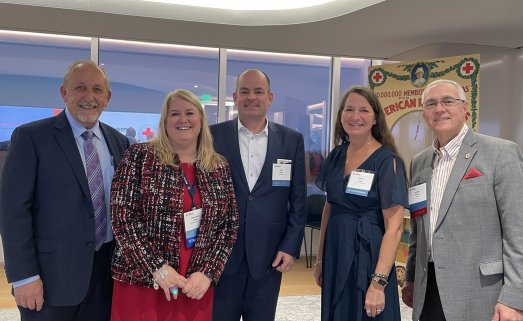
Robinson+Cole Hosts “An Evening of Mission Magic with the American Red Cross”

Robinson+Cole Hosts “An Evening of Mission Magic with the American Red Cross” teaser
October 8, 2025

Robinson+Cole Healthcare Transactions Team Represents The Pennant Group in One of 2025’s Largest Homecare and Hospice Transactions

August 26, 2025

78 Robinson+Cole Lawyers Listed in The Best Lawyers in America© 2026

Firm receives top listing in Connecticut lawyer count in national peer review survey
78 Robinson+Cole Lawyers Listed in The Best Lawyers in America© 2026 teaser
June 23, 2025

Jackie Scheib Recognized in 2025 Edition of Managing IP’s “IP Stars”

Managing IP
June 5, 2025

Robinson+Cole Secures 45 Total Rankings in Chambers USA 2025 Guide

Chambers USA: America’s Leading Lawyers for Business
Robinson+Cole Secures 45 Total Rankings in <i>Chambers USA 2025</i> Guide teaser
May 16, 2025

Capital Markets + Securities Group Represents Horizon Space Acquisition II in Business Combination with SL Bio


October 29, 2025

Robinson+Cole Hosts “An Evening of Mission Magic with the American Red Cross”

Robinson+Cole Hosts “An Evening of Mission Magic with the American Red Cross” teaser
October 8, 2025

Robinson+Cole Healthcare Transactions Team Represents The Pennant Group in One of 2025’s Largest Homecare and Hospice Transactions

August 26, 2025

78 Robinson+Cole Lawyers Listed in The Best Lawyers in America© 2026

Firm receives top listing in Connecticut lawyer count in national peer review survey
78 Robinson+Cole Lawyers Listed in The Best Lawyers in America© 2026 teaser
June 23, 2025

Jackie Scheib Recognized in 2025 Edition of Managing IP’s “IP Stars”

Managing IP
June 5, 2025

Robinson+Cole Secures 45 Total Rankings in Chambers USA 2025 Guide

Chambers USA: America’s Leading Lawyers for Business
Robinson+Cole Secures 45 Total Rankings in <i>Chambers USA 2025</i> Guide teaser
May 16, 2025

Capital Markets + Securities Group Represents Horizon Space Acquisition II in Business Combination with SL Bio


Events


Past

Best Practices in Trademark Acquisition

Jun 5 2025
American Intellectual Property Law Association Intellectual Property Trademark Law Committee Annual Meeting
Past

New England Legal Awards 2024

Sep 26 2024
Fairmont Copley Plaza
Past

Best Practices in Trademark Acquisition

Jun 5 2025
American Intellectual Property Law Association Intellectual Property Trademark Law Committee Annual Meeting
Past

New England Legal Awards 2024

Sep 26 2024
Fairmont Copley Plaza
Past

Food’NBev Connect

March and April 2022
Presented to Food'NBev
Past

Dymax Corporation

March 2022
Presentation to Client Marketing Department
Past

Tata Consumer Products

February 2022
Presented to Tata Consumer Products
Past

Registering for Success: Strategies for Maximizing the Value of a Business’s IP

Jan 21 2020
Connecticut Bar Association
Past

Food’NBev Connect

March and April 2022
Presented to Food'NBev
Past

Dymax Corporation

March 2022
Presentation to Client Marketing Department
Past

Tata Consumer Products

February 2022
Presented to Tata Consumer Products
Past

Registering for Success: Strategies for Maximizing the Value of a Business’s IP

Jan 21 2020
Connecticut Bar Association