













Janet (Zhanna) Kljyan has developed extensive experience with helping businesses and other institutional clients litigate and resolve their disputes across an array of industries, including real estate, health care, technology, insurance, manufacturing, education and non-profits. She routinely handles cases before federal and state courts and administrative agencies in New York as well as courts in other jurisdictions involving issues of contract, intellectual property, trade secrets, unfair trade practices, land use, and employment disputes. Janet is a member of our firm’s Business Litigation group and a secondary member of the Intellectual Property + Technology Group.

High Contrast Mode
Janet (Zhanna) Kljyan
Partner
she/her/hers

Firm Highlights
News
Robinson+Cole Advances in National 2026 Pro Bono Rankings
Robinson+Cole continues to gain national recognition for its commitment to pro bono service, earning improved placements in both The American Lawyer's 2026 Pro Bono Scorecard and Law360 Pulse's 2026 Pro Bono Rankings. The firm was ranked #91 in The American Lawyer's 2026 Pro Bono Scorecard, moving up two spots from the previous year. R+C also climbed nine positions in Law360 Pulse's 2026 Pro Bono Rankings for firms with 250-600 attorneys, rising to #16 in its category. Now in his third year as chair of Robinson+Cole's Pro Bono Committee, Seth Orkand credits the firm's continued progress to the strong culture of service embraced across the organization. "The momentum behind our pro bono program continues to grow alongside our firm," said Seth. "It's rewarding to see so many lawyers and professional staff embrace opportunities to make a meaningful difference. We're proud of what we've accomplished and remain focused on expanding our impact in the communities we serve." In The American Lawyer's 2026 Pro Bono Scorecard, which ranks Am Law 200 firms based on work performed by U.S.-based lawyers, R+C achieved strong results across both key metrics: average pro bono hours per lawyer and the percentage of lawyers contributing 20 or more pro bono hours during 2025. The firm posted scores of 24.9% and 29.5%, respectively, outperforming many firms with significantly larger attorney headcounts. Calculations are based on lawyer counts as of December 31, 2025. Learn more and view the scorecard. The firm's strong showing was also reflected in Law360 Pulse's 2026 Pro Bono Rankings. R+C's rise to #16 among firms with 250-600 attorneys underscores the continued growth of its pro bono program and the dedication of its attorneys to serving individuals and organizations in need. The rankings are based on average pro bono hours per lawyer and the percentage of attorneys contributing at least 20 hours of pro bono service.
News
Robinson+Cole Expands Managed Care + ERISA Litigation Team with Key Additions
Robinson+Cole announced that E. Sean Medina has joined the firm as a partner in its Managed Care + ERISA Litigation group. Medina’s arrival marks another step in the group’s ongoing expansion, enhancing its ability to serve clients facing increasingly complex managed care, Employee Retirement Income Security Act (ERISA), payor-provider, and other business-critical disputes. An experienced managed care and commercial litigator, Medina has represented managed care organizations, health insurers, and other industry clients for nearly 20 years in complex, high-stakes litigation and arbitration matters, including payor-provider disputes, ERISA litigation, class actions, state statutory claims, commercial disputes, and disputes involving Medicaid contract bids. He brings extensive experience guiding clients through all phases of litigation, from pre-suite strategy through trial and appeal. “We’re welcoming Sean to Robinson+Cole at a time of significant growth for our practice,” said Matthew P. Mazzola, co-chair of the firm’s Managed Care + ERISA Litigation group. “As demand for sophisticated counsel in the managed care and ERISA space continues to grow, Sean’s proven litigation experience, industry insight, and strategic approach will further strengthen our ability to help clients navigate their most challenging matters. His first-chair trial experience and deep understanding of the managed care industry make him a valuable addition to our team.” “Robinson+Cole has built an impressive Managed Care + ERISA Litigation practice and a reputation for delivering exceptional client service,” said Medina. “The firm’s collaborative culture and practical approach to helping clients navigate complex business and regulatory challenges made this opportunity especially compelling. I look forward to contributing to the group's continued success and helping our clients achieve their business objectives.” Medina's addition is complemented by the arrival of Mary Kate McDevitt, who also joins the firm’s Managed Care + ERISA Litigation group. An associate in the Philadelphia office, McDevitt’s practice concentrates on defending managed care organizations, life and disability insurers, plan administrators, employers, and fiduciaries in disputes arising under ERISA and other state and federal laws. She also brings experience across a broad range of litigation matters, including False Claims Act and qui tam actions, government enforcement, compliance, white-collar litigation, and cybersecurity and privacy disputes. Robinson+Cole’s Managed Care + ERISA Litigation group has experienced significant growth over the past year, reflecting the firm’s broader strategic investment in attracting top talent and strengthening key practices to meet clients’ evolving needs. Now 20 lawyers strong, the group brings together accomplished litigators who collaborate seamlessly across disciplines, reinforcing the firm’s commitment to delivering exceptional service, innovative solutions, and results that consistently meet and exceed client expectations.
News
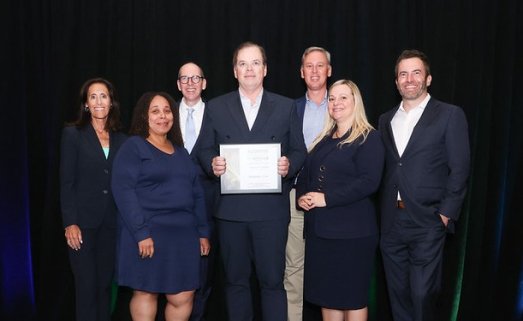
Robinson+Cole Honored at 2026 Connecticut Business Excellence Awards
News
Kate Dion Examines Legal Questions Surrounding NCAA Eligibility Changes
Education industry team chair and Professional + Collegiate Sports industry team member Kathleen E. Dion shared insights on the rapidly evolving legal framework governing college athletics in the article, "A series of court rulings turned college football upside down. What's next?" published by USA Today on August 26, 2026. The article examines the legal and practical implications of recent court decisions and NCAA policy changes that have created uncertainty around athlete eligibility, including the possibility of former college football players returning from NFL training camps to compete in college athletics. Addressing the growing tension between NCAA oversight and conference-level governance, Kate noted that recent court rulings may not necessarily invalidate rules adopted independently by athletic conferences. "While state-court injunctions against NCAA-wide eligibility restrictions certainly create legal uncertainty, conferences may believe those decisions do not automatically invalidate their own independently adopted rules," she said. "Whether that distinction ultimately holds up will depend on the particular conference, the rule being challenged, and the legal theory at issue." The article explores how ongoing litigation, regulatory changes, and conference responses are reshaping the landscape of college athletics and raising new legal questions about eligibility, governance, and athlete participation. Read the article.
News
Robinson+Cole Unites Multidisciplinary Sports Capabilities Under New Industry Team
Today, Robinson+Cole announced the formalization of its Professional + Collegiate Sports industry team, bringing together attorneys and professionals from the firm’s Immigration, Labor + Employment, Litigation, Education, Real Estate, Construction Law, Intellectual Property, Data Privacy, and Artificial Intelligence practices. The team draws on the firm’s extensive experience in these areas to provide coordinated counsel to sports leagues and teams, institutions, talent—athletes and coaches, investors, and sports-related businesses as they navigate issues involving name, image, and likeness (NIL), Title IX compliance, global mobility and sports tourism, media rights, private investment, emerging technologies, venue development, and the continued growth of women’s sports. "The sports industry represents an estimated $2.3 trillion global economy, and its continued growth is creating both opportunities and complexity across professional and collegiate athletics," said Robert C. Seiger, Chair of the new team. "As the sports industry continues to evolve, clients are increasingly seeking counsel that spans multiple disciplines and aligns with their broader strategic objectives. The formalization of this team reflects that demand and our commitment to serving clients across the sports ecosystem through an integrated approach." The team's focus will center on three strategic areas: Sports Immigration and Talent Mobility: Visa strategy, athlete and coach immigration, executive movement, global talent support, compliance, and mobility planning. Sports Venues, Infrastructure, and Development: Stadium and arena projects, training facilities, leasing and real estate transactions, construction and infrastructure matters, public and private financing, naming rights, sponsorship arrangements, and land use considerations. Collegiate Athletics and Institutional Risk Management: NIL matters, Title IX compliance, eligibility issues, employment matters, governance, investigations, litigation, licensing, and institutional risk management. Robinson+Cole's work spans athlete and executive mobility, intellectual property protection, commercial transactions, venue development, employment matters, investigations, litigation, and regulatory compliance. Representative matters include providing immigration and mobility services for NHL, NFL, MLS, and NWSL organizations, obtaining an industry-first O-1 visa for an IndyCar race team, representing professional race drivers and teams, managing trademark matters for high-profile sports figures, advising a WNBA organization on the design and construction of a new training facility, and handling real estate and leasing matters involving major sports properties. "This team reflects Robinson+Cole’s significant strength and capability across multiple disciplines to address the full range of issues facing sports organizations," said J. Michael Wirvin, the firm’s Managing Partner. "Many of the challenges in today’s sports industry do not fit neatly within a single practice area. By formalizing this effort, we are creating a more coordinated experience for clients while positioning the firm to continue growing alongside this dynamic industry." Beyond its client work, Robinson+Cole is actively engaged in advancing the sports industry through leadership, scholarship, and engagement. Team members regularly contribute to national conversations on emerging sports law developments and are frequently sought by media outlets for commentary on issues affecting professional and collegiate athletics, most recently USA Today and the Sports Business Journal. They also participate in leading industry organizations, such as the Sports Lawyers Association, where Seiger currently serves as Chair of the Immigration Committee. The firm is recognized for its role at the intersection of sports and global talent mobility.
News
Former Massachusetts False Claims Division Chief Amy Crafts Joins Robinson+Cole
Robinson+Cole announced that former Massachusetts False Claims Division Chief Amy Crafts has joined the firm's Business Litigation + Dispute Resolution group as a partner in its Boston office. Drawing on more than two decades of experience, Crafts represents businesses and executives navigating government investigations, enforcement matters, internal and independent investigations, regulatory compliance issues, and complex commercial disputes. Before joining Robinson+Cole, Crafts spent more than a decade in the Massachusetts Attorney General's Office, including as Chief of the False Claims Division. There, she supervised investigations and litigation involving alleged fraud in state contracting, consumer protection violations, and False Claims Act enforcement matters. Her government experience provides clients with valuable insight into how enforcement authorities investigate potential violations, assess risk, and evaluate matters involving civil and criminal exposure. "Amy is an accomplished litigator whose experience on both sides of government enforcement matters provides clients with valuable insight into regulatory enforcement, risk management, and complex litigation," said Edward J. Heath, Robinson+Cole Business Litigation group chair. "Her arrival further strengthens our litigation capabilities in Boston at an exciting time. As we continue to invest in our presence in the market, including our recent move to 53 State Street, we remain focused on attracting exceptional talent and helping clients navigate their most complex and high-stakes matters." Crafts represents clients across a range of industries and counsels organizations facing government investigations, enforcement actions, internal investigations, and compliance challenges. Her experience includes matters involving alleged fraudulent business practices, consumer protection issues, False Claims Act allegations, healthcare fraud investigations, and complex commercial litigation. "Robinson+Cole's commitment to delivering sophisticated litigation counsel across industries, coupled with the strength of its platform in Boston and throughout the Northeast, makes this an exciting opportunity," said Crafts. "I look forward to collaborating with my new colleagues and helping clients address their most significant business and regulatory challenges." A recognized leader in her field, Crafts was recently named a 2026 "Top Women of Law" honoree by Massachusetts Lawyers Weekly as well as a "Massachusetts Go To Lawyer" in the area of Life Sciences/Healthcare for 2026 and in Commercial/Consumer Law for 2025. She also is ranked in Chambers USA for Litigation: White-Collar Crime & Government Investigations. Crafts' arrival marks the latest addition to Robinson+Cole's expanding litigation platform. Last month, the firm welcomed Managed Care + ERISA Litigation partner E. Sean Medina, further strengthening its capabilities in complex disputes. In June, Victor R. Salgado and Eric Del Pozo also joined the firm’s business litigation practice. Salgado previously served as a federal prosecutor with the U.S. Department of Justice in Washington, DC, and as a Deputy Attorney General in the New Jersey Division of Criminal Justice. Del Pozo brings extensive government experience as a former Assistant Solicitor General in the New York Attorney General's Office and prosecutor with the Manhattan District Attorney's Office. Together, these additions underscore Robinson+Cole's strategic investment in enhancing its deep bench of litigators with significant government, enforcement, and trial experience.
News
Robinson+Cole Recognized Across Practices and Regions with 46 Chambers USA 2026 Rankings
News
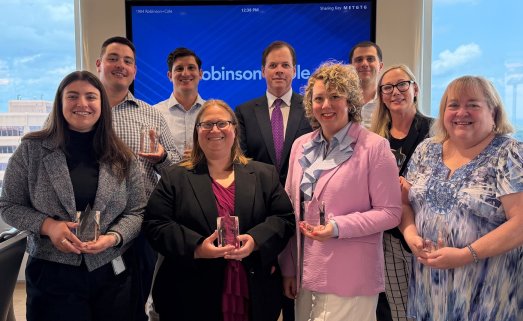
Robinson+Cole Honors 13 Lawyers and Business Professionals for Mentorship, Service, Inclusion, Wellbeing, and Innovation in 2026 Annual Awards
News
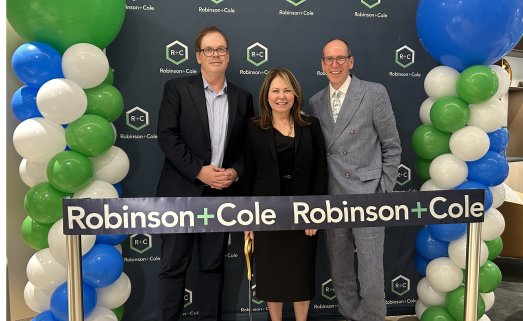
Robinson+Cole Expands Philadelphia Office at Landmark Liberty Place
News
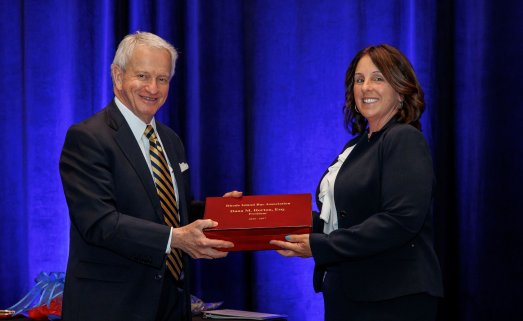
Dana Horton Ascends to Presidency of Rhode Island Bar Association
News
Robinson+Cole Advances in National 2026 Pro Bono Rankings
Robinson+Cole continues to gain national recognition for its commitment to pro bono service, earning improved placements in both The American Lawyer's 2026 Pro Bono Scorecard and Law360 Pulse's 2026 Pro Bono Rankings. The firm was ranked #91 in The American Lawyer's 2026 Pro Bono Scorecard, moving up two spots from the previous year. R+C also climbed nine positions in Law360 Pulse's 2026 Pro Bono Rankings for firms with 250-600 attorneys, rising to #16 in its category. Now in his third year as chair of Robinson+Cole's Pro Bono Committee, Seth Orkand credits the firm's continued progress to the strong culture of service embraced across the organization. "The momentum behind our pro bono program continues to grow alongside our firm," said Seth. "It's rewarding to see so many lawyers and professional staff embrace opportunities to make a meaningful difference. We're proud of what we've accomplished and remain focused on expanding our impact in the communities we serve." In The American Lawyer's 2026 Pro Bono Scorecard, which ranks Am Law 200 firms based on work performed by U.S.-based lawyers, R+C achieved strong results across both key metrics: average pro bono hours per lawyer and the percentage of lawyers contributing 20 or more pro bono hours during 2025. The firm posted scores of 24.9% and 29.5%, respectively, outperforming many firms with significantly larger attorney headcounts. Calculations are based on lawyer counts as of December 31, 2025. Learn more and view the scorecard. The firm's strong showing was also reflected in Law360 Pulse's 2026 Pro Bono Rankings. R+C's rise to #16 among firms with 250-600 attorneys underscores the continued growth of its pro bono program and the dedication of its attorneys to serving individuals and organizations in need. The rankings are based on average pro bono hours per lawyer and the percentage of attorneys contributing at least 20 hours of pro bono service.
News
Robinson+Cole Expands Managed Care + ERISA Litigation Team with Key Additions
Robinson+Cole announced that E. Sean Medina has joined the firm as a partner in its Managed Care + ERISA Litigation group. Medina’s arrival marks another step in the group’s ongoing expansion, enhancing its ability to serve clients facing increasingly complex managed care, Employee Retirement Income Security Act (ERISA), payor-provider, and other business-critical disputes. An experienced managed care and commercial litigator, Medina has represented managed care organizations, health insurers, and other industry clients for nearly 20 years in complex, high-stakes litigation and arbitration matters, including payor-provider disputes, ERISA litigation, class actions, state statutory claims, commercial disputes, and disputes involving Medicaid contract bids. He brings extensive experience guiding clients through all phases of litigation, from pre-suite strategy through trial and appeal. “We’re welcoming Sean to Robinson+Cole at a time of significant growth for our practice,” said Matthew P. Mazzola, co-chair of the firm’s Managed Care + ERISA Litigation group. “As demand for sophisticated counsel in the managed care and ERISA space continues to grow, Sean’s proven litigation experience, industry insight, and strategic approach will further strengthen our ability to help clients navigate their most challenging matters. His first-chair trial experience and deep understanding of the managed care industry make him a valuable addition to our team.” “Robinson+Cole has built an impressive Managed Care + ERISA Litigation practice and a reputation for delivering exceptional client service,” said Medina. “The firm’s collaborative culture and practical approach to helping clients navigate complex business and regulatory challenges made this opportunity especially compelling. I look forward to contributing to the group's continued success and helping our clients achieve their business objectives.” Medina's addition is complemented by the arrival of Mary Kate McDevitt, who also joins the firm’s Managed Care + ERISA Litigation group. An associate in the Philadelphia office, McDevitt’s practice concentrates on defending managed care organizations, life and disability insurers, plan administrators, employers, and fiduciaries in disputes arising under ERISA and other state and federal laws. She also brings experience across a broad range of litigation matters, including False Claims Act and qui tam actions, government enforcement, compliance, white-collar litigation, and cybersecurity and privacy disputes. Robinson+Cole’s Managed Care + ERISA Litigation group has experienced significant growth over the past year, reflecting the firm’s broader strategic investment in attracting top talent and strengthening key practices to meet clients’ evolving needs. Now 20 lawyers strong, the group brings together accomplished litigators who collaborate seamlessly across disciplines, reinforcing the firm’s commitment to delivering exceptional service, innovative solutions, and results that consistently meet and exceed client expectations.
News
Robinson+Cole Honored at 2026 Connecticut Business Excellence Awards
News
Kate Dion Examines Legal Questions Surrounding NCAA Eligibility Changes
Education industry team chair and Professional + Collegiate Sports industry team member Kathleen E. Dion shared insights on the rapidly evolving legal framework governing college athletics in the article, "A series of court rulings turned college football upside down. What's next?" published by USA Today on August 26, 2026. The article examines the legal and practical implications of recent court decisions and NCAA policy changes that have created uncertainty around athlete eligibility, including the possibility of former college football players returning from NFL training camps to compete in college athletics. Addressing the growing tension between NCAA oversight and conference-level governance, Kate noted that recent court rulings may not necessarily invalidate rules adopted independently by athletic conferences. "While state-court injunctions against NCAA-wide eligibility restrictions certainly create legal uncertainty, conferences may believe those decisions do not automatically invalidate their own independently adopted rules," she said. "Whether that distinction ultimately holds up will depend on the particular conference, the rule being challenged, and the legal theory at issue." The article explores how ongoing litigation, regulatory changes, and conference responses are reshaping the landscape of college athletics and raising new legal questions about eligibility, governance, and athlete participation. Read the article.
News
Robinson+Cole Unites Multidisciplinary Sports Capabilities Under New Industry Team
Today, Robinson+Cole announced the formalization of its Professional + Collegiate Sports industry team, bringing together attorneys and professionals from the firm’s Immigration, Labor + Employment, Litigation, Education, Real Estate, Construction Law, Intellectual Property, Data Privacy, and Artificial Intelligence practices. The team draws on the firm’s extensive experience in these areas to provide coordinated counsel to sports leagues and teams, institutions, talent—athletes and coaches, investors, and sports-related businesses as they navigate issues involving name, image, and likeness (NIL), Title IX compliance, global mobility and sports tourism, media rights, private investment, emerging technologies, venue development, and the continued growth of women’s sports. "The sports industry represents an estimated $2.3 trillion global economy, and its continued growth is creating both opportunities and complexity across professional and collegiate athletics," said Robert C. Seiger, Chair of the new team. "As the sports industry continues to evolve, clients are increasingly seeking counsel that spans multiple disciplines and aligns with their broader strategic objectives. The formalization of this team reflects that demand and our commitment to serving clients across the sports ecosystem through an integrated approach." The team's focus will center on three strategic areas: Sports Immigration and Talent Mobility: Visa strategy, athlete and coach immigration, executive movement, global talent support, compliance, and mobility planning. Sports Venues, Infrastructure, and Development: Stadium and arena projects, training facilities, leasing and real estate transactions, construction and infrastructure matters, public and private financing, naming rights, sponsorship arrangements, and land use considerations. Collegiate Athletics and Institutional Risk Management: NIL matters, Title IX compliance, eligibility issues, employment matters, governance, investigations, litigation, licensing, and institutional risk management. Robinson+Cole's work spans athlete and executive mobility, intellectual property protection, commercial transactions, venue development, employment matters, investigations, litigation, and regulatory compliance. Representative matters include providing immigration and mobility services for NHL, NFL, MLS, and NWSL organizations, obtaining an industry-first O-1 visa for an IndyCar race team, representing professional race drivers and teams, managing trademark matters for high-profile sports figures, advising a WNBA organization on the design and construction of a new training facility, and handling real estate and leasing matters involving major sports properties. "This team reflects Robinson+Cole’s significant strength and capability across multiple disciplines to address the full range of issues facing sports organizations," said J. Michael Wirvin, the firm’s Managing Partner. "Many of the challenges in today’s sports industry do not fit neatly within a single practice area. By formalizing this effort, we are creating a more coordinated experience for clients while positioning the firm to continue growing alongside this dynamic industry." Beyond its client work, Robinson+Cole is actively engaged in advancing the sports industry through leadership, scholarship, and engagement. Team members regularly contribute to national conversations on emerging sports law developments and are frequently sought by media outlets for commentary on issues affecting professional and collegiate athletics, most recently USA Today and the Sports Business Journal. They also participate in leading industry organizations, such as the Sports Lawyers Association, where Seiger currently serves as Chair of the Immigration Committee. The firm is recognized for its role at the intersection of sports and global talent mobility.
News
Former Massachusetts False Claims Division Chief Amy Crafts Joins Robinson+Cole
Robinson+Cole announced that former Massachusetts False Claims Division Chief Amy Crafts has joined the firm's Business Litigation + Dispute Resolution group as a partner in its Boston office. Drawing on more than two decades of experience, Crafts represents businesses and executives navigating government investigations, enforcement matters, internal and independent investigations, regulatory compliance issues, and complex commercial disputes. Before joining Robinson+Cole, Crafts spent more than a decade in the Massachusetts Attorney General's Office, including as Chief of the False Claims Division. There, she supervised investigations and litigation involving alleged fraud in state contracting, consumer protection violations, and False Claims Act enforcement matters. Her government experience provides clients with valuable insight into how enforcement authorities investigate potential violations, assess risk, and evaluate matters involving civil and criminal exposure. "Amy is an accomplished litigator whose experience on both sides of government enforcement matters provides clients with valuable insight into regulatory enforcement, risk management, and complex litigation," said Edward J. Heath, Robinson+Cole Business Litigation group chair. "Her arrival further strengthens our litigation capabilities in Boston at an exciting time. As we continue to invest in our presence in the market, including our recent move to 53 State Street, we remain focused on attracting exceptional talent and helping clients navigate their most complex and high-stakes matters." Crafts represents clients across a range of industries and counsels organizations facing government investigations, enforcement actions, internal investigations, and compliance challenges. Her experience includes matters involving alleged fraudulent business practices, consumer protection issues, False Claims Act allegations, healthcare fraud investigations, and complex commercial litigation. "Robinson+Cole's commitment to delivering sophisticated litigation counsel across industries, coupled with the strength of its platform in Boston and throughout the Northeast, makes this an exciting opportunity," said Crafts. "I look forward to collaborating with my new colleagues and helping clients address their most significant business and regulatory challenges." A recognized leader in her field, Crafts was recently named a 2026 "Top Women of Law" honoree by Massachusetts Lawyers Weekly as well as a "Massachusetts Go To Lawyer" in the area of Life Sciences/Healthcare for 2026 and in Commercial/Consumer Law for 2025. She also is ranked in Chambers USA for Litigation: White-Collar Crime & Government Investigations. Crafts' arrival marks the latest addition to Robinson+Cole's expanding litigation platform. Last month, the firm welcomed Managed Care + ERISA Litigation partner E. Sean Medina, further strengthening its capabilities in complex disputes. In June, Victor R. Salgado and Eric Del Pozo also joined the firm’s business litigation practice. Salgado previously served as a federal prosecutor with the U.S. Department of Justice in Washington, DC, and as a Deputy Attorney General in the New Jersey Division of Criminal Justice. Del Pozo brings extensive government experience as a former Assistant Solicitor General in the New York Attorney General's Office and prosecutor with the Manhattan District Attorney's Office. Together, these additions underscore Robinson+Cole's strategic investment in enhancing its deep bench of litigators with significant government, enforcement, and trial experience.
News
Robinson+Cole Recognized Across Practices and Regions with 46 Chambers USA 2026 Rankings
News
Robinson+Cole Honors 13 Lawyers and Business Professionals for Mentorship, Service, Inclusion, Wellbeing, and Innovation in 2026 Annual Awards
News
Robinson+Cole Expands Philadelphia Office at Landmark Liberty Place
News
Dana Horton Ascends to Presidency of Rhode Island Bar Association
News
Robinson+Cole Advances in National 2026 Pro Bono Rankings
Robinson+Cole continues to gain national recognition for its commitment to pro bono service, earning improved placements in both The American Lawyer's 2026 Pro Bono Scorecard and Law360 Pulse's 2026 Pro Bono Rankings. The firm was ranked #91 in The American Lawyer's 2026 Pro Bono Scorecard, moving up two spots from the previous year. R+C also climbed nine positions in Law360 Pulse's 2026 Pro Bono Rankings for firms with 250-600 attorneys, rising to #16 in its category. Now in his third year as chair of Robinson+Cole's Pro Bono Committee, Seth Orkand credits the firm's continued progress to the strong culture of service embraced across the organization. "The momentum behind our pro bono program continues to grow alongside our firm," said Seth. "It's rewarding to see so many lawyers and professional staff embrace opportunities to make a meaningful difference. We're proud of what we've accomplished and remain focused on expanding our impact in the communities we serve." In The American Lawyer's 2026 Pro Bono Scorecard, which ranks Am Law 200 firms based on work performed by U.S.-based lawyers, R+C achieved strong results across both key metrics: average pro bono hours per lawyer and the percentage of lawyers contributing 20 or more pro bono hours during 2025. The firm posted scores of 24.9% and 29.5%, respectively, outperforming many firms with significantly larger attorney headcounts. Calculations are based on lawyer counts as of December 31, 2025. Learn more and view the scorecard. The firm's strong showing was also reflected in Law360 Pulse's 2026 Pro Bono Rankings. R+C's rise to #16 among firms with 250-600 attorneys underscores the continued growth of its pro bono program and the dedication of its attorneys to serving individuals and organizations in need. The rankings are based on average pro bono hours per lawyer and the percentage of attorneys contributing at least 20 hours of pro bono service.
News
Robinson+Cole Expands Managed Care + ERISA Litigation Team with Key Additions
Robinson+Cole announced that E. Sean Medina has joined the firm as a partner in its Managed Care + ERISA Litigation group. Medina’s arrival marks another step in the group’s ongoing expansion, enhancing its ability to serve clients facing increasingly complex managed care, Employee Retirement Income Security Act (ERISA), payor-provider, and other business-critical disputes. An experienced managed care and commercial litigator, Medina has represented managed care organizations, health insurers, and other industry clients for nearly 20 years in complex, high-stakes litigation and arbitration matters, including payor-provider disputes, ERISA litigation, class actions, state statutory claims, commercial disputes, and disputes involving Medicaid contract bids. He brings extensive experience guiding clients through all phases of litigation, from pre-suite strategy through trial and appeal. “We’re welcoming Sean to Robinson+Cole at a time of significant growth for our practice,” said Matthew P. Mazzola, co-chair of the firm’s Managed Care + ERISA Litigation group. “As demand for sophisticated counsel in the managed care and ERISA space continues to grow, Sean’s proven litigation experience, industry insight, and strategic approach will further strengthen our ability to help clients navigate their most challenging matters. His first-chair trial experience and deep understanding of the managed care industry make him a valuable addition to our team.” “Robinson+Cole has built an impressive Managed Care + ERISA Litigation practice and a reputation for delivering exceptional client service,” said Medina. “The firm’s collaborative culture and practical approach to helping clients navigate complex business and regulatory challenges made this opportunity especially compelling. I look forward to contributing to the group's continued success and helping our clients achieve their business objectives.” Medina's addition is complemented by the arrival of Mary Kate McDevitt, who also joins the firm’s Managed Care + ERISA Litigation group. An associate in the Philadelphia office, McDevitt’s practice concentrates on defending managed care organizations, life and disability insurers, plan administrators, employers, and fiduciaries in disputes arising under ERISA and other state and federal laws. She also brings experience across a broad range of litigation matters, including False Claims Act and qui tam actions, government enforcement, compliance, white-collar litigation, and cybersecurity and privacy disputes. Robinson+Cole’s Managed Care + ERISA Litigation group has experienced significant growth over the past year, reflecting the firm’s broader strategic investment in attracting top talent and strengthening key practices to meet clients’ evolving needs. Now 20 lawyers strong, the group brings together accomplished litigators who collaborate seamlessly across disciplines, reinforcing the firm’s commitment to delivering exceptional service, innovative solutions, and results that consistently meet and exceed client expectations.
News
Robinson+Cole Honored at 2026 Connecticut Business Excellence Awards
News
Kate Dion Examines Legal Questions Surrounding NCAA Eligibility Changes
Education industry team chair and Professional + Collegiate Sports industry team member Kathleen E. Dion shared insights on the rapidly evolving legal framework governing college athletics in the article, "A series of court rulings turned college football upside down. What's next?" published by USA Today on August 26, 2026. The article examines the legal and practical implications of recent court decisions and NCAA policy changes that have created uncertainty around athlete eligibility, including the possibility of former college football players returning from NFL training camps to compete in college athletics. Addressing the growing tension between NCAA oversight and conference-level governance, Kate noted that recent court rulings may not necessarily invalidate rules adopted independently by athletic conferences. "While state-court injunctions against NCAA-wide eligibility restrictions certainly create legal uncertainty, conferences may believe those decisions do not automatically invalidate their own independently adopted rules," she said. "Whether that distinction ultimately holds up will depend on the particular conference, the rule being challenged, and the legal theory at issue." The article explores how ongoing litigation, regulatory changes, and conference responses are reshaping the landscape of college athletics and raising new legal questions about eligibility, governance, and athlete participation. Read the article.
News
Robinson+Cole Unites Multidisciplinary Sports Capabilities Under New Industry Team
Today, Robinson+Cole announced the formalization of its Professional + Collegiate Sports industry team, bringing together attorneys and professionals from the firm’s Immigration, Labor + Employment, Litigation, Education, Real Estate, Construction Law, Intellectual Property, Data Privacy, and Artificial Intelligence practices. The team draws on the firm’s extensive experience in these areas to provide coordinated counsel to sports leagues and teams, institutions, talent—athletes and coaches, investors, and sports-related businesses as they navigate issues involving name, image, and likeness (NIL), Title IX compliance, global mobility and sports tourism, media rights, private investment, emerging technologies, venue development, and the continued growth of women’s sports. "The sports industry represents an estimated $2.3 trillion global economy, and its continued growth is creating both opportunities and complexity across professional and collegiate athletics," said Robert C. Seiger, Chair of the new team. "As the sports industry continues to evolve, clients are increasingly seeking counsel that spans multiple disciplines and aligns with their broader strategic objectives. The formalization of this team reflects that demand and our commitment to serving clients across the sports ecosystem through an integrated approach." The team's focus will center on three strategic areas: Sports Immigration and Talent Mobility: Visa strategy, athlete and coach immigration, executive movement, global talent support, compliance, and mobility planning. Sports Venues, Infrastructure, and Development: Stadium and arena projects, training facilities, leasing and real estate transactions, construction and infrastructure matters, public and private financing, naming rights, sponsorship arrangements, and land use considerations. Collegiate Athletics and Institutional Risk Management: NIL matters, Title IX compliance, eligibility issues, employment matters, governance, investigations, litigation, licensing, and institutional risk management. Robinson+Cole's work spans athlete and executive mobility, intellectual property protection, commercial transactions, venue development, employment matters, investigations, litigation, and regulatory compliance. Representative matters include providing immigration and mobility services for NHL, NFL, MLS, and NWSL organizations, obtaining an industry-first O-1 visa for an IndyCar race team, representing professional race drivers and teams, managing trademark matters for high-profile sports figures, advising a WNBA organization on the design and construction of a new training facility, and handling real estate and leasing matters involving major sports properties. "This team reflects Robinson+Cole’s significant strength and capability across multiple disciplines to address the full range of issues facing sports organizations," said J. Michael Wirvin, the firm’s Managing Partner. "Many of the challenges in today’s sports industry do not fit neatly within a single practice area. By formalizing this effort, we are creating a more coordinated experience for clients while positioning the firm to continue growing alongside this dynamic industry." Beyond its client work, Robinson+Cole is actively engaged in advancing the sports industry through leadership, scholarship, and engagement. Team members regularly contribute to national conversations on emerging sports law developments and are frequently sought by media outlets for commentary on issues affecting professional and collegiate athletics, most recently USA Today and the Sports Business Journal. They also participate in leading industry organizations, such as the Sports Lawyers Association, where Seiger currently serves as Chair of the Immigration Committee. The firm is recognized for its role at the intersection of sports and global talent mobility.
News
Former Massachusetts False Claims Division Chief Amy Crafts Joins Robinson+Cole
Robinson+Cole announced that former Massachusetts False Claims Division Chief Amy Crafts has joined the firm's Business Litigation + Dispute Resolution group as a partner in its Boston office. Drawing on more than two decades of experience, Crafts represents businesses and executives navigating government investigations, enforcement matters, internal and independent investigations, regulatory compliance issues, and complex commercial disputes. Before joining Robinson+Cole, Crafts spent more than a decade in the Massachusetts Attorney General's Office, including as Chief of the False Claims Division. There, she supervised investigations and litigation involving alleged fraud in state contracting, consumer protection violations, and False Claims Act enforcement matters. Her government experience provides clients with valuable insight into how enforcement authorities investigate potential violations, assess risk, and evaluate matters involving civil and criminal exposure. "Amy is an accomplished litigator whose experience on both sides of government enforcement matters provides clients with valuable insight into regulatory enforcement, risk management, and complex litigation," said Edward J. Heath, Robinson+Cole Business Litigation group chair. "Her arrival further strengthens our litigation capabilities in Boston at an exciting time. As we continue to invest in our presence in the market, including our recent move to 53 State Street, we remain focused on attracting exceptional talent and helping clients navigate their most complex and high-stakes matters." Crafts represents clients across a range of industries and counsels organizations facing government investigations, enforcement actions, internal investigations, and compliance challenges. Her experience includes matters involving alleged fraudulent business practices, consumer protection issues, False Claims Act allegations, healthcare fraud investigations, and complex commercial litigation. "Robinson+Cole's commitment to delivering sophisticated litigation counsel across industries, coupled with the strength of its platform in Boston and throughout the Northeast, makes this an exciting opportunity," said Crafts. "I look forward to collaborating with my new colleagues and helping clients address their most significant business and regulatory challenges." A recognized leader in her field, Crafts was recently named a 2026 "Top Women of Law" honoree by Massachusetts Lawyers Weekly as well as a "Massachusetts Go To Lawyer" in the area of Life Sciences/Healthcare for 2026 and in Commercial/Consumer Law for 2025. She also is ranked in Chambers USA for Litigation: White-Collar Crime & Government Investigations. Crafts' arrival marks the latest addition to Robinson+Cole's expanding litigation platform. Last month, the firm welcomed Managed Care + ERISA Litigation partner E. Sean Medina, further strengthening its capabilities in complex disputes. In June, Victor R. Salgado and Eric Del Pozo also joined the firm’s business litigation practice. Salgado previously served as a federal prosecutor with the U.S. Department of Justice in Washington, DC, and as a Deputy Attorney General in the New Jersey Division of Criminal Justice. Del Pozo brings extensive government experience as a former Assistant Solicitor General in the New York Attorney General's Office and prosecutor with the Manhattan District Attorney's Office. Together, these additions underscore Robinson+Cole's strategic investment in enhancing its deep bench of litigators with significant government, enforcement, and trial experience.