













Robinson Cole LLP
High Contrast Mode

Jennifer L. Shanley focuses her practice on U.S. business immigration matters. She is a member of our firm's Immigration Practice group.

Immigration

Jennifer helps multinational companies, particularly in the manufacturing, aerospace, financial and pharmaceutical industries, staff their U.S. offices by obtaining appropriate immigration status for employees. Her efforts allow research organizations, academic institutions, and manufacturing, chemical, pharmaceutical, and biotechnology companies, including some Fortune 100 companies, to retain key business people, scientists, researchers, and other professionals. She obtains both temporary and permanent immigration status for key workers. Her practice encompasses all business-related nonimmigrant and immigrant petitions. Jennifer frequently handles multinational intracompany transfers, transfers for individuals with specialized knowledge, as well as petitions for outstanding researchers and individuals with extraordinary ability. She has helped secure immigration approvals for hundreds of employees, helping business clients attract and secure top talented individuals across a range of industries. While doing so, Jennifer uses her Six Sigma Green Belt certification to streamline the immigration process for clients, to decrease process variation and increase value.

Employment Eligibility – Verification + Compliance

Jennifer counsels employers on the Immigration Reform and Control Act and related issues, including employment verifications, I-9 matters, and E-Verify. She also provides guidance with export control regulations.

Jennifer regularly writes about immigration-related topics. Her recent article, 'H-1B and Beyond: What are the Options for Hiring Foreign Nationals?' published in Industry Week, discusses the most common work-authorized status categories through which manufacturers can sponsor foreign nationals to fill at least some of the unprecedented 800,000 job openings. She also co-authored the piece “How Fund Managers May Increase the Likelihood That H-1B Sponsorship for Quants and Data Scientist Employees Will Be Approved," published in Hedge Fund Law Report.

Pro Bono

Jennifer is committed to pro bono service. She recently assisted with our firm’s successful effort to secure the required immigration status for a dancer from Bolivia by demonstrating that he was one of the top ballet dancers in his field. The successful petition permitted the Bolivian dancer to join a ballet company in New York.

In addition to her practice, Jennifer is committed to serving her community, is serving as Chair of the Engagement and Connectivity Task Force at Robinson+Cole, and is an active member of Robinson+Cole’s Women’s Committee, which promotes the success of women lawyers and its Safety & Health Committee, which promotes the safety and health of our firm’s employees.

Prior to joining Robinson+Cole, Jennifer served as a law clerk to the Honorable F. Herbert Gruendel of the Connecticut Appellate Court. While attending law school, she served as the business managing editor of the Quinnipiac Probate Law Journal. She also served as a judicial intern for the Honorable Janet C. Hall at the United States District Court, District of Connecticut.
  • Quinnipiac University School of Law (Juris Doctor, summa cum laude)
  • Fordham University (Bachelors, summa cum laude)
    • B.A.

  • State of Connecticut
  • U.S. District Court, District of Connecticut

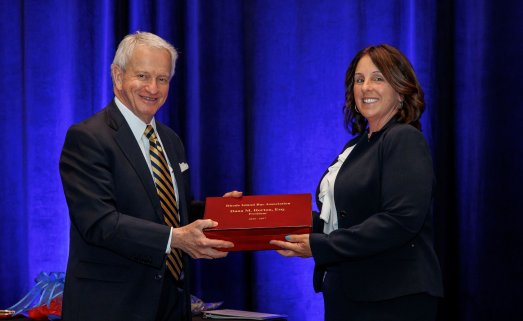
Recognized as the 2025 LeadHER Award Recipient by Women United

Hartford Business Journal, 2025 "Forty Under 40" Honoree  

Selected as a Rising Star to the Connecticut Super Lawyers list from 2019 to 2025

Recognized as a New Leader in the Law by the Connecticut Law Tribune, 2021

Robinson+Cole Community Service Award Recipient, 2021

Selected by her peers for inclusion in the 2025, 2024 and 2023 editions of Best Lawyers: Ones to Watch in the area of Immigration Law

American Bar Association (2013 - Present)

Connecticut Bar Association (2013 - Present)

American Immigration Lawyers Association (2015 - Present)

Women in Manufacturing® Association (WiM)
Member
Secretary of the Board, Connecticut Chapter (2022 - present)

Special Olympics Young Professionals Group
Former Volunteer

Special Olympics Connecticut
Former Volunteer

United Way of Central and Northeastern Connecticut
Member, Board of Directors 
Member, Advocacy Committee
Former Member, Finance Committee

Women United
Chair
Prior Vice Chair
Prior Co-Chair, Power of the Purse
Prior Chair, New Member Committee
Member of Engagement Committee

Experience


Securing Green Cards

Successfully assisted manufacturing companies, financial institutions, pharmaceutical and biotechnology companies, among others, securing green cards for outstanding researchers, individuals of extraordinary ability, intracompany transferees and general employment positions.

Read More

L-1 Petition Approvals

Files and secures approval for over 200 L-1 petitions each year on behalf of a Fortune 100 aircraft manufacturing company, financial institutions, pharmaceutical and biotechnology companies, among others, which allows for intracompany transfers of managers, executives, and individuals with specialized knowledge.

Read More

E-2 Treaty Trader Status Registration

Successfully registered multiple companies for E-2 treaty trader status with the U.S. Consulates in Italy, Mexico, and the United Kingdom.


Publications


Students: Union Organizing and Employee Status in 2026 teaser
March 11, 2026

Students: Union Organizing and Employee Status in 2026

October 28, 2025

How To Stay I-9 Compliant in Today’s Immigration World

Industry Today

The current administration has ushered in an era of increasing immigration complexity, especially in the area of Temporary Protected Status. What is TPS? Temporary Protected Status (TPS) is a country-specific humanitarian program impacting thousands of workers across industries, including manufacturing. In fact, according to a March 2025 report, an estimated 570,000 TPS beneficiaries are working in the U.S. labor force; 70,000 of which are in the manufacturing industry. TPS is an immigration status for foreign nationals whose home countries the Department of Homeland Security (DHS) has determined to be unsafe due to conditions such as environmental disasters, armed conflicts, epidemics, or other extraordinary conditions.  Not only does TPS temporarily protect eligible individuals from deportation but also allows beneficiaries to work legally in the U.S. throughout the duration of their designated status, which is defined through a TPS-based Employment Authorization Document (EAD). As of October 10, 2025, there are currently 12 countries designated for TPS: Burma, El Salvador, Ethiopia, Haiti, Lebanon, Somalia, South Sudan, Sudan, Syria, Ukraine, Venezuela, and Yemen. Several of these designations are the subjects of active and ongoing federal litigation, the basis of which is largely the Trump administration’s efforts to terminate various TPS designations. In recent months, DHS has issued key updates regarding TPS extensions, redesignations, and EAD validity – all of which impact how employers complete and update Form I-9, DHS’s Employment Eligibility Verification form. Understanding how to best navigate these changes is critical for employers to ensure compliant employment practices, avoid potential penalties, and maintain workforce stability. Venezuela as a TPS Case Study The TPS designation for Venezuela has been extended, redesignated and terminated multiple times by DHS, highlighting how complex I-9 compliance can be for U.S. employers in the wake of federal developments and ongoing litigation. Most recently, DHS’s termination of Venezuela’s TPS designations have been the subject of an ongoing federal court battle, resulting in litigation-driven uncertainties that directly impact how employers verify their employees’ work authorization. The ongoing litigation has forced manufacturing employers to repeatedly update I-9 records and reverify work authorization for impacted employees each time DHS announcements and court rulings change the program’s validity period. As of October 3, 2025, the 2021 designation for Venezuela is slated to terminate on November 7, 2025.  This development comes from DHS Secretary Noem’s publication in the Federal Register announcing the agency’s termination of the 2021 designation. DHS Secretary Noem also terminated the 2023 designation earlier this year, where termination took effect on April 7, 2025. Shortly before it was to take effect, a federal court partially blocked the termination, preserving TPS for only a narrow carve-out of impacted individuals. On September 5, 2025, a federal district court granted summary judgment in favor of TPS plaintiffs, leading DHS to reinstate the 2023 Venezuela designation. However, on October 3, 2025, the U.S Supreme Court granted DHS’s request to stay the district court decision that had reinstated the 2023 designation. In other words, DHS is now permitted to consider the 2023 designation terminated as of April 2025, rendering impacted individuals deportable and without work authorization while the litigation continues. What does this mean for employers of Venezuelan TPS beneficiaries? After the Supreme Court ruling, the U.S. Citizenship and Immigration Services (USCIS) updated its Venezuela TPS website to confirm that the Supreme Court had allowed the termination of the 2023 designation to “take immediate effect” and that “TPS beneficiaries who received an Employment Authorization Document on or before February 5, 2025, with a ‘Card Expires’ date of October 2, 2026, will maintain work authorization until October 2, 2026.” USCIS has not published updated guidance on the I-9 central page since the Supreme Court ruling, so additional guidance regarding its implementation of the termination may be forthcoming.1 Employers of impacted TPS beneficiaries may wish to contact immigration counsel for advice  on identifying their impacted workforce and next steps to consider. Staying current with TPS-related announcements, training HR personnel accordingly, and perhaps employing immigration compliance counsel, might be appropriate  for maintaining compliance and avoiding discriminatory practices. As DHS continues to issue new guidance and TPS designations shift with geopolitical realities, a flexible and informed compliance strategy is the best defense against risk, and the best way to support a diverse, authorized workforce. I-9 Compliance is A Moving Target, So What May Employers Consider Doing? TPS provides vital humanitarian protection — and critical workforce continuity — across domains including the manufacturing industry. But for employers, it can create a level of compliance complexity that cannot be ignored. Failure to comply with Form I-9 requirements, including the correct handling of TPS documentation and extensions, can result in civil penalties, discrimination claims, or disruption to business operations. Employers must invest in proactive education, systems updates, and consistent internal practices to stay ahead of the evolving regulatory landscape. To remain I-9 compliant, employers, HR departments, and hiring managers may want to consider utilizing an I-9 Compliance checklist, including the following: Stay Informed Directly from the Source (the federal government) ✓ Monitor updates in the Federal Register. ✓ Review Resources for Employers USCIS Handbook for Employers (M-274): https://www.uscis.gov/i-9-central DHS TPS Updates: https://www.uscis.gov/humanitarian/temporary-protected-status Federal Register Notices: https://www.federalregister.gov/ E-Verify Program: https://www.e-verify.gov/ ✓ For high-impact workforce decisions, consult with legal immigration counsel. Review and Update I-9s, When Needed ✓ If an employee presents a facially expired EAD that has been auto-extended under TPS, refer to the appropriate DHS notice and ensure the expiration date matches. ✓ Update Section 2 of Form I-9 correctly, noting the extension, EAD category (TPS), and referencing the Federal Register citation. ✓ Do not reverify until the auto-extension period ends. ✓ An expired EAD with a matching auto-extension from DHS may be valid. ✓ A new EAD with updated dates and codes should be reviewed carefully for consistency. ✓ Accept only documents that meet the DHS requirements for List A, B, or C. Avoid Discriminatory Practices ✓ Ensure that all employees are treated consistently throughout the employment verification process. ✓ Be aware of potential national origin discrimination risks when asking for documentation or making employment decisions. For manufacturing employers, workforce needs are often urgent and high-volume, so the stakes of I-9 compliance are particularly high. Employers must stay current with programs like TPS and others that grant employment authorization to ensure their workforce remain authorized. Venezuela TPS is just one example of how rapidly employment eligibility rules change, illustrating just how critical investing in proactive I-9 compliance counsel and systems is.

Manufacturing Industry Team Out + About teaser
November 14, 2024

Manufacturing Industry Team Out + About

Students: Union Organizing and Employee Status in 2026 teaser
March 11, 2026

Students: Union Organizing and Employee Status in 2026

October 28, 2025

How To Stay I-9 Compliant in Today’s Immigration World

Industry Today

The current administration has ushered in an era of increasing immigration complexity, especially in the area of Temporary Protected Status. What is TPS? Temporary Protected Status (TPS) is a country-specific humanitarian program impacting thousands of workers across industries, including manufacturing. In fact, according to a March 2025 report, an estimated 570,000 TPS beneficiaries are working in the U.S. labor force; 70,000 of which are in the manufacturing industry. TPS is an immigration status for foreign nationals whose home countries the Department of Homeland Security (DHS) has determined to be unsafe due to conditions such as environmental disasters, armed conflicts, epidemics, or other extraordinary conditions.  Not only does TPS temporarily protect eligible individuals from deportation but also allows beneficiaries to work legally in the U.S. throughout the duration of their designated status, which is defined through a TPS-based Employment Authorization Document (EAD). As of October 10, 2025, there are currently 12 countries designated for TPS: Burma, El Salvador, Ethiopia, Haiti, Lebanon, Somalia, South Sudan, Sudan, Syria, Ukraine, Venezuela, and Yemen. Several of these designations are the subjects of active and ongoing federal litigation, the basis of which is largely the Trump administration’s efforts to terminate various TPS designations. In recent months, DHS has issued key updates regarding TPS extensions, redesignations, and EAD validity – all of which impact how employers complete and update Form I-9, DHS’s Employment Eligibility Verification form. Understanding how to best navigate these changes is critical for employers to ensure compliant employment practices, avoid potential penalties, and maintain workforce stability. Venezuela as a TPS Case Study The TPS designation for Venezuela has been extended, redesignated and terminated multiple times by DHS, highlighting how complex I-9 compliance can be for U.S. employers in the wake of federal developments and ongoing litigation. Most recently, DHS’s termination of Venezuela’s TPS designations have been the subject of an ongoing federal court battle, resulting in litigation-driven uncertainties that directly impact how employers verify their employees’ work authorization. The ongoing litigation has forced manufacturing employers to repeatedly update I-9 records and reverify work authorization for impacted employees each time DHS announcements and court rulings change the program’s validity period. As of October 3, 2025, the 2021 designation for Venezuela is slated to terminate on November 7, 2025.  This development comes from DHS Secretary Noem’s publication in the Federal Register announcing the agency’s termination of the 2021 designation. DHS Secretary Noem also terminated the 2023 designation earlier this year, where termination took effect on April 7, 2025. Shortly before it was to take effect, a federal court partially blocked the termination, preserving TPS for only a narrow carve-out of impacted individuals. On September 5, 2025, a federal district court granted summary judgment in favor of TPS plaintiffs, leading DHS to reinstate the 2023 Venezuela designation. However, on October 3, 2025, the U.S Supreme Court granted DHS’s request to stay the district court decision that had reinstated the 2023 designation. In other words, DHS is now permitted to consider the 2023 designation terminated as of April 2025, rendering impacted individuals deportable and without work authorization while the litigation continues. What does this mean for employers of Venezuelan TPS beneficiaries? After the Supreme Court ruling, the U.S. Citizenship and Immigration Services (USCIS) updated its Venezuela TPS website to confirm that the Supreme Court had allowed the termination of the 2023 designation to “take immediate effect” and that “TPS beneficiaries who received an Employment Authorization Document on or before February 5, 2025, with a ‘Card Expires’ date of October 2, 2026, will maintain work authorization until October 2, 2026.” USCIS has not published updated guidance on the I-9 central page since the Supreme Court ruling, so additional guidance regarding its implementation of the termination may be forthcoming.1 Employers of impacted TPS beneficiaries may wish to contact immigration counsel for advice  on identifying their impacted workforce and next steps to consider. Staying current with TPS-related announcements, training HR personnel accordingly, and perhaps employing immigration compliance counsel, might be appropriate  for maintaining compliance and avoiding discriminatory practices. As DHS continues to issue new guidance and TPS designations shift with geopolitical realities, a flexible and informed compliance strategy is the best defense against risk, and the best way to support a diverse, authorized workforce. I-9 Compliance is A Moving Target, So What May Employers Consider Doing? TPS provides vital humanitarian protection — and critical workforce continuity — across domains including the manufacturing industry. But for employers, it can create a level of compliance complexity that cannot be ignored. Failure to comply with Form I-9 requirements, including the correct handling of TPS documentation and extensions, can result in civil penalties, discrimination claims, or disruption to business operations. Employers must invest in proactive education, systems updates, and consistent internal practices to stay ahead of the evolving regulatory landscape. To remain I-9 compliant, employers, HR departments, and hiring managers may want to consider utilizing an I-9 Compliance checklist, including the following: Stay Informed Directly from the Source (the federal government) ✓ Monitor updates in the Federal Register. ✓ Review Resources for Employers USCIS Handbook for Employers (M-274): https://www.uscis.gov/i-9-central DHS TPS Updates: https://www.uscis.gov/humanitarian/temporary-protected-status Federal Register Notices: https://www.federalregister.gov/ E-Verify Program: https://www.e-verify.gov/ ✓ For high-impact workforce decisions, consult with legal immigration counsel. Review and Update I-9s, When Needed ✓ If an employee presents a facially expired EAD that has been auto-extended under TPS, refer to the appropriate DHS notice and ensure the expiration date matches. ✓ Update Section 2 of Form I-9 correctly, noting the extension, EAD category (TPS), and referencing the Federal Register citation. ✓ Do not reverify until the auto-extension period ends. ✓ An expired EAD with a matching auto-extension from DHS may be valid. ✓ A new EAD with updated dates and codes should be reviewed carefully for consistency. ✓ Accept only documents that meet the DHS requirements for List A, B, or C. Avoid Discriminatory Practices ✓ Ensure that all employees are treated consistently throughout the employment verification process. ✓ Be aware of potential national origin discrimination risks when asking for documentation or making employment decisions. For manufacturing employers, workforce needs are often urgent and high-volume, so the stakes of I-9 compliance are particularly high. Employers must stay current with programs like TPS and others that grant employment authorization to ensure their workforce remain authorized. Venezuela TPS is just one example of how rapidly employment eligibility rules change, illustrating just how critical investing in proactive I-9 compliance counsel and systems is.

Manufacturing Industry Team Out + About teaser
November 14, 2024

Manufacturing Industry Team Out + About

March 14, 2024

Male Allyship Helps Women Succeed In Manufacturing

Industry Today

Currently, the manufacturing industry is projected to have over two million vacant positions over the next decade. The representation of women to men in the industry is 30/70% respectively. In their article, Jen and Jeff discuss how male allies can help promote the advancement of women and help close the significant employment gap. Understanding the hurdles women face and creating a more supportive and flexible work environment are just two ways men can help in the hiring and retention of women in the industry. Read the article.

Manufacturing Industry Team Out + About teaser
July 21, 2023

Manufacturing Industry Team Out + About

Manufacturing Industry Team Out + About teaser
January 4, 2022

Manufacturing Industry Team Out + About

Manufacturing Industry Team Out + About teaser
January 4, 2022

Manufacturing Industry Team Out + About

September 15, 2021

H-1B and Beyond: What are the Options for Hiring Foreign Nationals?

Industry Week

The article discusses the extraordinary workforce gap that manufacturers are facing today, with more than 800,000 vacant jobs. To fill those jobs, manufacturers are turning to foreign nationals who can be sponsored through a variety of different work-authorized status categories, each with its own requirements and limitations. View the article.

Manufacturing Group 2020 Annual Report teaser
December 2020

Manufacturing Group 2020 Annual Report


March 14, 2024

Male Allyship Helps Women Succeed In Manufacturing

Industry Today

Currently, the manufacturing industry is projected to have over two million vacant positions over the next decade. The representation of women to men in the industry is 30/70% respectively. In their article, Jen and Jeff discuss how male allies can help promote the advancement of women and help close the significant employment gap. Understanding the hurdles women face and creating a more supportive and flexible work environment are just two ways men can help in the hiring and retention of women in the industry. Read the article.

Manufacturing Industry Team Out + About teaser
July 21, 2023

Manufacturing Industry Team Out + About

Manufacturing Industry Team Out + About teaser
January 4, 2022

Manufacturing Industry Team Out + About

Manufacturing Industry Team Out + About teaser
January 4, 2022

Manufacturing Industry Team Out + About

September 15, 2021

H-1B and Beyond: What are the Options for Hiring Foreign Nationals?

Industry Week

The article discusses the extraordinary workforce gap that manufacturers are facing today, with more than 800,000 vacant jobs. To fill those jobs, manufacturers are turning to foreign nationals who can be sponsored through a variety of different work-authorized status categories, each with its own requirements and limitations. View the article.

Manufacturing Group 2020 Annual Report teaser
December 2020

Manufacturing Group 2020 Annual Report


Events


Past

2025 Hartford Business Journal 40 Under Forty Awards

Sep 11 2025
Aqua Turf Club
Past

Creating Your Allyship Action Plan

Feb 19 2025
Women in Manufacturing's "Men as Allies 2025"
Past

2025 Hartford Business Journal 40 Under Forty Awards

Sep 11 2025
Aqua Turf Club
Past

Creating Your Allyship Action Plan

Feb 19 2025
Women in Manufacturing's "Men as Allies 2025"
Past

2024 Tri-State SHRM Conference

May 15 2024
Earth Expo & Convention Center at Mohegan Sun
Past

Allyship and Engaging Male Allies

Jan 22 2024
Women in Manufacturing (WiM) Winter Leadership Conference 2024
Past

2024 Tri-State SHRM Conference

May 15 2024
Earth Expo & Convention Center at Mohegan Sun
Past

Allyship and Engaging Male Allies

Jan 22 2024
Women in Manufacturing (WiM) Winter Leadership Conference 2024

News


March 12, 2026

Jen Shanley Recognized as the 2025 LeadHER by Women United

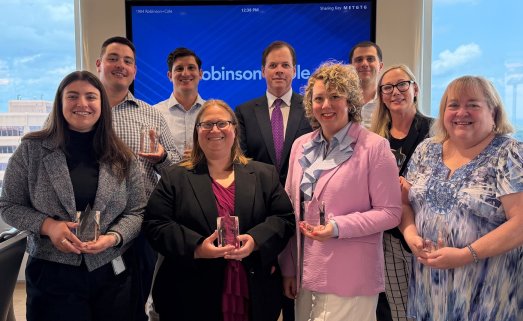
Immigration group partner Jennifer Shanley was recently recognized as the 2025 LeadHER Award recipient at the 2026 Women United Annual Meeting hosted on March 11, 2026, in Robinson+Cole’s Hartford office. The award recognizes a Women United leader who embodies excellence and is deeply passionate about raising funds and providing opportunities to women and families in the 860 region. Jen serves as Chair of Women United and as a member of United Way of Central and Northeastern Connecticut’s Board of Directors and Advocacy Committee.

United Way of Central and Northeastern Connecticut
Jen Shanley Recognized as the 2025 LeadHER by Women United teaser
November 6, 2025

Robinson+Cole Commends 62 Attorneys Recognized in 2025 Super Lawyers®

Recognition spans key regions and highlights the firm’s seasoned practitioners and emerging leaders in many business transactions and litigation practices
Robinson+Cole Commends 62 Attorneys Recognized in 2025 <i>Super Lawyers</i>® teaser
October 31, 2025

Jen Shanley and Carmen Ruiz Provide Roadmap for I-9 Compliance in Era of Immigration Complexity

Industry Today
March 12, 2026

Jen Shanley Recognized as the 2025 LeadHER by Women United

Immigration group partner Jennifer Shanley was recently recognized as the 2025 LeadHER Award recipient at the 2026 Women United Annual Meeting hosted on March 11, 2026, in Robinson+Cole’s Hartford office. The award recognizes a Women United leader who embodies excellence and is deeply passionate about raising funds and providing opportunities to women and families in the 860 region. Jen serves as Chair of Women United and as a member of United Way of Central and Northeastern Connecticut’s Board of Directors and Advocacy Committee.

United Way of Central and Northeastern Connecticut
Jen Shanley Recognized as the 2025 LeadHER by Women United teaser
November 6, 2025

Robinson+Cole Commends 62 Attorneys Recognized in 2025 Super Lawyers®

Recognition spans key regions and highlights the firm’s seasoned practitioners and emerging leaders in many business transactions and litigation practices
Robinson+Cole Commends 62 Attorneys Recognized in 2025 <i>Super Lawyers</i>® teaser
October 31, 2025

Jen Shanley and Carmen Ruiz Provide Roadmap for I-9 Compliance in Era of Immigration Complexity

Industry Today
September 12, 2025

Jen Shanley Recognized as a 2025 “40 Under Forty” Awardee

Hartford Business Journal
Jen Shanley Recognized as a 2025 “40 Under Forty” Awardee teaser
August 11, 2025

Jen Shanley Profiled in 2025 “40 Under Forty” Issue

Hartford Business Journal
Jen Shanley Profiled in 2025 “40 Under Forty” Issue teaser
October 31, 2024

Robinson+Cole Lawyers Recognized in 2024 Super Lawyers®

Thomson Reuters
Robinson+Cole Lawyers Recognized in 2024 <i>Super Lawyers</i>® teaser
August 15, 2024

78 Robinson+Cole Lawyers Listed in The Best Lawyers in America© 2025

78 Robinson+Cole Lawyers Listed in <i>The Best Lawyers in America</i>© 2025 teaser
March 19, 2024

Jennifer Shanley and Jeff White Discuss Importance of Male Allyship in Industry Today

Industry Today
Jennifer Shanley and Jeff White Discuss Importance of Male Allyship in <i>Industry Today</i> teaser
October 26, 2023

Robinson+Cole Lawyers Recognized in 2023 Super Lawyers®

Super Lawyers

September 12, 2025

Jen Shanley Recognized as a 2025 “40 Under Forty” Awardee

Hartford Business Journal
Jen Shanley Recognized as a 2025 “40 Under Forty” Awardee teaser
August 11, 2025

Jen Shanley Profiled in 2025 “40 Under Forty” Issue

Hartford Business Journal
Jen Shanley Profiled in 2025 “40 Under Forty” Issue teaser
October 31, 2024

Robinson+Cole Lawyers Recognized in 2024 Super Lawyers®

Thomson Reuters
Robinson+Cole Lawyers Recognized in 2024 <i>Super Lawyers</i>® teaser
August 15, 2024

78 Robinson+Cole Lawyers Listed in The Best Lawyers in America© 2025

78 Robinson+Cole Lawyers Listed in <i>The Best Lawyers in America</i>© 2025 teaser
March 19, 2024

Jennifer Shanley and Jeff White Discuss Importance of Male Allyship in Industry Today

Industry Today
Jennifer Shanley and Jeff White Discuss Importance of Male Allyship in <i>Industry Today</i> teaser
October 26, 2023

Robinson+Cole Lawyers Recognized in 2023 Super Lawyers®

Super Lawyers