













Robinson Cole LLP
High Contrast Mode

Kevin P. Daly focuses his practice on complex commercial litigation and international trade compliance issues. He has extensive experience representing companies at all stages of class actions, consumer claims litigation, complex business disputes, and ERISA litigation. His practice also includes advising manufacturers and other companies regarding export, sanctions, and anti-corruption compliance.

Litigation

Kevin represents a variety of clients, including manufacturers, insurance companies, and other businesses, in complex litigation matters. He has represented clients at all stages of class actions (including insurance class actions, consumer class actions, and class actions related to the Telephone Consumer Protection Act). He also represents businesses in a range of commercial disputes, such as claims for breach of contract and unfair trade practices. Kevin also has experience representing health insurers in ERISA litigation and other managed-care related litigation.

International Trade Compliance

Kevin represents clients in connection with a diverse array of international trade compliance matters. He advises clients on a variety of trade regulations, including Export Administration Regulations, International Traffic in Arms Regulations, and U.S. sanctions regulations. He also assists clients in developing facility and technology control plans to ensure that access to controlled technical data is managed consistent with applicable trade regulations. Additionally, he advises clients regarding Foreign Corrupt Practices Act compliance and risk assessment and the development of anti-corruption policies and training. Kevin also has experience defending False Claims Act litigation on behalf of companies with financial relationships with the U.S. government. He has experience conducting internal compliance reviews to identify and remedy potential trade compliance violations and strengthen compliance policies and procedures.

Pro Bono

Throughout his career, Kevin has maintained a robust pro bono practice focusing on criminal defense, criminal post-conviction, and civil and human rights matters. He also helped coordinate a pro bono legal clinic on behalf of homeless clients in Massachusetts.

Prior to joining Robinson+Cole, Kevin worked for a large global law firm. He represented clients in the pharmaceutical sector in matters alleging violations of the False Claims Act, unfair trade practices, consumer protection statutes, and common law. In addition, he represented financial services clients in the arbitration and litigation of complex commercial disputes.

While in law school, Kevin was a clinical student for the Southern Center for Human Rights and an intern for the ACLU of North Carolina. After graduating from law school, he served as a law clerk for Justice Judith A. Cowin of the Massachusetts Supreme Judicial Court.  

  • Harvard Law School (Juris Doctor, cum laude)
  • Amherst College (Bachelors, with distinction)
    • B.A., Economics and History

  • Commonwealth of Massachusetts
  • State of California
  • State of Connecticut
  • U.S. District Court, Northern District of California
  • U.S. District Court, District of Connecticut
  • U.S. District Court, District of Massachusetts
  • U.S. District Court, Eastern District of California

Selected by his peers for inclusion in The Best Lawyers in America© in the area of Commercial Litigation since 2021

American Bar Association

Connecticut Bar Association

Noah Webster House & West Hartford Historical Society
Board of Trustees (2022 - 2025)

Experience


Litigation: Termination from Provider Network

Represented health insurer in litigation and arbitration of claims arising from provider’s termination from insurer’s provider network.

Litigation: Breach of Fiduciary Duty

Represented health insurer in breach of fiduciary duty litigation brought by health insurance plan sponsor.

Litigation: Unfair Trade Practices Class Action

Represented credit union in class action regarding allegations of unfair trade practices in connection with imposition of overdraft fees.


Publications


After U.S. Supreme Court Strikes Down IEEPA Tariffs, Court of International Trade Orders Path Forward teaser
March 6, 2026

After U.S. Supreme Court Strikes Down IEEPA Tariffs, Court of International Trade Orders Path Forward

DOJ Accelerates Trade Fraud Enforcement with Interagency Task Force after a Series of False Claims Act Case Resolutions teaser
September 18, 2025

DOJ Accelerates Trade Fraud Enforcement with Interagency Task Force after a Series of False Claims Act Case Resolutions

Manufacturing Industry Team Out + About teaser
November 14, 2024

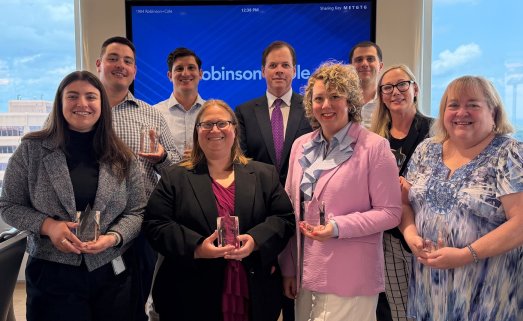
Manufacturing Industry Team Out + About

After U.S. Supreme Court Strikes Down IEEPA Tariffs, Court of International Trade Orders Path Forward teaser
March 6, 2026

After U.S. Supreme Court Strikes Down IEEPA Tariffs, Court of International Trade Orders Path Forward

DOJ Accelerates Trade Fraud Enforcement with Interagency Task Force after a Series of False Claims Act Case Resolutions teaser
September 18, 2025

DOJ Accelerates Trade Fraud Enforcement with Interagency Task Force after a Series of False Claims Act Case Resolutions

Manufacturing Industry Team Out + About teaser
November 14, 2024

Manufacturing Industry Team Out + About

Legal Update: Department of Justice National Security Division Announces First-of-Its-Kind Declination under Its Voluntary Self-Disclosure Program teaser
June 4, 2024

Legal Update: Department of Justice National Security Division Announces First-of-Its-Kind Declination under Its Voluntary Self-Disclosure Program

Legal Update: New Round of Sanctions Relevant to Manufacturers Are Launched on the First Anniversary of Russia’s Invasion of Ukraine teaser
March 14, 2023

Legal Update: New Round of Sanctions Relevant to Manufacturers Are Launched on the First Anniversary of Russia’s Invasion of Ukraine

Legal Update: DOJ Announces Significant Corporate Compliance Initiatives teaser
March 8, 2023

Legal Update: DOJ Announces Significant Corporate Compliance Initiatives

June 20, 2022

What Is the Scope of Russian Sanctions?

IndustryWeek

In the article, the authors counsel that a “clear-eyed assessment of the scope of the new sanctions is essential to understanding how to navigate them in the months, and possibly years, ahead.” Despite this complexity, there are techniques available that companies want to consider when evaluating business opportunities in light of the current and evolving restrictions. View the article.

Manufacturing Industry Team Out + About teaser
January 4, 2022

Manufacturing Industry Team Out + About

Manufacturing Industry Team Out + About teaser
January 4, 2022

Manufacturing Industry Team Out + About


Legal Update: Department of Justice National Security Division Announces First-of-Its-Kind Declination under Its Voluntary Self-Disclosure Program teaser
June 4, 2024

Legal Update: Department of Justice National Security Division Announces First-of-Its-Kind Declination under Its Voluntary Self-Disclosure Program

Legal Update: New Round of Sanctions Relevant to Manufacturers Are Launched on the First Anniversary of Russia’s Invasion of Ukraine teaser
March 14, 2023

Legal Update: New Round of Sanctions Relevant to Manufacturers Are Launched on the First Anniversary of Russia’s Invasion of Ukraine

Legal Update: DOJ Announces Significant Corporate Compliance Initiatives teaser
March 8, 2023

Legal Update: DOJ Announces Significant Corporate Compliance Initiatives

June 20, 2022

What Is the Scope of Russian Sanctions?

IndustryWeek

In the article, the authors counsel that a “clear-eyed assessment of the scope of the new sanctions is essential to understanding how to navigate them in the months, and possibly years, ahead.” Despite this complexity, there are techniques available that companies want to consider when evaluating business opportunities in light of the current and evolving restrictions. View the article.

Manufacturing Industry Team Out + About teaser
January 4, 2022

Manufacturing Industry Team Out + About

Manufacturing Industry Team Out + About teaser
January 4, 2022

Manufacturing Industry Team Out + About


News


May 5, 2026

Kevin Daly Confirms Tariff Exemptions After Supreme Court Ruling

Manufacturing Law industry team member Kevin P. Daly was featured in the article, “Aerospace Tariffs Update,” published in Aerospace Manufacturing and Design on March 20, 2026 . In the article, Kevin clarified the impact of the Supreme Court’s ruling in February 2026. “Civil aircraft parts are among the articles exempt from the new 10% global tariff issued after the Supreme Court’s ruling. The previously imposed Section 232 tariffs [of the Trade Expansion Act of 1962] on steel and aluminum are unaffected by the Supreme Court decision and the new 10% tariff and remain in place.” The article also highlighted a March 6, 2026 Robinson+Cole Legal Update, “After U.S. Supreme Court Strikes Down IEEPA Tariffs, Court of International Trade Orders Path Forward,” co-authored by Kevin and his colleagues Kathleen M. Porter and Edward J. Heath.

Aerospace Manufacturing and Design
April 23, 2026

Kevin Daly Says Planning Ahead is Difficult for Businesses in Uncertain Tariff Legal Landscape

Hartford Business Journal
December 4, 2025

Health Care Enforcement Team Secures First Circuit Win for Clinical Lab in False Claims Act Appeal

May 5, 2026

Kevin Daly Confirms Tariff Exemptions After Supreme Court Ruling

Manufacturing Law industry team member Kevin P. Daly was featured in the article, “Aerospace Tariffs Update,” published in Aerospace Manufacturing and Design on March 20, 2026 . In the article, Kevin clarified the impact of the Supreme Court’s ruling in February 2026. “Civil aircraft parts are among the articles exempt from the new 10% global tariff issued after the Supreme Court’s ruling. The previously imposed Section 232 tariffs [of the Trade Expansion Act of 1962] on steel and aluminum are unaffected by the Supreme Court decision and the new 10% tariff and remain in place.” The article also highlighted a March 6, 2026 Robinson+Cole Legal Update, “After U.S. Supreme Court Strikes Down IEEPA Tariffs, Court of International Trade Orders Path Forward,” co-authored by Kevin and his colleagues Kathleen M. Porter and Edward J. Heath.

Aerospace Manufacturing and Design
April 23, 2026

Kevin Daly Says Planning Ahead is Difficult for Businesses in Uncertain Tariff Legal Landscape

Hartford Business Journal
December 4, 2025

Health Care Enforcement Team Secures First Circuit Win for Clinical Lab in False Claims Act Appeal

August 26, 2025

78 Robinson+Cole Lawyers Listed in The Best Lawyers in America© 2026

Firm receives top listing in Connecticut lawyer count in national peer review survey
78 Robinson+Cole Lawyers Listed in The Best Lawyers in America© 2026 teaser
January 27, 2025

Health Care Enforcement Team Wins Summary Judgment in Groundbreaking False Claims Act Litigation

Law.com, Law360, G2 Intelligence, The Dark Report, Laboratory Economics, and Massachusetts Lawyers Weekly
August 15, 2024

78 Robinson+Cole Lawyers Listed in The Best Lawyers in America© 2025

78 Robinson+Cole Lawyers Listed in <i>The Best Lawyers in America</i>© 2025 teaser
May 20, 2024

Robinson+Cole Receives Second Presidential Award for Export Service

U.S. Department of Commerce
Robinson+Cole Receives Second Presidential Award for Export Service teaser
August 17, 2023

78 Robinson+Cole Lawyers Listed in The Best Lawyers in America© 2024

Best Lawyers in America
78 Robinson+Cole Lawyers Listed in The Best Lawyers in America© 2024 teaser
August 18, 2022

74 Robinson+Cole Lawyers Listed in The Best Lawyers in America 2023

The Best Lawyers in America

August 26, 2025

78 Robinson+Cole Lawyers Listed in The Best Lawyers in America© 2026

Firm receives top listing in Connecticut lawyer count in national peer review survey
78 Robinson+Cole Lawyers Listed in The Best Lawyers in America© 2026 teaser
January 27, 2025

Health Care Enforcement Team Wins Summary Judgment in Groundbreaking False Claims Act Litigation

Law.com, Law360, G2 Intelligence, The Dark Report, Laboratory Economics, and Massachusetts Lawyers Weekly
August 15, 2024

78 Robinson+Cole Lawyers Listed in The Best Lawyers in America© 2025

78 Robinson+Cole Lawyers Listed in <i>The Best Lawyers in America</i>© 2025 teaser
May 20, 2024

Robinson+Cole Receives Second Presidential Award for Export Service

U.S. Department of Commerce
Robinson+Cole Receives Second Presidential Award for Export Service teaser
August 17, 2023

78 Robinson+Cole Lawyers Listed in The Best Lawyers in America© 2024

Best Lawyers in America
78 Robinson+Cole Lawyers Listed in The Best Lawyers in America© 2024 teaser
August 18, 2022

74 Robinson+Cole Lawyers Listed in The Best Lawyers in America 2023

The Best Lawyers in America

Events


Past

Buy America: Demystifying the Complexities of the Buy American, Made in USA, and Build Back Better Legislation

May 14 2024
U.S. Commercial Service Export Documentation and Logistics Webinar Series
Past

International Space Trade Summit

5/19-21/2019
International Space Trade Summit
Past

Buy America: Demystifying the Complexities of the Buy American, Made in USA, and Build Back Better Legislation

May 14 2024
U.S. Commercial Service Export Documentation and Logistics Webinar Series
Past

International Space Trade Summit

5/19-21/2019
International Space Trade Summit

Class Action Insider


Below is an excerpt of the Class Action Insider posts authored by Kevin.

Recent First Circuit Opinion Addresses Strategies for Litigating Predominance in Class Action Litigation

On August 30, 2021, the U.S. Court of Appeals for the First Circuit issued a decision in Bais Yaakov of Spring Valley v. ACT, Inc. that addresses how plaintiffs can satisfy the predominance requirement in federal class actions. (The opinion (“Op.”) is available here). The decision held that on the facts of this case, the plaintiff could not establish predominance because individualized proof would be required on at least one element of the claim. The decision follows on the heels of an earlier decision where the First Circuit ruled against plaintiffs on a predominance dispute. In re Asacol Antitrust Litig., 907 F.3d 42 (1st Cir. 2018). These two cases create a high bar for plaintiffs to overcome defendants’ submission of declarations or other evidence substantiating an actual need to litigate an issue using individualized evidence. Bais Yaakov arose under the Telephone Consumer Protection Act (TCPA). The TCPA prohibits sending advertisements by fax, unless the advertisement was either 1) sent pursuant to prior express permission or invitation of the recipient; or 2) the advertisement meets certain formatting requirements, including the presence of an opt-out notice in the advertisement. See 47 U.S.C. § 227(a)(5), 227(b)(1)(C). The statute provides for penalties of up to $1,500 per violation, which can quickly add up given the usually high volume of fax advertisements. 47 U.S.C. § 227(b)(3). Plaintiff, a small private high school, sent a request form to ACT in order to permit students’ ACT test scores to be reported to the school. Op. at 3. The school provided its fax number on the form and checked a box stating that the school wanted to receive SAT and ACT publications. Id.  Seven years later, ACT sent three faxes to Bais Yaakov. Id.  Two of the faxes promoted registration to take the ACT, while the third invited the school to sign up as an ACT test administration venue. Id. at 3-4. Bais Yaakov then brought a TCPA suit against ACT on behalf of a putative class of approximately 7,000 schools. Id. at 4. Bais Yaakov alleged that ACT sent approximately 28,000 faxes that transgressed the TCPA. Id. The district court denied Bais Yaakov’s motion for class certification. Id. at 8. The court concluded that determining whether the faxes were sent with the prior express permission of the recipients would require individualized examination of the class members’ individual communications with ACT. Id. at 7. Thus, common issues would not predominate and the class could not be certified pursuant to Rule 23(b)(3) of the Federal Rules of Civil Procedure. Op. at 7. The court reached this conclusion in large part based on declarations (submitted by ACT) from seventy-eight putative class members stating that they provided ACT with their fax numbers, that they received communications via fax that were integral to their relationship with ACT, and that they would have given permission to send such information via fax. Id. at 20-21. Bais Yaakov appealed and the First Circuit affirmed the denial of class certification. The court held that the predominance inquiry turned on whether “the record reasonably shows that some putative class members” gave ACT permission to send the faxes and, if so, whether “there is a fair and efficient method for culling those consenting recipients from the class.” Id. at 16. The court emphasized the importance of the declarations from the seventy-eight putative class members, which highlighted the differing positions of different putative class members regarding whether they had given ACT permission to send faxes. Id. at 20-21. The court concluded that, based on this evidence, the district court did not abuse its discretion in holding that there would be putative class members that consented to the faxes. Id. at 24. The First Circuit further held that Bais Yaakov raised no argument that there was a feasible way to cull those members from the class. Id. at 24-25. In a concurring opinion, Circuit Judge Barron addressed the implications of the court’s decision on plaintiffs’ ability to satisfy the predominance requirement more generally. In light of the First Circuit’s decision and its earlier, similar decision in In re Asacol Antitrust Litig., 907 F.3d 42 (1st Cir. 2018), some commentators have questioned whether plaintiffs could ever satisfy the predominance requirement if the defendant merely contends that it needs to challenge class members’ testimony on an individual basis. Judge Barron’s concurrence pushes back against that argument and identifies potential situations where he might hold that a plaintiff can establish predominance even though the defendant contends that individual proof is required. He contends that Asacol and Bais Yaakov do not establish a per se rule that predominance cannot be satisfied whenever a defendant announces an intent to contest class members’ testimony individually. Op. at 40. Rather, in Judge Barron’s view, the court must make a “predictive assessment” of how the case would actually be litigated. Id. at 41. In making that assessment, the concurrence says that the court must look at whether such litigation would actually result in inefficiency (such as a large number of class members needing to testify about individual issues) or unfairness (such as infringing defendants’ rights to present individualized evidence in order to avoid inefficiency). Id. After Asacol, many commentators viewed the First Circuit as a difficult place for class action plaintiffs to win class certification. The Bais Yaakov decision will likely reinforce that view. ACT effectively used declarations from putative class members to establish that different class members were differently situated regarding an element of the claim and to illustrate that individualized proof would be required on that element. By observing that courts should not just rest on defendants’ word that individualized issues defeat predominance, the concurring opinion further highlights how important it is for defendants to supplement their class certification evidence with declarations or other supporting evidence, where appropriate. Whether and if plaintiffs can successfully rebut an argument against certification that is supported with such evidence remains to be seen in future cases. But the First Circuit’s decisions so far suggest that where defendants’ evidence demonstrates a real need for individualized assessments, the predominance standard is difficult for class action plaintiffs to satisfy. On August 30, 2021, the U.S. Court of Appeals for the First Circuit issued a decision in Bais Yaakov of Spring Valley v. ACT, Inc. that addresses how plaintiffs can satisfy the predominance requirement in federal class actions. (The opinion (“Op.”) is available here). The decision held that on the facts of this case, the plaintiff could not establish predominance because individualized proof would be required on at least one element of the claim. The decision follows on the heels of an earlier decision where the First Circuit ruled against plaintiffs on a predominance dispute. In re Asacol Antitrust Litig., 907 F.3d 42 (1st Cir. 2018). These two cases create a high bar for plaintiffs to overcome defendants’ submission of declarations or other evidence substantiating an actual need to litigate an issue using individualized evidence. Bais Yaakov arose under the Telephone Consumer Protection Act (TCPA). The TCPA prohibits sending advertisements by fax, unless the advertisement was either 1) sent pursuant to prior express permission or invitation of the recipient; or 2) the advertisement meets certain formatting requirements, including the presence of an opt-out notice in the advertisement. See 47 U.S.C. § 227(a)(5), 227(b)(1)(C). The statute provides for penalties of up to $1,500 per violation, which can quickly add up given the usually high volume of fax advertisements. 47 U.S.C. § 227(b)(3). Plaintiff, a small private high school, sent a request form to ACT in order to permit students’ ACT test scores to be reported to the school. Op. at 3. The school provided its fax number on the form and checked a box stating that the school wanted to receive SAT and ACT publications. Id.  Seven years later, ACT sent three faxes to Bais Yaakov. Id.  Two of the faxes promoted registration to take the ACT, while the third invited the school to sign up as an ACT test administration venue. Id. at 3-4. Bais Yaakov then brought a TCPA suit against ACT on behalf of a putative class of approximately 7,000 schools. Id. at 4. Bais Yaakov alleged that ACT sent approximately 28,000 faxes that transgressed the TCPA. Id. The district court denied Bais Yaakov’s motion for class certification. Id. at 8. The court concluded that determining whether the faxes were sent with the prior express permission of the recipients would require individualized examination of the class members’ individual communications with ACT. Id. at 7. Thus, common issues would not predominate and the class could not be certified pursuant to Rule 23(b)(3) of the Federal Rules of Civil Procedure. Op. at 7. The court reached this conclusion in large part based on declarations (submitted by ACT) from seventy-eight putative class members stating that they provided ACT with their fax numbers, that they received communications via fax that were integral to their relationship with ACT, and that they would have given permission to send such information via fax. Id. at 20-21. Bais Yaakov appealed and the First Circuit affirmed the denial of class certification. The court held that the predominance inquiry turned on whether “the record reasonably shows that some putative class members” gave ACT permission to send the faxes and, if so, whether “there is a fair and efficient method for culling those consenting recipients from the class.” Id. at 16. The court emphasized the importance of the declarations from the seventy-eight putative class members, which highlighted the differing positions of different putative class members regarding whether they had given ACT permission to send faxes. Id. at 20-21. The court concluded that, based on this evidence, the district court did not abuse its discretion in holding that there would be putative class members that consented to the faxes. Id. at 24. The First Circuit further held that Bais Yaakov raised no argument that there was a feasible way to cull those members from the class. Id. at 24-25. In a concurring opinion, Circuit Judge Barron addressed the implications of the court’s decision on plaintiffs’ ability to satisfy the predominance requirement more generally. In light of the First Circuit’s decision and its earlier, similar decision in In re Asacol Antitrust Litig., 907 F.3d 42 (1st Cir. 2018), some commentators have questioned whether plaintiffs could ever satisfy the predominance requirement if the defendant merely contends that it needs to challenge class members’ testimony on an individual basis. Judge Barron’s concurrence pushes back against that argument and identifies potential situations where he might hold that a plaintiff can establish predominance even though the defendant contends that individual proof is required. He contends that Asacol and Bais Yaakov do not establish a per se rule that predominance cannot be satisfied whenever a defendant announces an intent to contest class members’ testimony individually. Op. at 40. Rather, in Judge Barron’s view, the court must make a “predictive assessment” of how the case would actually be litigated. Id. at 41. In making that assessment, the concurrence says that the court must look at whether such litigation would actually result in inefficiency (such as a large number of class members needing to testify about individual issues) or unfairness (such as infringing defendants’ rights to present individualized evidence in order to avoid inefficiency). Id. After Asacol, many commentators viewed the First Circuit as a difficult place for class action plaintiffs to win class certification. The Bais Yaakov decision will likely reinforce that view. ACT effectively used declarations from putative class members to establish that different class members were differently situated regarding an element of the claim and to illustrate that individualized proof would be required on that element. By observing that courts should not just rest on defendants’ word that individualized issues defeat predominance, the concurring opinion further highlights how important it is for defendants to supplement their class certification evidence with declarations or other supporting evidence, where appropriate. Whether and if plaintiffs can successfully rebut an argument against certification that is supported with such evidence remains to be seen in future cases. But the First Circuit’s decisions so far suggest that where defendants’ evidence demonstrates a real need for individualized assessments, the predominance standard is difficult for class action plaintiffs to satisfy.

Visit Blog