













Robinson Cole LLP
High Contrast Mode

Rachel V. Kushel counsels clients on all employment law and workplace human resource issues. She defends management in state and federal court litigation matters and administrative agency claims. Rachel is chair of our firm’s Labor, Employment, Benefits, Immigration + Tax group.

Employment Litigation + Administrative Advocacy

Rachel has extensive experience defending management clients in discrimination, leave, and harassment matters. She litigates matters from inception to trial and through appeal in federal and state courts. She has argued successfully on behalf of clients before the United States Court of Appeals for the Second Circuit, the District Court of Connecticut, and Connecticut state trial and appellate courts.

Rachel also represents clients in administrative agency matters before the Connecticut Commission on Human Rights and Opportunities, the Equal Employment Opportunity Commission, the Department of Labor, and the Occupational Safety and Health Administration. She also represents clients at private and public arbitration hearings, and in alternative dispute resolution and mediation sessions with federal, state, and private mediators.

In addition to assisting clients in obtaining favorable resolutions to matters, Rachel has also achieved successes for clients at various stages of the litigation proceedings. She works with clients in a wide range of industries, including but not limited to, healthcare, financial services, government, and higher education.

Counseling, Compliance, + Training

Rachel counsels companies and human resource professionals in all areas of employment law, including discharge and discrimination issues, employee discipline, wage and hour issues, disability and reasonable accommodation, family and medical leave, unemployment, employment and independent contractor agreements, severance and separation agreements, individual terminations and reductions in force, and workplace health and safety issues. Rachel also negotiates and drafts employment and separation agreements, in addition to reviewing and revising employee handbooks and personnel policies. She also conducts training sessions related to a myriad of employment issues, including topics such as sexual harassment, workplace civility, and avoiding discrimination claims.

Workplace Investigations

Rachel is a trained workplace investigator and regularly conducts, manages, and provides advice regarding workplace investigations involving all types of employment-related issues. She assists clients with identifying situations that require a workplace investigation.

Labor Relations + Union Avoidance

Rachel advises clients on management rights and strategy. She also handles union grievances and arbitrations on behalf of employers.

Pro Bono

Rachel regularly engages in pro bono work, including handling unemployment benefits appeals for individuals and reviewing employment handbooks for non-profit and charitable organizations.

She has been listed in The Best Lawyers in America© in the areas of Employment Law – Management and Labor Law – Management since 2018.
  • Temple University School of Law (Juris Doctor, cum laude)
    • Political and Civil Rights Law Review
  • University of Pennsylvania (Bachelors, cum laude)
    • B.A.

  • State of Connecticut
  • State of New Jersey
  • Commonwealth of Pennsylvania
  • U.S. Court of Appeals, 2nd Circuit
  • U.S. Court of Appeals, 3rd Circuit
  • U.S. District Court, District of Connecticut
  • U.S. District Court, District of New Jersey
  • U.S. District Court, Eastern District of Pennsylvania
  • U.S. District Court, Middle District of Pennsylvania

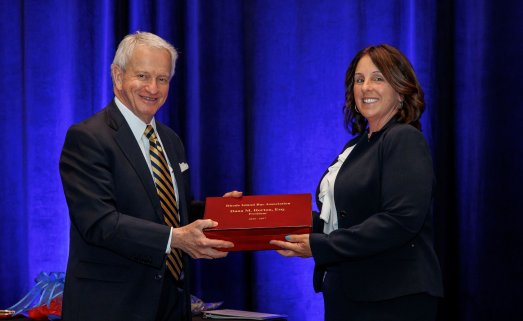
Hartford Business Journal 2025 "Women in Business" Honoree

Listed in The Best Lawyers in America©  as Hartford Lawyer of the Year in the area of Employment Law – Management for 2023

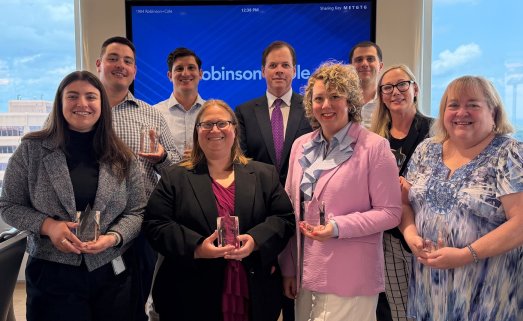
Robinson+Cole Diversity, Equity + Inclusion Award, 2022

Listed in Benchmark Labor & Employment as a Labor & Employment Star for 2021, 2022 and 2023

Selected to the "Top 50 Connecticut Super Lawyers list for 2025

Selected to the Top 25 Women Connecticut Super Lawyers list for 2024 and 2025

Selected to the Connecticut Super Lawyers list from 2020 to 2025

Selected by her peers for inclusion in The Best Lawyers in America© in the areas of Employment Law-Management and Labor Law-Management since 2018

Named to the Connecticut Coalition Against Domestic Violence (CCADV) First 100 Plus Class of 2018 for demonstrating leadership and commitment to improving the lives of domestic violence survivors throughout Connecticut

Robinson+Cole Mentor of the Year Award Recipient, 2018

Connecticut Bar Association
Executive Committee of the Labor and Employment Section (2020)

Association of Workplace Investigators
Certificate Holder (2019)

Center for Women and Families of Eastern Fairfield County
Board Member (2010)
Chair, HR Committee (2010)

Experience


Constitutional Claims Against Municipality

Secured dismissal of two separate actions alleging Constitutional claims against a municipality.

Favorable Settlement of Litigation

Secured favorable settlement of litigation involving allegations of defamation, tortious interference with business relations, and promissory estoppel.

First-Chair in Multi-Million Dollar Litigation

Currently serving as first-chair in multi-million dollar litigation which alleges violations of federal employment discrimination law and the Connecticut Fair Employment Practices Act.


Publications


July 28, 2021

Updating Connecticut Employee Handbooks for 2022

cbia.com

View the article.

Legal Update: Employer-Mandated Disclosure of Wage Ranges and Expansion of Equal Pay Law Enacted in Connecticut teaser
June 15, 2021

Legal Update: Employer-Mandated Disclosure of Wage Ranges and Expansion of Equal Pay Law Enacted in Connecticut

March 12, 2021

The ABCs of DEI

Industry Week

The article offers best practices for cultivating a workplace that promotes a culture of diversity, equity and inclusion (DEI) while also supporting manufacturers' overall business objectives. “Ideally, getting DEI right this year is a priority for employers, including those that may be federal contractors subject to affirmative action laws and regulations seeking to strengthen their commitments and strategies.” Britt-Marie, Rachel, Abby and Kayla go on to share questions for manufacturers to consider posing to evaluate where they currently stand on DEI and core components for a strong DEI program. View the article.

July 28, 2021

Updating Connecticut Employee Handbooks for 2022

cbia.com

View the article.

Legal Update: Employer-Mandated Disclosure of Wage Ranges and Expansion of Equal Pay Law Enacted in Connecticut teaser
June 15, 2021

Legal Update: Employer-Mandated Disclosure of Wage Ranges and Expansion of Equal Pay Law Enacted in Connecticut

March 12, 2021

The ABCs of DEI

Industry Week

The article offers best practices for cultivating a workplace that promotes a culture of diversity, equity and inclusion (DEI) while also supporting manufacturers' overall business objectives. “Ideally, getting DEI right this year is a priority for employers, including those that may be federal contractors subject to affirmative action laws and regulations seeking to strengthen their commitments and strategies.” Britt-Marie, Rachel, Abby and Kayla go on to share questions for manufacturers to consider posing to evaluate where they currently stand on DEI and core components for a strong DEI program. View the article.

February 11, 2021

Employer Best Practices For Diversity, Equity and Inclusion

Law360

The article addresses employers’ options in responding in 2021 to challenges in the workplace on highly-charged matters of social justice and civil rights. The piece outlines steps employers can take to foster a workplace that both respects and promotes a culture of diversity, equity and inclusion (DEI) while also supporting the business’ overall objectives. The authors write that “employees are poised to take employers to task because of their silence, or even to change employers based on their disagreement with their employer’s position on an issue.” They offer a series of reflective questions that can help move an organization forward on DEI issues, such as: Where are we now? What are our goals and how will we hold ourselves accountable? What internal and external resources will we need? and Does our current leadership have the skillset necessary to speak competently on DEI issues? In addition to these considerations, the article also outlines key components and steps employers can take to engage and involve employees, crafting achievable strategies that can be implemented to build a strong, sustainable DEI program and position their business “ahead of the curve” in 2021. View the article.

Legal Update: Employers and Diversity, Equity and Inclusion: Getting it Right in 2021 teaser
February 10, 2021

Legal Update: Employers and Diversity, Equity and Inclusion: Getting it Right in 2021

July 11, 2019

Legal Update: Clarity Comes to Compensation Data Collection: EEOC Guidance and Notices Issued for EEO-1 Filers

The Equal Employment Opportunity Commission (EEOC) has issued a set of Frequently Asked Questions (FAQs) regarding its collection of 2017 and 2018 Component 2 compensation data. Additionally, many EEO-1 filers recently received notices from the EEOC advising that the EEOC has contracted with a third party to collect the Component 2 data for 2017 and 2018. WHAT IS EEO-1 COMPONENT 2 COMPENSATION DATA? All private employers with at least 100 employees and all federal contractors and subcontractors with 50 or more employees and at least one federal contract or subcontract worth at least $50,000, must file EEO-1 reports each year. For the first time, the EEOC will now require such employers to file the EEO-1 Component 2 compensation data, listing their employees’ hours worked and Form W-2 Box 1 wages by pay band for each job category by gender, ethnicity, and race. COMPLIANCE REQUIREMENTS The EEOC has advised all EEO-1 filers that they must submit Component 2 data for calendar year 2017 as well as calendar year 2018, by September 30, 2019. The EEOC has contracted with a third party, specifically the National Opinion Research Center (NORC), an independent, non-partisan social research organization at the University of Chicago, to gather the Component 2 data for calendar years 2017 and 2018. As of July 15, 2019, EEO-1 filers will be able to utilize a web-based portal for the submission of the Component 2 EEO-1 reports for 2017 and 2018, referred to as the Component 2 EEO-1 Online Filing System. Additional information about the Component 2 EEO-1 compensation data collection can be found at https://eeoccomp2.norc.org. The EEOC has also launched a Component 2 EEO-1 Help Desk, which can be reached via email at EEOCcompdata@norc.org or via phone at 877-324-6214. KEY DATES FOR 2019 EEO-1 FILERS July 15, 2019 – Component 2 EEO-1 Online Filing System available for EEO-1 filers. September 30, 2019 – Component 2 EEO-1 Compensation Data due for 2017 and 2018. OTHER CONSIDERATIONS If an employer has not conducted a pay equity analysis recently, specifically evaluating any wage differences between employees taking into account legitimate factors to determine if there are gaps as it relates to female, minority, or any other employee group’s compensation, those employers may wish to look closely at the data being submitted to the EEOC. Employers would be well served to assess whether any pay disparities are significant or show any concerning trend lines. Without a recent pay equity analysis, employers can be caught unprepared. Being able to demonstrate one or more legitimate, nondiscriminatory reasons for any pay disparities could assist employers in preparing to defend any legal action or respond to an internal complaint.

July 2019

Legal Update: Major Shift in Connecticut’s Leave Landscape: What Employers Need to Know About the New Connecticut Paid Family and Medical Leave Law

Connecticut has followed a growing trend among the states by implementing a system to provide paid time off to workers experiencing health and family-related issues. On June 25, 2019, Governor Ned Lamont signed into law “An Act Concerning Paid Family and Medical Leave,” making Connecticut the most recent state to pass a paid family leave law, joining California, the District of Columbia, Massachusetts, New Jersey, New York, Rhode Island, and Washington. Connecticut’s law is currently regarded as the most generous paid family leave law in the country and is solely employee-funded through a mandatory payroll tax. The law revises Connecticut’s existing Family and Medical Leave law in a number of ways, the most significant of which are – leave is paid and all employers, regardless of size, must provide such leave. KEY DATES FOR CONNECTICUT EMPLOYERS January 1, 2021 – Connecticut employers must begin withholding mandatory payroll tax. January 1, 2022 – Employees may utilize paid family and medical leave. July 1, 2022 – Written notice must be given to new hires and every employee annually. KEY HIGHLIGHTS OF NEW LAW Covered Employers – All private employers are covered by this law, regardless of size. (Previously, only employers with 75 or more employees in Connecticut were covered by Connecticut’s current unpaid Family and Medical Leave Law (“Current Law”) which will remain in effect until the new law takes effect January 1, 2022). Eligible Employees – Employees who have worked three months for an employer immediately preceding their request for leave are covered. (Under Current Law, employees must have been employed at least 12 months and worked at least 1,000 hours during the 12-month period preceding the first day of leave.) Leave Amount – Beginning on January 1, 2022, employees will be eligible to take up to 12 weeks of leave in any 12-month period. Employees also will be eligible to take two additional weeks of leave for serious health conditions resulting in incapacitation that occurs during a pregnancy. (Under Current Law, employees are entitled to take up to 16 weeks of unpaid leave in any 24 month period.) Use of Other Accrued Leave – Employers may permit or require employees to substitute accrued paid vacation, sick, personal, or family leave (to the extent applicable), except that the employee must be permitted to retain at least two weeks of such leave. Salary Continuation – Employees will continue to receive a portion of their salary during leave, currently capped at $900 per week. Administration – The new law establishes the Paid Family and Medical Leave Authority (Authority) in Connecticut, which will be a quasi-public agency responsible for administering the Family and Medical Leave Insurance Program. Contributions – Contributions to the Family and Medical Leave Insurance Program will be funded by a payroll deduction from employee wages of up to 0.5 percent at the discretion of the Authority. Wages subject to the deduction are limited to the amount of annual earnings subject to Social Security taxes, currently capped at $132,900 per year. Timing – Deductions will be made from employee pay beginning January 1, 2021; however, employees cannot take leave until January 1, 2022. Reasons To Take Leave – The reasons for leave are the same as those under Current Law, which include: 1) birth of a son or daughter; 2) placement of a son or daughter for adoption or foster care; 3) care for a family member with a serious health condition; 4) serious health condition of employee; 5) serve as an organ or bone marrow donor; 6) qualifying exigency related to spouse, son, daughter or parent on active duty or notification of an impending call or order to active duty in the armed forces; or 7) for reasons related to family violence. Definition of “Family Member” – The definition of “family member” has been expanded and now includes spouse, sibling, son or daughter, grandparent, grandchild or parents or an individual related to the employee by blood or affinity whose close association the employee shows to be the equivalent of those family relationships. Notice – Written notice regarding leave must be provided to employees upon hire and annually, beginning on July 1, 2022. Self-Employed Individuals – Self-employed individuals and sole proprietors will have the option to opt-in to the paid family leave program but must do so for an initial period of at least three years. Option for Private Plan – Employers may offer a private plan if approved by the Authority to do so. Any such plan must provide, at a minimum, the same level of benefits at the same cost to the employee with the same conditions as offered by the Authority’s program. Guidance will likely be issued in the coming months. Employers may want to consult with labor and employment counsel to ensure compliance with the law and any guidance issued. EMPLOYERS MAY WISH TO CONSIDER THE FOLLOWING ACTIONS 1. Training human resources personnel, managers, supervisors, and other personnel involved in administering leave policies on the new law and its interaction with other types of leave. 2. Reviewing current leave offerings to determine whether such offerings should be modified based on the new law. 3. Drafting a paid family leave policy for the employee handbook and revising leave, benefits, and other applicable policies to ensure consistency with the new leave law. This is particularly important as it relates to revising leave policies so it is clear which leaves may/will be taken concurrently and when paid time can/must be used during leave. 4. Coordinating with any vendors, who assist in leave law compliance, such as payroll, human resource information systems, and human resource compliance vendors, so they understand their role in assisting with the employer’s compliance with the new law. 5. Determining whether changes should be made in the employer’s organization-wide leave offerings based on the new law, with a specific eye toward leave offerings for employees in other states. 6. Creating a plan to manage any issues related to the absence of employees, including an ongoing review of the potential for significant operational challenges and relevant solutions.

Legal Update: New York State and City Adopt New Tools to Combat Gender-Based Harassment teaser
September 5, 2018

Legal Update: New York State and City Adopt New Tools to Combat Gender-Based Harassment


February 11, 2021

Employer Best Practices For Diversity, Equity and Inclusion

Law360

The article addresses employers’ options in responding in 2021 to challenges in the workplace on highly-charged matters of social justice and civil rights. The piece outlines steps employers can take to foster a workplace that both respects and promotes a culture of diversity, equity and inclusion (DEI) while also supporting the business’ overall objectives. The authors write that “employees are poised to take employers to task because of their silence, or even to change employers based on their disagreement with their employer’s position on an issue.” They offer a series of reflective questions that can help move an organization forward on DEI issues, such as: Where are we now? What are our goals and how will we hold ourselves accountable? What internal and external resources will we need? and Does our current leadership have the skillset necessary to speak competently on DEI issues? In addition to these considerations, the article also outlines key components and steps employers can take to engage and involve employees, crafting achievable strategies that can be implemented to build a strong, sustainable DEI program and position their business “ahead of the curve” in 2021. View the article.

Legal Update: Employers and Diversity, Equity and Inclusion: Getting it Right in 2021 teaser
February 10, 2021

Legal Update: Employers and Diversity, Equity and Inclusion: Getting it Right in 2021

July 11, 2019

Legal Update: Clarity Comes to Compensation Data Collection: EEOC Guidance and Notices Issued for EEO-1 Filers

The Equal Employment Opportunity Commission (EEOC) has issued a set of Frequently Asked Questions (FAQs) regarding its collection of 2017 and 2018 Component 2 compensation data. Additionally, many EEO-1 filers recently received notices from the EEOC advising that the EEOC has contracted with a third party to collect the Component 2 data for 2017 and 2018. WHAT IS EEO-1 COMPONENT 2 COMPENSATION DATA? All private employers with at least 100 employees and all federal contractors and subcontractors with 50 or more employees and at least one federal contract or subcontract worth at least $50,000, must file EEO-1 reports each year. For the first time, the EEOC will now require such employers to file the EEO-1 Component 2 compensation data, listing their employees’ hours worked and Form W-2 Box 1 wages by pay band for each job category by gender, ethnicity, and race. COMPLIANCE REQUIREMENTS The EEOC has advised all EEO-1 filers that they must submit Component 2 data for calendar year 2017 as well as calendar year 2018, by September 30, 2019. The EEOC has contracted with a third party, specifically the National Opinion Research Center (NORC), an independent, non-partisan social research organization at the University of Chicago, to gather the Component 2 data for calendar years 2017 and 2018. As of July 15, 2019, EEO-1 filers will be able to utilize a web-based portal for the submission of the Component 2 EEO-1 reports for 2017 and 2018, referred to as the Component 2 EEO-1 Online Filing System. Additional information about the Component 2 EEO-1 compensation data collection can be found at https://eeoccomp2.norc.org. The EEOC has also launched a Component 2 EEO-1 Help Desk, which can be reached via email at EEOCcompdata@norc.org or via phone at 877-324-6214. KEY DATES FOR 2019 EEO-1 FILERS July 15, 2019 – Component 2 EEO-1 Online Filing System available for EEO-1 filers. September 30, 2019 – Component 2 EEO-1 Compensation Data due for 2017 and 2018. OTHER CONSIDERATIONS If an employer has not conducted a pay equity analysis recently, specifically evaluating any wage differences between employees taking into account legitimate factors to determine if there are gaps as it relates to female, minority, or any other employee group’s compensation, those employers may wish to look closely at the data being submitted to the EEOC. Employers would be well served to assess whether any pay disparities are significant or show any concerning trend lines. Without a recent pay equity analysis, employers can be caught unprepared. Being able to demonstrate one or more legitimate, nondiscriminatory reasons for any pay disparities could assist employers in preparing to defend any legal action or respond to an internal complaint.

July 2019

Legal Update: Major Shift in Connecticut’s Leave Landscape: What Employers Need to Know About the New Connecticut Paid Family and Medical Leave Law

Connecticut has followed a growing trend among the states by implementing a system to provide paid time off to workers experiencing health and family-related issues. On June 25, 2019, Governor Ned Lamont signed into law “An Act Concerning Paid Family and Medical Leave,” making Connecticut the most recent state to pass a paid family leave law, joining California, the District of Columbia, Massachusetts, New Jersey, New York, Rhode Island, and Washington. Connecticut’s law is currently regarded as the most generous paid family leave law in the country and is solely employee-funded through a mandatory payroll tax. The law revises Connecticut’s existing Family and Medical Leave law in a number of ways, the most significant of which are – leave is paid and all employers, regardless of size, must provide such leave. KEY DATES FOR CONNECTICUT EMPLOYERS January 1, 2021 – Connecticut employers must begin withholding mandatory payroll tax. January 1, 2022 – Employees may utilize paid family and medical leave. July 1, 2022 – Written notice must be given to new hires and every employee annually. KEY HIGHLIGHTS OF NEW LAW Covered Employers – All private employers are covered by this law, regardless of size. (Previously, only employers with 75 or more employees in Connecticut were covered by Connecticut’s current unpaid Family and Medical Leave Law (“Current Law”) which will remain in effect until the new law takes effect January 1, 2022). Eligible Employees – Employees who have worked three months for an employer immediately preceding their request for leave are covered. (Under Current Law, employees must have been employed at least 12 months and worked at least 1,000 hours during the 12-month period preceding the first day of leave.) Leave Amount – Beginning on January 1, 2022, employees will be eligible to take up to 12 weeks of leave in any 12-month period. Employees also will be eligible to take two additional weeks of leave for serious health conditions resulting in incapacitation that occurs during a pregnancy. (Under Current Law, employees are entitled to take up to 16 weeks of unpaid leave in any 24 month period.) Use of Other Accrued Leave – Employers may permit or require employees to substitute accrued paid vacation, sick, personal, or family leave (to the extent applicable), except that the employee must be permitted to retain at least two weeks of such leave. Salary Continuation – Employees will continue to receive a portion of their salary during leave, currently capped at $900 per week. Administration – The new law establishes the Paid Family and Medical Leave Authority (Authority) in Connecticut, which will be a quasi-public agency responsible for administering the Family and Medical Leave Insurance Program. Contributions – Contributions to the Family and Medical Leave Insurance Program will be funded by a payroll deduction from employee wages of up to 0.5 percent at the discretion of the Authority. Wages subject to the deduction are limited to the amount of annual earnings subject to Social Security taxes, currently capped at $132,900 per year. Timing – Deductions will be made from employee pay beginning January 1, 2021; however, employees cannot take leave until January 1, 2022. Reasons To Take Leave – The reasons for leave are the same as those under Current Law, which include: 1) birth of a son or daughter; 2) placement of a son or daughter for adoption or foster care; 3) care for a family member with a serious health condition; 4) serious health condition of employee; 5) serve as an organ or bone marrow donor; 6) qualifying exigency related to spouse, son, daughter or parent on active duty or notification of an impending call or order to active duty in the armed forces; or 7) for reasons related to family violence. Definition of “Family Member” – The definition of “family member” has been expanded and now includes spouse, sibling, son or daughter, grandparent, grandchild or parents or an individual related to the employee by blood or affinity whose close association the employee shows to be the equivalent of those family relationships. Notice – Written notice regarding leave must be provided to employees upon hire and annually, beginning on July 1, 2022. Self-Employed Individuals – Self-employed individuals and sole proprietors will have the option to opt-in to the paid family leave program but must do so for an initial period of at least three years. Option for Private Plan – Employers may offer a private plan if approved by the Authority to do so. Any such plan must provide, at a minimum, the same level of benefits at the same cost to the employee with the same conditions as offered by the Authority’s program. Guidance will likely be issued in the coming months. Employers may want to consult with labor and employment counsel to ensure compliance with the law and any guidance issued. EMPLOYERS MAY WISH TO CONSIDER THE FOLLOWING ACTIONS 1. Training human resources personnel, managers, supervisors, and other personnel involved in administering leave policies on the new law and its interaction with other types of leave. 2. Reviewing current leave offerings to determine whether such offerings should be modified based on the new law. 3. Drafting a paid family leave policy for the employee handbook and revising leave, benefits, and other applicable policies to ensure consistency with the new leave law. This is particularly important as it relates to revising leave policies so it is clear which leaves may/will be taken concurrently and when paid time can/must be used during leave. 4. Coordinating with any vendors, who assist in leave law compliance, such as payroll, human resource information systems, and human resource compliance vendors, so they understand their role in assisting with the employer’s compliance with the new law. 5. Determining whether changes should be made in the employer’s organization-wide leave offerings based on the new law, with a specific eye toward leave offerings for employees in other states. 6. Creating a plan to manage any issues related to the absence of employees, including an ongoing review of the potential for significant operational challenges and relevant solutions.

Legal Update: New York State and City Adopt New Tools to Combat Gender-Based Harassment teaser
September 5, 2018

Legal Update: New York State and City Adopt New Tools to Combat Gender-Based Harassment

News


November 6, 2025

Robinson+Cole Commends 62 Attorneys Recognized in 2025 Super Lawyers®

Robinson+Cole announced a total of 35 attorneys were named to Thomson Reuters’ Super Lawyers® lists and 27 lawyers were recognized on its “Rising Stars” lists in Connecticut, Delaware, Massachusetts, New York, Pennsylvania, and Rhode Island for 2025. In addition, Robinson+Cole Labor, Employment, Benefits, Immigration + Tax group chair Rachel V. Kushel, Appellate group chair Linda L. Morkan, and Manufacturing Law Industry team chair Jeffrey J. White were named to the Top 50: 2025 Connecticut Super Lawyers list. Rachel and Linda also appear on the Top 25: 2025 Women Connecticut Super Lawyers list. In addition, Bankruptcy + Reorganizations group co-chair, Natalie D. Ramsey was named to the Top 50: 2005 Women Pennsylvania Super Lawyers list. The Super Lawyers designation is based on regional balloting by attorneys, third-party research, and a peer review process encompassing myriad practice areas. An explanation of the Super Lawyers methodology can be found here. Recognized attorneys and their areas of practice include the following: Hartford, CT - Super Lawyers® Wystan M. Ackerman – Class Action Stephen W. Aronson – Employment Lit: Defense Bradford S. Babbitt – Business Litigation Bruce B. Barth – Employee Benefits Garry C. Berman – Real Estate Patrick M. Birney – Bankruptcy: Business Dennis C. Cavanaugh – Construction Litigation Britt-Marie K. Cole-Johnson – Employment & Labor Kathleen Dion – Schools & Education Michael R. Enright – Bankruptcy: Business Gregory R. Faulkner – Construction Litigation Edward J. Heath – Business Litigation Frederick E. Hedberg – Construction Litigation Rachel V. Kushel – Employment & Labor Michael F. Maglio – Banking Virginia E. McGarrity – Employee Benefits Joey Lee Miranda – Energy & Resources Linda L. Morkan – Appellate Martin A. Onorato – Construction Litigation James P. Ray – Environmental Litigation Emilee Mooney Scott – Environmental Rhonda J. Tobin – Insurance Coverage Theodore J. Tucci – Health Care Abby M. Warren – Employment & Labor Jeffrey J. White – Aviation and Aerospace Hartford, CT - Rising Stars Dan A. Brody – Criminal Defense: White Collar Kayla D. O’Leary Daly – Intellectual Property Jason H. DePatie – Insurance Coverage Scott T. Garosshen – Appellate Larry E. Grijalva – Construction Litigation Ryan Hoyler – Land Use/Zoning Kathryn N. Mullin – Real Estate Abigail L. Preissler – Securities & Corp Fin Jonathan H. Schaefer – Environmental Jennifer L. Shanley – Immigration: Business Taylor A. Shea – Business/Corp. Mallori D. Thompson – Business Litigation Taylor A. Vann – Civil Litigation: Defense Stamford, CT – Super Lawyers®  Steven L. Elbaum – Real Estate Brian J. Wheelin – Business Litigation Stamford, CT - Rising Stars Raymond J. Carta – Civil Litigation: Defense Emily C. Deans – Environmental Diana E. Neeves – Environmental Austin G. Provost – Real Estate Massachusetts - Super Lawyers® Kendra L. Berardi – Civil Litigation: Defense Danielle Andrews Long – Civil Litigation: Defense Seth B. Orkand – Criminal Defense: White Collar         Massachusetts - Rising Stars Jessica D. Bardi – Land Use/Zoning Jeffrey R. Gribouski – General Litigation Taz Islam – Business Litigation Rita E. Nerney – Employee Benefits New York Metro - Super Lawyers® John F. McCarrick – Insurance Coverage David D. Rodrigues – Intellectual Property Anna Jinhua Wang – Securities & Corporate Finance Evans E. Wohlforth Jr. – Health Care New York Metro - Rising Stars Joshua A. Dachs – Civil Litigation Sabrina M. Galli – Business Litigation New York Upstate - Rising Stars Danielle H. Tangorre – Health Care Wilmington, DE - Super Lawyers® and Pennsylvania - Super Lawyers® Natalie D. Ramsey – Bankruptcy: Business Pennsylvania - Rising Stars Katherine M. Fix – Bankruptcy: Business Rhode Island - Rising Stars William M. Daley – Business Litigation Kathryn M. Rattigan – Business Litigation

Recognition spans key regions and highlights the firm’s seasoned practitioners and emerging leaders in many business transactions and litigation practices
Robinson+Cole Commends 62 Attorneys Recognized in 2025 <i>Super Lawyers</i>® teaser
August 26, 2025

78 Robinson+Cole Lawyers Listed in The Best Lawyers in America© 2026

Firm receives top listing in Connecticut lawyer count in national peer review survey
78 Robinson+Cole Lawyers Listed in The Best Lawyers in America© 2026 teaser
May 1, 2025

Rachel Kushel Named to 2025 “Women in Business” Class

Hartford Business Journal
Rachel Kushel Named to 2025 “Women in Business” Class teaser
November 6, 2025

Robinson+Cole Commends 62 Attorneys Recognized in 2025 Super Lawyers®

Robinson+Cole announced a total of 35 attorneys were named to Thomson Reuters’ Super Lawyers® lists and 27 lawyers were recognized on its “Rising Stars” lists in Connecticut, Delaware, Massachusetts, New York, Pennsylvania, and Rhode Island for 2025. In addition, Robinson+Cole Labor, Employment, Benefits, Immigration + Tax group chair Rachel V. Kushel, Appellate group chair Linda L. Morkan, and Manufacturing Law Industry team chair Jeffrey J. White were named to the Top 50: 2025 Connecticut Super Lawyers list. Rachel and Linda also appear on the Top 25: 2025 Women Connecticut Super Lawyers list. In addition, Bankruptcy + Reorganizations group co-chair, Natalie D. Ramsey was named to the Top 50: 2005 Women Pennsylvania Super Lawyers list. The Super Lawyers designation is based on regional balloting by attorneys, third-party research, and a peer review process encompassing myriad practice areas. An explanation of the Super Lawyers methodology can be found here. Recognized attorneys and their areas of practice include the following: Hartford, CT - Super Lawyers® Wystan M. Ackerman – Class Action Stephen W. Aronson – Employment Lit: Defense Bradford S. Babbitt – Business Litigation Bruce B. Barth – Employee Benefits Garry C. Berman – Real Estate Patrick M. Birney – Bankruptcy: Business Dennis C. Cavanaugh – Construction Litigation Britt-Marie K. Cole-Johnson – Employment & Labor Kathleen Dion – Schools & Education Michael R. Enright – Bankruptcy: Business Gregory R. Faulkner – Construction Litigation Edward J. Heath – Business Litigation Frederick E. Hedberg – Construction Litigation Rachel V. Kushel – Employment & Labor Michael F. Maglio – Banking Virginia E. McGarrity – Employee Benefits Joey Lee Miranda – Energy & Resources Linda L. Morkan – Appellate Martin A. Onorato – Construction Litigation James P. Ray – Environmental Litigation Emilee Mooney Scott – Environmental Rhonda J. Tobin – Insurance Coverage Theodore J. Tucci – Health Care Abby M. Warren – Employment & Labor Jeffrey J. White – Aviation and Aerospace Hartford, CT - Rising Stars Dan A. Brody – Criminal Defense: White Collar Kayla D. O’Leary Daly – Intellectual Property Jason H. DePatie – Insurance Coverage Scott T. Garosshen – Appellate Larry E. Grijalva – Construction Litigation Ryan Hoyler – Land Use/Zoning Kathryn N. Mullin – Real Estate Abigail L. Preissler – Securities & Corp Fin Jonathan H. Schaefer – Environmental Jennifer L. Shanley – Immigration: Business Taylor A. Shea – Business/Corp. Mallori D. Thompson – Business Litigation Taylor A. Vann – Civil Litigation: Defense Stamford, CT – Super Lawyers®  Steven L. Elbaum – Real Estate Brian J. Wheelin – Business Litigation Stamford, CT - Rising Stars Raymond J. Carta – Civil Litigation: Defense Emily C. Deans – Environmental Diana E. Neeves – Environmental Austin G. Provost – Real Estate Massachusetts - Super Lawyers® Kendra L. Berardi – Civil Litigation: Defense Danielle Andrews Long – Civil Litigation: Defense Seth B. Orkand – Criminal Defense: White Collar         Massachusetts - Rising Stars Jessica D. Bardi – Land Use/Zoning Jeffrey R. Gribouski – General Litigation Taz Islam – Business Litigation Rita E. Nerney – Employee Benefits New York Metro - Super Lawyers® John F. McCarrick – Insurance Coverage David D. Rodrigues – Intellectual Property Anna Jinhua Wang – Securities & Corporate Finance Evans E. Wohlforth Jr. – Health Care New York Metro - Rising Stars Joshua A. Dachs – Civil Litigation Sabrina M. Galli – Business Litigation New York Upstate - Rising Stars Danielle H. Tangorre – Health Care Wilmington, DE - Super Lawyers® and Pennsylvania - Super Lawyers® Natalie D. Ramsey – Bankruptcy: Business Pennsylvania - Rising Stars Katherine M. Fix – Bankruptcy: Business Rhode Island - Rising Stars William M. Daley – Business Litigation Kathryn M. Rattigan – Business Litigation

Recognition spans key regions and highlights the firm’s seasoned practitioners and emerging leaders in many business transactions and litigation practices
Robinson+Cole Commends 62 Attorneys Recognized in 2025 <i>Super Lawyers</i>® teaser
August 26, 2025

78 Robinson+Cole Lawyers Listed in The Best Lawyers in America© 2026

Firm receives top listing in Connecticut lawyer count in national peer review survey
78 Robinson+Cole Lawyers Listed in The Best Lawyers in America© 2026 teaser
May 1, 2025

Rachel Kushel Named to 2025 “Women in Business” Class

Hartford Business Journal
Rachel Kushel Named to 2025 “Women in Business” Class teaser
October 31, 2024

Robinson+Cole Lawyers Recognized in 2024 Super Lawyers®

Thomson Reuters
Robinson+Cole Lawyers Recognized in 2024 <i>Super Lawyers</i>® teaser
August 15, 2024

78 Robinson+Cole Lawyers Listed in The Best Lawyers in America© 2025

78 Robinson+Cole Lawyers Listed in <i>The Best Lawyers in America</i>© 2025 teaser
April 5, 2024

Rachel Kushel and Virginia McGarrity Discuss DEI Practices in Hartford Business Journal Articles

Hartford Business Journal
November 29, 2023

Robinson+Cole Lawyers Named to the Connecticut District Court’s 2023 Pro Bono Honor Roll

October 26, 2023

Robinson+Cole Lawyers Recognized in 2023 Super Lawyers®

Super Lawyers
August 17, 2023

78 Robinson+Cole Lawyers Listed in The Best Lawyers in America© 2024

Best Lawyers in America
78 Robinson+Cole Lawyers Listed in The Best Lawyers in America© 2024 teaser

October 31, 2024

Robinson+Cole Lawyers Recognized in 2024 Super Lawyers®

Thomson Reuters
Robinson+Cole Lawyers Recognized in 2024 <i>Super Lawyers</i>® teaser
August 15, 2024

78 Robinson+Cole Lawyers Listed in The Best Lawyers in America© 2025

78 Robinson+Cole Lawyers Listed in <i>The Best Lawyers in America</i>© 2025 teaser
April 5, 2024

Rachel Kushel and Virginia McGarrity Discuss DEI Practices in Hartford Business Journal Articles

Hartford Business Journal
November 29, 2023

Robinson+Cole Lawyers Named to the Connecticut District Court’s 2023 Pro Bono Honor Roll

October 26, 2023

Robinson+Cole Lawyers Recognized in 2023 Super Lawyers®

Super Lawyers
August 17, 2023

78 Robinson+Cole Lawyers Listed in The Best Lawyers in America© 2024

Best Lawyers in America
78 Robinson+Cole Lawyers Listed in The Best Lawyers in America© 2024 teaser

Events


Past

Responding to Employee Accommodation Requests

Oct 21 2025
CBIA 2025 Employment Law Conference
Past

Hartford Business Journal’s Women In Business Awards 2025

Apr 30 2025
The Aqua Turf Club
Past

Responding to Employee Accommodation Requests

Oct 21 2025
CBIA 2025 Employment Law Conference
Past

Hartford Business Journal’s Women In Business Awards 2025

Apr 30 2025
The Aqua Turf Club
Past

Does Your PTO Policy Comply with Connecticut’s New Paid Sick Leave Law?

Oct 29 2024
CBIA 2024 Employment Law Conference
Past

Recent Non-Compete Developments

Apr 4 2024
2024 ABA Business Law Section Spring Meeting
Past

Recognizing Workplace Contract Risks

Nov 2 2023
CBIA Employment Law Conference
Past

Pregnancy Accommodations for Educational Institutions

Oct 24 2023
R+C-hosted webinar
Past

Does Your PTO Policy Comply with Connecticut’s New Paid Sick Leave Law?

Oct 29 2024
CBIA 2024 Employment Law Conference
Past

Recent Non-Compete Developments

Apr 4 2024
2024 ABA Business Law Section Spring Meeting
Past

Recognizing Workplace Contract Risks

Nov 2 2023
CBIA Employment Law Conference
Past

Pregnancy Accommodations for Educational Institutions

Oct 24 2023
R+C-hosted webinar

Data Privacy + Cybersecurity Insider


Below is an excerpt of Data Privacy + Cybersecurity Insider blog posts authored by Rachel.

PayPal reaches settlement with Texas AG over privacy and security disclosures

PayPal agreed to pay $175,000 and strengthen its privacy and security disclosures in a settlement agreement reached with the Texas Attorney General’s office (the “AG’s office”). The AG’s office claimed that PayPal failed to explain to users of its Venmo mobile money transfer app how users’ personal information would be used and shared. PayPal acquired... Continue Reading

Visit Blog

Does Employees’ Use of Apps Lead to Violations of Workplace Policies?

The constant and evolving release of new apps used by employees both personally and in the workplace continue to present challenges to employers in the implementation and execution of workplace policies designed to protect employees, particularly those involving sexual harassment, anti-discrimination and bullying.  These challenges are no longer limited solely to social media websites such... Continue Reading

Visit Blog

Does your organization’s new year’s resolution violate employee privacy?

One of the most common New Year’s resolutions is a renewed commitment to health and fitness. Many employers also seek to update or introduce wellness programs at the beginning of the year with the goal of improving their employees’ health, which can lead to increased employee productivity and reduced group health care costs. Corporate wellness... Continue Reading

Visit Blog