

























Real Estate Developers + Owners
/People

Robinson+Cole's real estate practice is national in scope, providing clients with a multidisciplinary approach to real estate transactions, development, and financings. Our clients include major financial institutions; multinational corporations; institutional, public, and private lenders; retailers; state agencies; bonding authorities; schools; and commercial and multifamily developers, as well as small and midsized businesses. In addition to our general real estate practice of project development, financing, conveyancing, and commercial leasing, Robinson+Cole has significant experience in tax-advantaged transactions, public/private ventures, waterfront development, municipal tax lien sales, affordable housing, sale-leaseback transactions, common interest communities, and telecommunications matters.
Robinson+Cole's real estate lawyers are active participants in national and local legal associations and real estate trade groups and are regular speakers and writers on real estate topics. We have assumed leadership roles in the American College of Real Estate Lawyers, the National Association of Corporate Real Estate Executives, the International Council of Shopping Centers, the Commercial Real Estate Development Association (NAIOP), the Urban Land Institute, the U.S. Green Building Council, The Counselors of Real Estate, and the Real Estate Finance Association.
Our team of lawyers regularly handles the following types of transactions and matters:
Assisted client in connection with the acquisition of a retail shopping plaza in Massachusetts with a joint venture partner.
Represent a foreign sovereign wealth fund with approximately $275 billion under management in United States real estate matters.
Represented national affordable housing lender on $26 million loan for a 365-unit senior housing U.S. Housing & Urban Development (HUD) Rental Assistance Demonstration (RAD) conversion transaction and conversion to Freddie Mac permanent loan facility.
In the article, Matt and Kevin discuss the implications of the recently passed Massachusetts Affordable Homes Act (the Act). “The commonwealth is ‘bleeding early-career young people,’” they write. “High purchase prices and rental costs have caused net migration out of Massachusetts to increase by 1,100%.” With Massachusetts facing “a worsening shortage of affordable housing” and housing prices outpacing wages, forcing “an ever-growing number of people out of the general housing market,” the Act aims to address these issues by revising the commonwealth’s Zoning Act, specifically focusing on allowing accessory dwelling units—otherwise known as “in-law apartments”—revisions for the zoning relief appeals process, and increasing “affordable housing opportunities for low-income veterans” by allowing municipalities to enter “agreements with developers to provide a preference for veterans for up to 10% of the affordable units in a given project.” Read the article.
The Yellowstone injunction is implicated in nearly every lease for commercial real property in the state of New York, yet most landlords and tenants do not know what it is or how it affects them. Below is a succinct overview of its implications so that commercial landlords and tenants can better navigate lease disputes. Stopping the Clock on a Cure Period Yellowstone injunctions take their name not from the popular neo-Western drama series but from the New York Court of Appeals case of First National Stores v. Yellowstone Shopping Center that created this limited-purpose injunction. In that case, the landlord and tenant disagreed about who was responsible for installing a sprinkler system, which the court ultimately decided was the tenant’s responsibility. Although the tenant was able and willing to make the installation once the court said so, the tenant had not asked to pause the cure period, and the landlord had terminated the lease for default. New York’s highest court decided it was not empowered to extend the tenant’s deadline to cure its default and upheld the lease termination. This case conceptualized and gave rise to the remedy referred to a Yellowstone injunction. Its purpose is to stop the running of the applicable cure period: it prevents a commercial landlord from prematurely terminating a lease for default until a court decides whether the alleged default is proper or not. Only a commercial tenant can ask for such an injunction, and it must demonstrate that: (1) it has received a notice of default, notice to cure, or a threat of termination; (2) it has made its request to the court for an injunction prior to the termination of the lease; and (3) it is willing and able to cure the alleged default. Since these three factors are relatively easy to prove, such injunctions are commonly granted. Although Yellowstone injunctions are a tenant’s remedy, they are not always one-sided and can provide protections for a landlord. New York courts have imposed conditions on injunctions meant to protect the landlord during the period of the stay. For example, in disputes concerning defaults unrelated to the payment of rent, courts have conditioned the injunction on the continued payment of rent or the posting of a bond. In disputes concerning the payment of rent, courts have required the tenant to deposit rent arrears in a jointly held escrow account and deposit monthly sums equal to rent in the account for the duration of the injunction. Practical Implications From a tenant’s perspective, time is often of the essence. Because most cure periods can be quite short (7 to 10 calendar days is typical), a tenant must act quickly if it receives a notice of default or notice of cure. This should involve having an attorney review the notice and the lease, assess whether an injunction remedy is available, and, if so, make an emergency application in court to stop the clock on the cure period. Acting quickly not only preserves the tenant’s right to cure its default down the road if the court decides against the tenant, but it also provides the tenant some leverage by engaging the landlord in urgent litigation. From a landlord’s perspective, these practical implications have led many landlords to require a tenant to waive its right to seek such an injunction. These waivers often go beyond Yellowstone injunctions to waive a tenant’s right to bring a lawsuit for a “declaratory judgment”—meaning a lawsuit brought in the Supreme Court of New York seeking an interpretation of the lease and giving the parties access to full discovery. As a result of such a waiver, tenants are typically limited to bringing their claims in an expedited, streamlined proceeding in the landlord-tenant part of the local court, which does not typically allow for discovery (and is, thus, less costly for the landlord). However, a wave of new laws arose in 2019 with respect to declaratory judgment waivers, making it prudent for landlords to take stock of their commercial leases well before a dispute arises. In 2019, the Court of Appeals upheld the enforceability of a lease provision waiving a commercial tenant’s right to bring an action for a declaratory judgment. In the case decided by the court, the Yellowstone injunction requested by the tenant as part of the action was also denied as waived. Almost immediately, in response to the Court of Appeals decision, the New York State Legislature passed a law prohibiting such declaratory judgment waivers effective Dec. 20, 2019. Section 235-h of the New York Real Property prohibits and nullifies any provision in a commercial lease “waiving or prohibiting the right of any tenant to bring a declaratory judgment action with respect to any provision, term or condition” of its commercial lease. Section 235-h raises more questions than it answers. First, Section 235-h has been interpreted to only apply to leases signed after Dec. 20, 2019. Therefore, waivers of declaratory judgment actions contained in older leases can still be enforceable. Second, the prohibition’s scope is unclear and has not yet been tested in court. Section 235-h prohibits waiving the remedy of a “declaratory judgment action,” but a Yellowstone injunction can still be available to tenants in other types of actions as well. This creates opportunities and risks for both tenants and landlords. From a tenant’s perspective, a tenant whose lease only waives “declaratory judgment” actions can try to frame its lawsuit as one for breach of contract (i.e., a breach of the lease) and seek a Yellowstone injunction in that context. Although this type of action may not be ideal for the tenant, it is a potential workaround of the waiver that creates the same urgency and leverage that can promote an out-of-court resolution. From a landlord’s perspective, a landlord may still try to require a more limited waiver of only a Yellowstone injunction (not declaratory judgments broadly) because Section 235-h does not call out Yellowstone injunctions specifically. Tenants, in turn, may try to resist or negotiate such a waiver depending on their relative bargaining power. Negotiations could include lengthening the cure period in exchange for a waiver or requiring the parties to participate in a mediation before the lease can be terminated. Yellowstone injunctions and related waivers are frequently litigated, making it essential to stay updated on changes in the law. Janet Kljyan is a member of Robinson+Cole’s business litigation group and Charles F. Martin III is a partner in the firm’s real estate and development group. Reprinted with permission from the February 14, 2024 edition of the New York Law Journal© 2023 ALM Global Properties, LLC. All rights reserved. Further duplication without permission is prohibited, contact 877-256-2472 or asset-and-logo-licensing@alm.com
In the article, Matt and Kevin discuss the implications of the recently passed Massachusetts Affordable Homes Act (the Act). “The commonwealth is ‘bleeding early-career young people,’” they write. “High purchase prices and rental costs have caused net migration out of Massachusetts to increase by 1,100%.” With Massachusetts facing “a worsening shortage of affordable housing” and housing prices outpacing wages, forcing “an ever-growing number of people out of the general housing market,” the Act aims to address these issues by revising the commonwealth’s Zoning Act, specifically focusing on allowing accessory dwelling units—otherwise known as “in-law apartments”—revisions for the zoning relief appeals process, and increasing “affordable housing opportunities for low-income veterans” by allowing municipalities to enter “agreements with developers to provide a preference for veterans for up to 10% of the affordable units in a given project.” Read the article.
The Yellowstone injunction is implicated in nearly every lease for commercial real property in the state of New York, yet most landlords and tenants do not know what it is or how it affects them. Below is a succinct overview of its implications so that commercial landlords and tenants can better navigate lease disputes. Stopping the Clock on a Cure Period Yellowstone injunctions take their name not from the popular neo-Western drama series but from the New York Court of Appeals case of First National Stores v. Yellowstone Shopping Center that created this limited-purpose injunction. In that case, the landlord and tenant disagreed about who was responsible for installing a sprinkler system, which the court ultimately decided was the tenant’s responsibility. Although the tenant was able and willing to make the installation once the court said so, the tenant had not asked to pause the cure period, and the landlord had terminated the lease for default. New York’s highest court decided it was not empowered to extend the tenant’s deadline to cure its default and upheld the lease termination. This case conceptualized and gave rise to the remedy referred to a Yellowstone injunction. Its purpose is to stop the running of the applicable cure period: it prevents a commercial landlord from prematurely terminating a lease for default until a court decides whether the alleged default is proper or not. Only a commercial tenant can ask for such an injunction, and it must demonstrate that: (1) it has received a notice of default, notice to cure, or a threat of termination; (2) it has made its request to the court for an injunction prior to the termination of the lease; and (3) it is willing and able to cure the alleged default. Since these three factors are relatively easy to prove, such injunctions are commonly granted. Although Yellowstone injunctions are a tenant’s remedy, they are not always one-sided and can provide protections for a landlord. New York courts have imposed conditions on injunctions meant to protect the landlord during the period of the stay. For example, in disputes concerning defaults unrelated to the payment of rent, courts have conditioned the injunction on the continued payment of rent or the posting of a bond. In disputes concerning the payment of rent, courts have required the tenant to deposit rent arrears in a jointly held escrow account and deposit monthly sums equal to rent in the account for the duration of the injunction. Practical Implications From a tenant’s perspective, time is often of the essence. Because most cure periods can be quite short (7 to 10 calendar days is typical), a tenant must act quickly if it receives a notice of default or notice of cure. This should involve having an attorney review the notice and the lease, assess whether an injunction remedy is available, and, if so, make an emergency application in court to stop the clock on the cure period. Acting quickly not only preserves the tenant’s right to cure its default down the road if the court decides against the tenant, but it also provides the tenant some leverage by engaging the landlord in urgent litigation. From a landlord’s perspective, these practical implications have led many landlords to require a tenant to waive its right to seek such an injunction. These waivers often go beyond Yellowstone injunctions to waive a tenant’s right to bring a lawsuit for a “declaratory judgment”—meaning a lawsuit brought in the Supreme Court of New York seeking an interpretation of the lease and giving the parties access to full discovery. As a result of such a waiver, tenants are typically limited to bringing their claims in an expedited, streamlined proceeding in the landlord-tenant part of the local court, which does not typically allow for discovery (and is, thus, less costly for the landlord). However, a wave of new laws arose in 2019 with respect to declaratory judgment waivers, making it prudent for landlords to take stock of their commercial leases well before a dispute arises. In 2019, the Court of Appeals upheld the enforceability of a lease provision waiving a commercial tenant’s right to bring an action for a declaratory judgment. In the case decided by the court, the Yellowstone injunction requested by the tenant as part of the action was also denied as waived. Almost immediately, in response to the Court of Appeals decision, the New York State Legislature passed a law prohibiting such declaratory judgment waivers effective Dec. 20, 2019. Section 235-h of the New York Real Property prohibits and nullifies any provision in a commercial lease “waiving or prohibiting the right of any tenant to bring a declaratory judgment action with respect to any provision, term or condition” of its commercial lease. Section 235-h raises more questions than it answers. First, Section 235-h has been interpreted to only apply to leases signed after Dec. 20, 2019. Therefore, waivers of declaratory judgment actions contained in older leases can still be enforceable. Second, the prohibition’s scope is unclear and has not yet been tested in court. Section 235-h prohibits waiving the remedy of a “declaratory judgment action,” but a Yellowstone injunction can still be available to tenants in other types of actions as well. This creates opportunities and risks for both tenants and landlords. From a tenant’s perspective, a tenant whose lease only waives “declaratory judgment” actions can try to frame its lawsuit as one for breach of contract (i.e., a breach of the lease) and seek a Yellowstone injunction in that context. Although this type of action may not be ideal for the tenant, it is a potential workaround of the waiver that creates the same urgency and leverage that can promote an out-of-court resolution. From a landlord’s perspective, a landlord may still try to require a more limited waiver of only a Yellowstone injunction (not declaratory judgments broadly) because Section 235-h does not call out Yellowstone injunctions specifically. Tenants, in turn, may try to resist or negotiate such a waiver depending on their relative bargaining power. Negotiations could include lengthening the cure period in exchange for a waiver or requiring the parties to participate in a mediation before the lease can be terminated. Yellowstone injunctions and related waivers are frequently litigated, making it essential to stay updated on changes in the law. Janet Kljyan is a member of Robinson+Cole’s business litigation group and Charles F. Martin III is a partner in the firm’s real estate and development group. Reprinted with permission from the February 14, 2024 edition of the New York Law Journal© 2023 ALM Global Properties, LLC. All rights reserved. Further duplication without permission is prohibited, contact 877-256-2472 or asset-and-logo-licensing@alm.com
The legislation that legalized cannabis use in Connecticut “…also empowered the state’s municipalities to regulate adult recreational cannabis establishments through local zoning codes or ordinances.” The authors surveyed the state’s 169 municipalities to identify regulatory trends and varying approaches taken by communities across the state. There are at least 90 municipalities that permit some form of cannabis establishments, with 72 of them having enacted their own regulations. Evan, Ryan and Chris examine and report how municipalities are dealing with related issues including where establishments are allowed, permitting and procedural considerations, distance separation requirements, security and odor issues, and visibility of products. Evan serves as CCAPA’s Program Committee Chair and is a member of the Executive Board. View the article.
Presented at American Corporate Counsel Association, Real Estate Finance Association, and Connecticut Bar Association
Quoted in Inc. magazine in an article on buying versus leasing commercial property
Co-published with the American Planning Association. This book provides a balanced treatment of a controversial topic. It covers the general background of the Religious Land Use and Institutionalized Persons Act (RLUIPA) so that the reader understands the context in which RLUIPA was passed by Congress in 2000, as well as a very practical discussion about RLUIPA litigation from the perspective of the church (religious land use applicant) and the perspective of the community. Attorneys as well as planners and religious land use applicants will benefit from reading this book, which offers information and advice on initiating a RLUIPA lawsuit, as well as defending a RLUIPA lawsuit.
This timely article illustrates in simple terms, by means of a hypothetical dialogue between an attorney and his client, how the recent Supreme Judicial Court decision impacts the ongoing debate between property owners and municipalities over the extent to which a property owner may expand an existing single or two family dwelling on a non-conforming lot.
View the article.
The legislation that legalized cannabis use in Connecticut “…also empowered the state’s municipalities to regulate adult recreational cannabis establishments through local zoning codes or ordinances.” The authors surveyed the state’s 169 municipalities to identify regulatory trends and varying approaches taken by communities across the state. There are at least 90 municipalities that permit some form of cannabis establishments, with 72 of them having enacted their own regulations. Evan, Ryan and Chris examine and report how municipalities are dealing with related issues including where establishments are allowed, permitting and procedural considerations, distance separation requirements, security and odor issues, and visibility of products. Evan serves as CCAPA’s Program Committee Chair and is a member of the Executive Board. View the article.
Presented at American Corporate Counsel Association, Real Estate Finance Association, and Connecticut Bar Association
Quoted in Inc. magazine in an article on buying versus leasing commercial property
Co-published with the American Planning Association. This book provides a balanced treatment of a controversial topic. It covers the general background of the Religious Land Use and Institutionalized Persons Act (RLUIPA) so that the reader understands the context in which RLUIPA was passed by Congress in 2000, as well as a very practical discussion about RLUIPA litigation from the perspective of the church (religious land use applicant) and the perspective of the community. Attorneys as well as planners and religious land use applicants will benefit from reading this book, which offers information and advice on initiating a RLUIPA lawsuit, as well as defending a RLUIPA lawsuit.
This timely article illustrates in simple terms, by means of a hypothetical dialogue between an attorney and his client, how the recent Supreme Judicial Court decision impacts the ongoing debate between property owners and municipalities over the extent to which a property owner may expand an existing single or two family dwelling on a non-conforming lot.
View the article.
(August 15, 2024) – 78 Robinson+Cole lawyers were selected by their peers for inclusion in The Best Lawyers in America© 2025. Of the 78 lawyers from across the firm’s practice groups and offices named to the list, 56 are from Connecticut. The firm continues to have the highest number of recognized lawyers in the state. Robinson+Cole also has the highest number of listed lawyers in Connecticut in the areas of environmental law, health care law, and insurance law. Additionally, four lawyers were named Best Lawyers® 2025 “Lawyer of the Year” in the following offices, in the noted practice areas: Hartford, CT – Best Lawyers® 2025 “Lawyer of the Year” Kenneth C. Baldwin – Energy Law John L. Cordani – Trademark Law Michael R. Enright – Bankruptcy and Creditor Debtor Rights / Insolvency and Reorganization Law Boston, MA – Best Lawyers® 2025 “Lawyer of the Year” Kathleen M. Porter – Information Technology Law A Best Lawyers “Lawyer of the Year” designation is awarded to one lawyer in each of various high-profile specialties in large legal communities. These particular lawyers received the highest ratings among their peers for their abilities, professionalism, and integrity. The fifth edition of Best Lawyers: Ones to Watch® in America was also released, and includes 23 Robinson+Cole lawyers. The “Ones to Watch” recognition is given to lawyers early in their careers for their outstanding professional excellence in private practice in the United States. The firm has the highest number of lawyers to receive this designation in Hartford, Connecticut. Inclusion in The Best Lawyers in America® and Best Lawyers: Ones to Watch® in America is determined through a comprehensive peer-review survey. The 2025 awards were created by analyzing over 27 million evaluations, including a record breaking 4.2 million responses from this year alone. Additional information regarding the Best Lawyers selection methodology may be read here. Congratulations to the following Robinson+Cole lawyers: Hartford, CT – Best Lawyers® Wystan M. Ackerman – Litigation-Insurance Kenneth C. Baldwin – Energy Law Garry C. Berman – Real Estate Law Patrick M. Birney – Bankruptcy and Creditor Debtor Rights / Insolvency and Reorganization Law Lisa M. Boyle – Health Care Law Dan A. Brody – Commercial Litigation; Criminal Defense: White-Collar Christine E. Bromberg – Nonprofit / Charities Law; Tax Law Dennis C. Cavanaugh – Construction Law; Litigation-Construction Stephen O. Clancy – Commercial Litigation; Litigation-Insurance Thomas P. Cody – Real Estate Law Britt-Marie K. Cole-Johnson – Employment Law-Individuals; Employment Law-Management John L. Cordani – Litigation-Intellectual Property; Trade Secrets Law; Trademark Law Frank F. Coulom, Jr. – Commercial Litigation Kevin P. Daly – Commercial Litigation Raymond T. DeMeo – Insurance Law Natale V. DiNatale – Employment Law-Management; Labor Law-Management Michael R. Enright – Bankruptcy and Creditor Debtor Rights / Insolvency and Reorganization Law; Litigation-Bankruptcy Gregory R. Faulkner – Construction Law; Litigation-Construction Brian C. Freeman – Environmental Law; Litigation-Environmental Stephen E. Goldman – Insurance Law Matthew J. Guanci, Jr. – Corporate Law Edward J. Heath – Commercial Litigation Frederick E. Hedberg – Construction Law, Litigation-Construction Rachel V. Kushel – Employment Law-Management; Labor Law-Management John B. Lynch Jr. – Corporate Law; Mergers and Acquisitions Law Michael F. Maglio – Banking and Finance Law; Commercial Finance Law; Equipment Finance Law; Securitization and Structured Finance Law Virginia E. McGarrity – Employee Benefits (ERISA) Law Robert S. Melvin – Environmental Law; Litigation-Environmental Joey Lee Miranda – Energy Law; Energy Regulatory Law; Environmental Law Linda L. Morkan – Appellate Practice John H. Mutchler – Copyright Law; Patent Law; Trademark Law Megan R. Naughton – Immigration Law Martin A. Onorato – Construction Law; Litigation-Construction David M. Panico – Public Finance Law Earl W. Phillips, Jr. – Environmental Law James P. Ray – Environmental Law; Litigation-Environmental Norman H. Roos – Banking and Finance Law Edward J. Samorajczyk, Jr. – Corporate Law; Securities / Capital Markets Law Jacqueline Pennino Scheib – Copyright Law; Trademark Law Emilee Mooney Scott – Environmental Law Jonathan E. Small – Insurance Law Brian R. Smith – Land Use and Zoning Law Rhonda J. Tobin – Insurance Law Theodore J. Tucci – Health Care Law; Insurance Law Abby M. Warren – Employment Law-Management Jeffrey J. White – Commercial Litigation; Mass Tort Litigation / Class Actions-Defendants William S. Wilson II – Construction Law; Litigation-Construction Hartford, CT - Ones to Watch Nathaniel T. Arden – Health Care Law Jason H. DePatie – Insurance Law Andrew A. DePeau – Commercial Litigation Conor O. Duffy – Health Care Law Scott T. Garosshen – Appellate Practice Peter R. Meggers – Appellate Practice; Commercial Litigation; Insurance Law Kathryn N. Mullin – Real Estate Law Abigail L. Preissler – Banking and Finance Law; Corporate Law Austin G. Provost – Real Estate Law Jonathan H. Schaefer – Energy Law; Environmental Law Jennifer L. Shanley – Immigration Law Stamford, CT – Best Lawyers® Patrick W. Begos – Litigation-Insurance Gregory J. Bennici – Litigation-Insurance Thomas J. Donlon – Appellate Practice Steven L. Elbaum – Real Estate Law John H. Kane – Insurance Law Eric M. Kogan – Corporate Law Charles F. Martin III – Real Estate Law John F.X. Peloso Jr. – Litigation-Real Estate Patricia D. Weitzman – Health Care Law; Litigation-Health Care Stamford, CT - Ones to Watch Lisa B. Andrzejewski – Construction Law Emily C. Deans – Energy Law Anthony J. Vogel – Real Estate Law Boston, MA - Best Lawyers® Joseph A. Barra – Construction Law Kendra L. Berardi – Real Estate Law Amanda S. Eckhoff – Real Estate Law Michael S. Giaimo – Land Use and Zoning Law; Real Estate Law Kathleen G. Healy – Health Care Law E. Christopher Kehoe – Real Estate Law Matthew J. Lawlor – Land Use and Zoning Law; Real Estate Law Seth B. Orkand – Criminal Defense: General Practice, Criminal Defense: White-Collar Kathleen M. Porter – Information Technology Law Deirdre M. Robinson – Real Estate Law Boston, MA - Ones to Watch Jessica D. Bardi – Environmental Law; Litigation-Environmental Jonathan L. Cabot – Corporate Law; Public Finance Law Julianna M. Charpentier – Commercial Litigation; Litigation-Real Estate Timothy C. Twardowski – Land Use and Zoning Law; Real Estate Law New York, NY - Best Lawyers® Ian T. Clarke-Fisher – Litigation-Labor and Employment E. Evans Wohlforth, Jr. – Commercial Litigation Albany, NY - Ones to Watch Danielle H. Tangorre – Administrative / Regulatory Law; Elder Law; Health Care Law Philadelphia, PA - Best Lawyers® Laurie A. Krepto – Bankruptcy and Creditor Debtor Rights / Insolvency and Reorganization Law Wilmington, DE - Best Lawyers® Natalie D. Ramsey – Bankruptcy and Creditor Debtor Rights / Insolvency and Reorganization Law; Litigation-Bankruptcy Wilmington, DE – Ones to Watch Jamie L. Edmonson – Bankruptcy and Creditor Debtor Rights / Insolvency and Reorganization Law Providence, RI - Best Lawyers® William M. Daley – Commercial Litigation; Litigation-Insurance Linn F. Freedman – Commercial Litigation; Privacy and Data Security Law Dana M. Horton – Insurance Law; Litigation-Insurance; Personal Injury Litigation-Defendants Patricia J. Igoe – Commercial Finance Law Peter V. Lacouture – Energy Law Roger A. Peters II – Real Estate Law Daniel F. Sullivan – Insurance Law George W. Watson III – Energy Regulatory Law Providence, RI - Ones to Watch Kathryn M. Rattigan – Privacy and Data Security Miami, FL- Ones to Watch Audrey E. Goldman – Insurance Law Joel L. McNabney – Insurance Law
(August 15, 2024) – 78 Robinson+Cole lawyers were selected by their peers for inclusion in The Best Lawyers in America© 2025. Of the 78 lawyers from across the firm’s practice groups and offices named to the list, 56 are from Connecticut. The firm continues to have the highest number of recognized lawyers in the state. Robinson+Cole also has the highest number of listed lawyers in Connecticut in the areas of environmental law, health care law, and insurance law. Additionally, four lawyers were named Best Lawyers® 2025 “Lawyer of the Year” in the following offices, in the noted practice areas: Hartford, CT – Best Lawyers® 2025 “Lawyer of the Year” Kenneth C. Baldwin – Energy Law John L. Cordani – Trademark Law Michael R. Enright – Bankruptcy and Creditor Debtor Rights / Insolvency and Reorganization Law Boston, MA – Best Lawyers® 2025 “Lawyer of the Year” Kathleen M. Porter – Information Technology Law A Best Lawyers “Lawyer of the Year” designation is awarded to one lawyer in each of various high-profile specialties in large legal communities. These particular lawyers received the highest ratings among their peers for their abilities, professionalism, and integrity. The fifth edition of Best Lawyers: Ones to Watch® in America was also released, and includes 23 Robinson+Cole lawyers. The “Ones to Watch” recognition is given to lawyers early in their careers for their outstanding professional excellence in private practice in the United States. The firm has the highest number of lawyers to receive this designation in Hartford, Connecticut. Inclusion in The Best Lawyers in America® and Best Lawyers: Ones to Watch® in America is determined through a comprehensive peer-review survey. The 2025 awards were created by analyzing over 27 million evaluations, including a record breaking 4.2 million responses from this year alone. Additional information regarding the Best Lawyers selection methodology may be read here. Congratulations to the following Robinson+Cole lawyers: Hartford, CT – Best Lawyers® Wystan M. Ackerman – Litigation-Insurance Kenneth C. Baldwin – Energy Law Garry C. Berman – Real Estate Law Patrick M. Birney – Bankruptcy and Creditor Debtor Rights / Insolvency and Reorganization Law Lisa M. Boyle – Health Care Law Dan A. Brody – Commercial Litigation; Criminal Defense: White-Collar Christine E. Bromberg – Nonprofit / Charities Law; Tax Law Dennis C. Cavanaugh – Construction Law; Litigation-Construction Stephen O. Clancy – Commercial Litigation; Litigation-Insurance Thomas P. Cody – Real Estate Law Britt-Marie K. Cole-Johnson – Employment Law-Individuals; Employment Law-Management John L. Cordani – Litigation-Intellectual Property; Trade Secrets Law; Trademark Law Frank F. Coulom, Jr. – Commercial Litigation Kevin P. Daly – Commercial Litigation Raymond T. DeMeo – Insurance Law Natale V. DiNatale – Employment Law-Management; Labor Law-Management Michael R. Enright – Bankruptcy and Creditor Debtor Rights / Insolvency and Reorganization Law; Litigation-Bankruptcy Gregory R. Faulkner – Construction Law; Litigation-Construction Brian C. Freeman – Environmental Law; Litigation-Environmental Stephen E. Goldman – Insurance Law Matthew J. Guanci, Jr. – Corporate Law Edward J. Heath – Commercial Litigation Frederick E. Hedberg – Construction Law, Litigation-Construction Rachel V. Kushel – Employment Law-Management; Labor Law-Management John B. Lynch Jr. – Corporate Law; Mergers and Acquisitions Law Michael F. Maglio – Banking and Finance Law; Commercial Finance Law; Equipment Finance Law; Securitization and Structured Finance Law Virginia E. McGarrity – Employee Benefits (ERISA) Law Robert S. Melvin – Environmental Law; Litigation-Environmental Joey Lee Miranda – Energy Law; Energy Regulatory Law; Environmental Law Linda L. Morkan – Appellate Practice John H. Mutchler – Copyright Law; Patent Law; Trademark Law Megan R. Naughton – Immigration Law Martin A. Onorato – Construction Law; Litigation-Construction David M. Panico – Public Finance Law Earl W. Phillips, Jr. – Environmental Law James P. Ray – Environmental Law; Litigation-Environmental Norman H. Roos – Banking and Finance Law Edward J. Samorajczyk, Jr. – Corporate Law; Securities / Capital Markets Law Jacqueline Pennino Scheib – Copyright Law; Trademark Law Emilee Mooney Scott – Environmental Law Jonathan E. Small – Insurance Law Brian R. Smith – Land Use and Zoning Law Rhonda J. Tobin – Insurance Law Theodore J. Tucci – Health Care Law; Insurance Law Abby M. Warren – Employment Law-Management Jeffrey J. White – Commercial Litigation; Mass Tort Litigation / Class Actions-Defendants William S. Wilson II – Construction Law; Litigation-Construction Hartford, CT - Ones to Watch Nathaniel T. Arden – Health Care Law Jason H. DePatie – Insurance Law Andrew A. DePeau – Commercial Litigation Conor O. Duffy – Health Care Law Scott T. Garosshen – Appellate Practice Peter R. Meggers – Appellate Practice; Commercial Litigation; Insurance Law Kathryn N. Mullin – Real Estate Law Abigail L. Preissler – Banking and Finance Law; Corporate Law Austin G. Provost – Real Estate Law Jonathan H. Schaefer – Energy Law; Environmental Law Jennifer L. Shanley – Immigration Law Stamford, CT – Best Lawyers® Patrick W. Begos – Litigation-Insurance Gregory J. Bennici – Litigation-Insurance Thomas J. Donlon – Appellate Practice Steven L. Elbaum – Real Estate Law John H. Kane – Insurance Law Eric M. Kogan – Corporate Law Charles F. Martin III – Real Estate Law John F.X. Peloso Jr. – Litigation-Real Estate Patricia D. Weitzman – Health Care Law; Litigation-Health Care Stamford, CT - Ones to Watch Lisa B. Andrzejewski – Construction Law Emily C. Deans – Energy Law Anthony J. Vogel – Real Estate Law Boston, MA - Best Lawyers® Joseph A. Barra – Construction Law Kendra L. Berardi – Real Estate Law Amanda S. Eckhoff – Real Estate Law Michael S. Giaimo – Land Use and Zoning Law; Real Estate Law Kathleen G. Healy – Health Care Law E. Christopher Kehoe – Real Estate Law Matthew J. Lawlor – Land Use and Zoning Law; Real Estate Law Seth B. Orkand – Criminal Defense: General Practice, Criminal Defense: White-Collar Kathleen M. Porter – Information Technology Law Deirdre M. Robinson – Real Estate Law Boston, MA - Ones to Watch Jessica D. Bardi – Environmental Law; Litigation-Environmental Jonathan L. Cabot – Corporate Law; Public Finance Law Julianna M. Charpentier – Commercial Litigation; Litigation-Real Estate Timothy C. Twardowski – Land Use and Zoning Law; Real Estate Law New York, NY - Best Lawyers® Ian T. Clarke-Fisher – Litigation-Labor and Employment E. Evans Wohlforth, Jr. – Commercial Litigation Albany, NY - Ones to Watch Danielle H. Tangorre – Administrative / Regulatory Law; Elder Law; Health Care Law Philadelphia, PA - Best Lawyers® Laurie A. Krepto – Bankruptcy and Creditor Debtor Rights / Insolvency and Reorganization Law Wilmington, DE - Best Lawyers® Natalie D. Ramsey – Bankruptcy and Creditor Debtor Rights / Insolvency and Reorganization Law; Litigation-Bankruptcy Wilmington, DE – Ones to Watch Jamie L. Edmonson – Bankruptcy and Creditor Debtor Rights / Insolvency and Reorganization Law Providence, RI - Best Lawyers® William M. Daley – Commercial Litigation; Litigation-Insurance Linn F. Freedman – Commercial Litigation; Privacy and Data Security Law Dana M. Horton – Insurance Law; Litigation-Insurance; Personal Injury Litigation-Defendants Patricia J. Igoe – Commercial Finance Law Peter V. Lacouture – Energy Law Roger A. Peters II – Real Estate Law Daniel F. Sullivan – Insurance Law George W. Watson III – Energy Regulatory Law Providence, RI - Ones to Watch Kathryn M. Rattigan – Privacy and Data Security Miami, FL- Ones to Watch Audrey E. Goldman – Insurance Law Joel L. McNabney – Insurance Law


Robinson+Cole has expanded its firmwide artificial intelligence (AI) capabilities by integrating Thomson Reuters’ Deep Research directly into Newcode.ai, the agentic AI platform implemented last year by the firm to support legal workflows across practices. With this integration, Robinson+Cole is one of only two law firms with direct access to the Deep Research API—and the only firm deploying it through Newcode.ai. Building on its 2025 partnership with Newcode.ai —making Robinson+Cole the first Am Law 200 firm to adopt the platform—the firm has continued to expand its AI capabilities as part of a broader strategy focused on secure deployment, ethical use, and seamless integration into daily legal work. The integration enables Robinson+Cole attorneys to conduct complex, multi‑step legal research and receive verifiable, citation‑backed responses grounded in trusted Thomson Reuters content. By embedding Deep Research into Newcode.ai, Robinson+Cole continues to build on its deliberate, governance‑first approach to AI adoption while delivering meaningful, practice‑ready innovation for its lawyers and clients. “Innovation at Robinson+Cole is grounded in client service, security, and practicality,” said J. Michael Wirvin, Managing Partner of Robinson+Cole. “By incorporating Thomson Reuters’ Deep Research directly into Newcode.ai, we are providing our lawyers with advanced research capabilities in a secure environment fully controlled by the firm that aligns with our standards for data governance, accuracy, and responsible AI use. This integration reflects our continued focus on adopting technology thoughtfully to support our attorneys and deliver value to our clients.” The addition of Deep Research allows attorneys to: Perform sophisticated legal research using agentic workflows that mirror real‑world legal reasoning Receive structured, verifiable responses grounded in Thomson Reuters data Streamline research processes while maintaining rigorous quality and accuracy standards Work entirely within Robinson+Cole’s firm‑controlled AI environment “Our integration of the Thomson Reuters’ Deep Research API with Newcode represents a defining moment in our AI strategy,” said Chief Data Officer Jim Merrifield. "We are incredibly proud to be the first firm to bring this capability to life—unlocking the power of trusted legal data directly within the workflows our lawyers and business professionals rely on every day. This is exactly how we maximize our technology investments: by connecting best-in-class data sources through APIs into a unified platform, so the technology meets our people where they work, enhances their judgment, and accelerates better outcomes for our clients.” Robinson+Cole’s AI program is guided by firmwide policies, mandatory training, and ongoing oversight to ensure responsible use of emerging technologies. The firm’s approach emphasizes measured adoption, strong information governance, and alignment with client expectations, rather than one‑off experimentation. This latest enhancement underscores Robinson+Cole’s commitment to remaining forward‑thinking in its use of technology, while ensuring that innovation serves the firm’s clients, lawyers, and long‑term strategic goals.
Robinson+Cole is pleased to be a Platinum Sponsor for the 2026 CBIZ Manufacturing Forum. The forum is produced in collaboration with the Connecticut Center for Advanced Technology and brings together industry leaders and executives from the New England manufacturing community to share strategies, insights, and resources to elevate and advance manufacturing businesses. For more information, click here.
Insurance + Reinsurance group chair Erica J. Kerstein was featured in a Law.com column titled, “How I Made Practice Group Chair,” published on April 15, 2026. In the article, Erica discusses her new role as a practice group chair and how it has expanded her insight into not only the firm’s strategic vision and goals, but the reality of running a business and ensuring that current planning aligns with future goals. “The role provides a window into how individual practices fit into the firm’s overall strategy,” said Erica. “You’re thinking not just about today’s matters, but about where clients are headed, how the industry is changing, and how the firm positions itself to meet those needs.” In addition, Erica also identified “…strengthening client relationships, investing in our people, and staying ahead of emerging issues—particularly around technology and artificial intelligence in the insurance space…” as key priorities for the practice. Read the article.
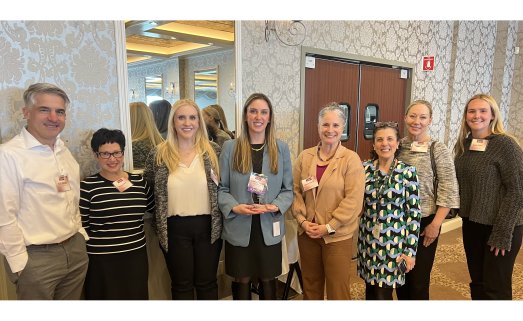
Robinson+Cole is proud to once again be a Gold Sponsor of the New England Women in Energy and the Environment’s (NEWIEE) 15th Annual Awards Gala. The event celebrates the accomplishments of women in the energy and environmental fields of New England and draws attendees from across the region for an inspirational evening honoring four awardees who have distinguished themselves as drivers of change in the energy industry. Environmental, Energy + Telecommunications group partner Joey Lee Miranda serves as Chair of NEWIEE’s Development Committee and is a member, and former President, of its board of directors. For more information, click here.
Robinson+Cole’s partnership has elected Boston Business Transactions Partner J. Michael Wirvin as its next Managing Partner, marking a pivotal moment in the firm’s 180-year history. Effective March 1, Wirvin will become the firm’s first Managing Partner based outside of Hartford, CT, reflecting Robinson+Cole’s continued evolution and expanding geographic footprint. His election underscores the firm’s deliberate, forward‑looking approach to leadership succession and long‑term strategic growth. Wirvin has served on Robinson+Cole’s Managing Committee since 2014, where he has played a central role in firm governance, strategic planning, and leadership succession, working closely with three managing partners through periods of unprecedented growth, market expansion, and changes in the legal industry. He is widely recognized for advising clients on complex domestic and cross‑border mergers and acquisitions, financings, and corporate structuring matters, with a particular focus on assisting U.S. and offshore companies navigate the legal, commercial, and cultural complexities of operating across jurisdictions. Wirvin also co‑chairs the firm’s International team. Wirvin has served as partner-in-charge of Robinson+Cole’s Boston office since 2014, reinforcing the firm’s culture, mentoring lawyers at all stages of their careers, and fostering cross‑disciplinary teamwork that strengthens client service. He recently helped lead the relocation of Robinson+Cole’s Boston office to 53 State Street, a premier downtown tower, creating a modern, light‑filled space designed to support employee well‑being with an energizing environment along with enhanced technology and workspaces that facilitate seamless remote and on-site collaboration and team building, while also promoting focused work. “It is a profound honor to be elected by my partners to serve as Managing Partner and lead this extraordinary team of lawyers and business professionals who raise the bar every day,” said Wirvin. “Our 180-year history is defined not merely by longevity, but by the trust we have earned, the results we have delivered, and the professionalism, mutual respect, and collegiality that have long defined our culture. As Managing Partner, I aim to build on that foundation—bringing strategic clarity and disciplined growth to our priorities, strengthening our national and international profile, investing in our people, and ensuring Robinson+Cole remains agile, cohesive, and well positioned to deliver practical, business‑minded solutions for clients in an increasingly complex and competitive environment.” Wirvin succeeds Rhonda J. Tobin, the firm’s first female Managing Partner, who led Robinson+Cole since 2021 and guided the firm through a period of significant transformation, growth, and innovation. Elected during the height of the COVID‑19 pandemic, Tobin brought to the role more than a decade of firm leadership experience, including service on the Managing Committee for 17 years and leadership of the firm’s Litigation Section for 14 years. During Tobin’s five-year tenure, Robinson+Cole successfully advanced and executed on a new Strategic Plan, improving profitability; expanding the firm’s New York, Boston, and Philadelphia offices; opening and growing offices in Washington, DC, and Austin, TX; and deepening leading national practices in affordable housing finance, bankruptcy, business transactions, capital markets and securities, intellectual property and technology, health care, managed care litigation, immigration, insurance, public finance, and real estate and development. Under Tobin’s leadership, the firm also strengthened its commitment to collaboration, inclusion, and talent development; launched meaningful DEIB initiatives; and made significant investments in technology, information governance, and workplace innovation. Additionally, the firm achieved top national rankings in Vault’s Best Law Firms to Work For six consecutive years. Robinson+Cole became the first Am Law 200 firm to strategically partner with agentic AI builder Newcode.ai and the first law firm in the United States to earn ARMA’s Verified Organization status, further reinforcing its position as an industry leader in innovation and information governance. Tobin’s leadership has been widely recognized, including being named Regional Managing Partner of the Year in Law.com’s 2025 New England Legal Awards and Managing Partner of the Year in the 2022 Women, Influence & Power in Law Awards. She will continue to serve as chair of the firm’s lateral growth committee and will continue her leadership roles and active involvement in Connecticut’s non-profit community and as Chairperson of the Connecticut Judicial Review Council. Commenting on Wirvin’s election, Tobin stated, “Mike’s deeply rooted presence and extensive leadership experience at Robinson+Cole make him an outstanding choice to lead our firm. I have known and worked closely with Mike for more than two decades, and there is no question that he is the right person to guide us forward as technological advancements and an evolving professional landscape present new opportunities. Mike is an exceptionally talented and experienced lawyer, and a trusted confidant whose insight I consistently relied on when facing strategic decisions. He is deeply respected by our lawyers and business professionals and brings a thoughtful, strategic perspective that will greatly benefit the firm. I look forward to the firm’s continued growth and success under his leadership.” Robinson+Cole also announced several additional leadership updates reflecting the firm’s continued focus on thoughtful succession planning, geographic expansion, and strategic growth. Davis Lee Wright, who is based in the firm’s Wilmington office, has been elected to the Managing Committee, joining Britt‑Marie K. Cole‑Johnson and Edward J. Heath who are resident in the Hartford office, Eric M. Kogan in Stamford, and Charles F. Martin III in Miami. The firm recently named New York partner Erica J. Kerstein as chair of its Insurance + Reinsurance group, Stamford partner Patrick W. Begos co-chair of its Managed Care + ERISA Litigation group, and Hartford partners Conor O. Duffy and Robert S. Melvin and as Health Law group co-chair and Land Law Section co-chair, respectively. In addition, Kendra L. Berardi will succeed Wirvin as partner in charge of the Boston office.
Robinson+Cole has expanded its firmwide artificial intelligence (AI) capabilities by integrating Thomson Reuters’ Deep Research directly into Newcode.ai, the agentic AI platform implemented last year by the firm to support legal workflows across practices. With this integration, Robinson+Cole is one of only two law firms with direct access to the Deep Research API—and the only firm deploying it through Newcode.ai. Building on its 2025 partnership with Newcode.ai —making Robinson+Cole the first Am Law 200 firm to adopt the platform—the firm has continued to expand its AI capabilities as part of a broader strategy focused on secure deployment, ethical use, and seamless integration into daily legal work. The integration enables Robinson+Cole attorneys to conduct complex, multi‑step legal research and receive verifiable, citation‑backed responses grounded in trusted Thomson Reuters content. By embedding Deep Research into Newcode.ai, Robinson+Cole continues to build on its deliberate, governance‑first approach to AI adoption while delivering meaningful, practice‑ready innovation for its lawyers and clients. “Innovation at Robinson+Cole is grounded in client service, security, and practicality,” said J. Michael Wirvin, Managing Partner of Robinson+Cole. “By incorporating Thomson Reuters’ Deep Research directly into Newcode.ai, we are providing our lawyers with advanced research capabilities in a secure environment fully controlled by the firm that aligns with our standards for data governance, accuracy, and responsible AI use. This integration reflects our continued focus on adopting technology thoughtfully to support our attorneys and deliver value to our clients.” The addition of Deep Research allows attorneys to: Perform sophisticated legal research using agentic workflows that mirror real‑world legal reasoning Receive structured, verifiable responses grounded in Thomson Reuters data Streamline research processes while maintaining rigorous quality and accuracy standards Work entirely within Robinson+Cole’s firm‑controlled AI environment “Our integration of the Thomson Reuters’ Deep Research API with Newcode represents a defining moment in our AI strategy,” said Chief Data Officer Jim Merrifield. "We are incredibly proud to be the first firm to bring this capability to life—unlocking the power of trusted legal data directly within the workflows our lawyers and business professionals rely on every day. This is exactly how we maximize our technology investments: by connecting best-in-class data sources through APIs into a unified platform, so the technology meets our people where they work, enhances their judgment, and accelerates better outcomes for our clients.” Robinson+Cole’s AI program is guided by firmwide policies, mandatory training, and ongoing oversight to ensure responsible use of emerging technologies. The firm’s approach emphasizes measured adoption, strong information governance, and alignment with client expectations, rather than one‑off experimentation. This latest enhancement underscores Robinson+Cole’s commitment to remaining forward‑thinking in its use of technology, while ensuring that innovation serves the firm’s clients, lawyers, and long‑term strategic goals.
Robinson+Cole is pleased to be a Platinum Sponsor for the 2026 CBIZ Manufacturing Forum. The forum is produced in collaboration with the Connecticut Center for Advanced Technology and brings together industry leaders and executives from the New England manufacturing community to share strategies, insights, and resources to elevate and advance manufacturing businesses. For more information, click here.
Insurance + Reinsurance group chair Erica J. Kerstein was featured in a Law.com column titled, “How I Made Practice Group Chair,” published on April 15, 2026. In the article, Erica discusses her new role as a practice group chair and how it has expanded her insight into not only the firm’s strategic vision and goals, but the reality of running a business and ensuring that current planning aligns with future goals. “The role provides a window into how individual practices fit into the firm’s overall strategy,” said Erica. “You’re thinking not just about today’s matters, but about where clients are headed, how the industry is changing, and how the firm positions itself to meet those needs.” In addition, Erica also identified “…strengthening client relationships, investing in our people, and staying ahead of emerging issues—particularly around technology and artificial intelligence in the insurance space…” as key priorities for the practice. Read the article.
Robinson+Cole is proud to once again be a Gold Sponsor of the New England Women in Energy and the Environment’s (NEWIEE) 15th Annual Awards Gala. The event celebrates the accomplishments of women in the energy and environmental fields of New England and draws attendees from across the region for an inspirational evening honoring four awardees who have distinguished themselves as drivers of change in the energy industry. Environmental, Energy + Telecommunications group partner Joey Lee Miranda serves as Chair of NEWIEE’s Development Committee and is a member, and former President, of its board of directors. For more information, click here.
Robinson+Cole’s partnership has elected Boston Business Transactions Partner J. Michael Wirvin as its next Managing Partner, marking a pivotal moment in the firm’s 180-year history. Effective March 1, Wirvin will become the firm’s first Managing Partner based outside of Hartford, CT, reflecting Robinson+Cole’s continued evolution and expanding geographic footprint. His election underscores the firm’s deliberate, forward‑looking approach to leadership succession and long‑term strategic growth. Wirvin has served on Robinson+Cole’s Managing Committee since 2014, where he has played a central role in firm governance, strategic planning, and leadership succession, working closely with three managing partners through periods of unprecedented growth, market expansion, and changes in the legal industry. He is widely recognized for advising clients on complex domestic and cross‑border mergers and acquisitions, financings, and corporate structuring matters, with a particular focus on assisting U.S. and offshore companies navigate the legal, commercial, and cultural complexities of operating across jurisdictions. Wirvin also co‑chairs the firm’s International team. Wirvin has served as partner-in-charge of Robinson+Cole’s Boston office since 2014, reinforcing the firm’s culture, mentoring lawyers at all stages of their careers, and fostering cross‑disciplinary teamwork that strengthens client service. He recently helped lead the relocation of Robinson+Cole’s Boston office to 53 State Street, a premier downtown tower, creating a modern, light‑filled space designed to support employee well‑being with an energizing environment along with enhanced technology and workspaces that facilitate seamless remote and on-site collaboration and team building, while also promoting focused work. “It is a profound honor to be elected by my partners to serve as Managing Partner and lead this extraordinary team of lawyers and business professionals who raise the bar every day,” said Wirvin. “Our 180-year history is defined not merely by longevity, but by the trust we have earned, the results we have delivered, and the professionalism, mutual respect, and collegiality that have long defined our culture. As Managing Partner, I aim to build on that foundation—bringing strategic clarity and disciplined growth to our priorities, strengthening our national and international profile, investing in our people, and ensuring Robinson+Cole remains agile, cohesive, and well positioned to deliver practical, business‑minded solutions for clients in an increasingly complex and competitive environment.” Wirvin succeeds Rhonda J. Tobin, the firm’s first female Managing Partner, who led Robinson+Cole since 2021 and guided the firm through a period of significant transformation, growth, and innovation. Elected during the height of the COVID‑19 pandemic, Tobin brought to the role more than a decade of firm leadership experience, including service on the Managing Committee for 17 years and leadership of the firm’s Litigation Section for 14 years. During Tobin’s five-year tenure, Robinson+Cole successfully advanced and executed on a new Strategic Plan, improving profitability; expanding the firm’s New York, Boston, and Philadelphia offices; opening and growing offices in Washington, DC, and Austin, TX; and deepening leading national practices in affordable housing finance, bankruptcy, business transactions, capital markets and securities, intellectual property and technology, health care, managed care litigation, immigration, insurance, public finance, and real estate and development. Under Tobin’s leadership, the firm also strengthened its commitment to collaboration, inclusion, and talent development; launched meaningful DEIB initiatives; and made significant investments in technology, information governance, and workplace innovation. Additionally, the firm achieved top national rankings in Vault’s Best Law Firms to Work For six consecutive years. Robinson+Cole became the first Am Law 200 firm to strategically partner with agentic AI builder Newcode.ai and the first law firm in the United States to earn ARMA’s Verified Organization status, further reinforcing its position as an industry leader in innovation and information governance. Tobin’s leadership has been widely recognized, including being named Regional Managing Partner of the Year in Law.com’s 2025 New England Legal Awards and Managing Partner of the Year in the 2022 Women, Influence & Power in Law Awards. She will continue to serve as chair of the firm’s lateral growth committee and will continue her leadership roles and active involvement in Connecticut’s non-profit community and as Chairperson of the Connecticut Judicial Review Council. Commenting on Wirvin’s election, Tobin stated, “Mike’s deeply rooted presence and extensive leadership experience at Robinson+Cole make him an outstanding choice to lead our firm. I have known and worked closely with Mike for more than two decades, and there is no question that he is the right person to guide us forward as technological advancements and an evolving professional landscape present new opportunities. Mike is an exceptionally talented and experienced lawyer, and a trusted confidant whose insight I consistently relied on when facing strategic decisions. He is deeply respected by our lawyers and business professionals and brings a thoughtful, strategic perspective that will greatly benefit the firm. I look forward to the firm’s continued growth and success under his leadership.” Robinson+Cole also announced several additional leadership updates reflecting the firm’s continued focus on thoughtful succession planning, geographic expansion, and strategic growth. Davis Lee Wright, who is based in the firm’s Wilmington office, has been elected to the Managing Committee, joining Britt‑Marie K. Cole‑Johnson and Edward J. Heath who are resident in the Hartford office, Eric M. Kogan in Stamford, and Charles F. Martin III in Miami. The firm recently named New York partner Erica J. Kerstein as chair of its Insurance + Reinsurance group, Stamford partner Patrick W. Begos co-chair of its Managed Care + ERISA Litigation group, and Hartford partners Conor O. Duffy and Robert S. Melvin and as Health Law group co-chair and Land Law Section co-chair, respectively. In addition, Kendra L. Berardi will succeed Wirvin as partner in charge of the Boston office.
Robinson+Cole has expanded its firmwide artificial intelligence (AI) capabilities by integrating Thomson Reuters’ Deep Research directly into Newcode.ai, the agentic AI platform implemented last year by the firm to support legal workflows across practices. With this integration, Robinson+Cole is one of only two law firms with direct access to the Deep Research API—and the only firm deploying it through Newcode.ai. Building on its 2025 partnership with Newcode.ai —making Robinson+Cole the first Am Law 200 firm to adopt the platform—the firm has continued to expand its AI capabilities as part of a broader strategy focused on secure deployment, ethical use, and seamless integration into daily legal work. The integration enables Robinson+Cole attorneys to conduct complex, multi‑step legal research and receive verifiable, citation‑backed responses grounded in trusted Thomson Reuters content. By embedding Deep Research into Newcode.ai, Robinson+Cole continues to build on its deliberate, governance‑first approach to AI adoption while delivering meaningful, practice‑ready innovation for its lawyers and clients. “Innovation at Robinson+Cole is grounded in client service, security, and practicality,” said J. Michael Wirvin, Managing Partner of Robinson+Cole. “By incorporating Thomson Reuters’ Deep Research directly into Newcode.ai, we are providing our lawyers with advanced research capabilities in a secure environment fully controlled by the firm that aligns with our standards for data governance, accuracy, and responsible AI use. This integration reflects our continued focus on adopting technology thoughtfully to support our attorneys and deliver value to our clients.” The addition of Deep Research allows attorneys to: Perform sophisticated legal research using agentic workflows that mirror real‑world legal reasoning Receive structured, verifiable responses grounded in Thomson Reuters data Streamline research processes while maintaining rigorous quality and accuracy standards Work entirely within Robinson+Cole’s firm‑controlled AI environment “Our integration of the Thomson Reuters’ Deep Research API with Newcode represents a defining moment in our AI strategy,” said Chief Data Officer Jim Merrifield. "We are incredibly proud to be the first firm to bring this capability to life—unlocking the power of trusted legal data directly within the workflows our lawyers and business professionals rely on every day. This is exactly how we maximize our technology investments: by connecting best-in-class data sources through APIs into a unified platform, so the technology meets our people where they work, enhances their judgment, and accelerates better outcomes for our clients.” Robinson+Cole’s AI program is guided by firmwide policies, mandatory training, and ongoing oversight to ensure responsible use of emerging technologies. The firm’s approach emphasizes measured adoption, strong information governance, and alignment with client expectations, rather than one‑off experimentation. This latest enhancement underscores Robinson+Cole’s commitment to remaining forward‑thinking in its use of technology, while ensuring that innovation serves the firm’s clients, lawyers, and long‑term strategic goals.