


































Business Litigation + Dispute Resolution
/People

When businesses face complex disputes, they turn to Robinson+Cole. We serve corporations and other entities, from Fortune 500 companies to start-ups, across virtually every industry, locally and around the globe. We know that success requires not only the extensive trial and appellate experience that our lawyers possess but also a deep understanding of the client’s business operations and the commercial issues driving the conflict. Our reputation is built on more than 150 years of helping clients resolve their toughest business challenges.
Our Services + Our Team
As trusted advisors, our lawyers are often involved by clients soon after a dispute arises, before any lawsuit or arbitration demand is filed. Whether our role at that stage is direct or behind the scenes, our ultimate goal remains the same: a swift conclusion that meets the client’s business objectives. If the opposing party does not promptly come to terms or abandon its claims, we work to best position our client for potential litigation.
As forceful advocates, our lawyers have amassed an impressive track record of success, achieving very favorable results in hotly contested, sophisticated, multimillion-dollar business disputes, including bet-the-company cases and class actions. We have extensive experience taking cases to trial in federal and state courts, and in arbitrations, around the country, involving claims and issues such as the following:
Successfully defended entity in arbitration involving multimillion-dollar breach of contract claims. The arbitration concluded after several days of evidence, and the three arbitrators thereafter issued a unanimous award in favor of our client.
Obtained judgment dismissing lawsuit filed against non-profit foundation and its members alleging that foundation’s members acted in concert with municipal and school officials to harass and defame student and student’s family.
In matter of first impression within Circuit, convinced Connecticut federal court to reject application of statutory medical peer review privilege asserted by Massachusetts hospital, to limit application of such privilege to medical malpractice claims, and to compel hospital to produce hospital’s peer review investigation report concerning provider’s fitness to continue to enjoy clinical privileges.
Commercial contracts tend to be full of “boilerplate provisions” that, to paraphrase Mark Twain’s assessment of classic novels, everyone knows are important, but no one actually reads. When COVID-19 struck, manufacturers learned all about the significance of one particular boilerplate provision — force majeure. This type of provision can excuse or postpone contractual performance in the face of a materially unforeseen event beyond the party’s control. It was a pivotal tool for countless manufacturers seeking relief from their contractual burdens because of severe operational challenges brought on by the global pandemic. This boilerplate provision may become critical again as manufacturers in the U.S. and abroad face the increasing threat of new federal tariffs. Triggering events Force majeure translates as “superior force.” Arising from the Napoleonic Code, or French Civil Code, which was established in France in 1804 and remains in amended use today, this legal concept excused a commercial party from damages liability under a contract if their nonperformance (e.g., the product was not delivered) was “by consequence of a superior force or of a fortuitous occurrence.” Force majeure provisions have been part of American commercial contracting since at least the 19th century, when the U.S. Supreme Court recognized their validity in a case called The Tornado. Like the pandemic, tariffs may present a new severe operational challenge for manufacturers that rely on imported raw materials, components or equipment. “A 25% tariff on Canada and Mexico threatens to upend the very supply chains that have made U.S. manufacturing more competitive globally,” according to Jay Simmons, the president and CEO of the National Association of Manufacturers. “The ripple effects will be severe, particularly for small and medium-sized manufacturers that lack the flexibility and capital to rapidly find alternative suppliers, or absorb skyrocketing energy costs,” he added. This begs the question: Could these new federal tariffs constitute a force majeure event that excuses, or at least delays performance under a commercial contract? The answer depends on the specific language used in the contract. A provision’s heading is generally irrelevant to the parties’ rights, so merely including the words “force majeure” in a contract is unlikely to provide relief. Facing serious supply chain problems in 2020, many manufacturers were disappointed to learn that the force majeure provisions in their contracts listed a series of triggering events, such as acts of God, natural disasters and war, but said nothing about pandemics. The COVID-19 case law was not a model of consistency when it came to whether these provisions are interpreted narrowly, but some courts have been reluctant to imply that “pandemics” were meant to be covered when they were not expressly listed in the provision. The options may be better for manufacturers this time around. Force majeure provisions often list “government action” as a triggering event, and a tariff could qualify as such an action. If tariffs are not specifically listed, however, the rule of narrow interpretation might lead to a contrary result. The outcome will depend on the applicable state law and precise contract language. Additionally, force majeure provisions sometimes include requirements that the triggering event must be unanticipated and/or make performance impossible. Lawyers might argue that tariffs were not unanticipated events, particularly for contracts drafted since January 2025, or that substantially increased costs make performance “unprofitable” or “very difficult,” but not impossible. The development of a new commercial contract, or the renewal or amendment of an existing one, presents an ideal opportunity to mitigate uncertainty around this point. Manufacturers may want to evaluate whether (or not) a contract needs a force majeure provision excusing performance because of tariffs, and insist on language that explicitly includes (or excludes) tariffs and identifies the circumstances under which they may (or may not) qualify as a triggering event. The details matter here. Read the article.

Commercial contracts tend to be full of “boilerplate provisions” that, to paraphrase Mark Twain’s assessment of classic novels, everyone knows are important, but no one actually reads. When COVID-19 struck, manufacturers learned all about the significance of one particular boilerplate provision — force majeure. This type of provision can excuse or postpone contractual performance in the face of a materially unforeseen event beyond the party’s control. It was a pivotal tool for countless manufacturers seeking relief from their contractual burdens because of severe operational challenges brought on by the global pandemic. This boilerplate provision may become critical again as manufacturers in the U.S. and abroad face the increasing threat of new federal tariffs. Triggering events Force majeure translates as “superior force.” Arising from the Napoleonic Code, or French Civil Code, which was established in France in 1804 and remains in amended use today, this legal concept excused a commercial party from damages liability under a contract if their nonperformance (e.g., the product was not delivered) was “by consequence of a superior force or of a fortuitous occurrence.” Force majeure provisions have been part of American commercial contracting since at least the 19th century, when the U.S. Supreme Court recognized their validity in a case called The Tornado. Like the pandemic, tariffs may present a new severe operational challenge for manufacturers that rely on imported raw materials, components or equipment. “A 25% tariff on Canada and Mexico threatens to upend the very supply chains that have made U.S. manufacturing more competitive globally,” according to Jay Simmons, the president and CEO of the National Association of Manufacturers. “The ripple effects will be severe, particularly for small and medium-sized manufacturers that lack the flexibility and capital to rapidly find alternative suppliers, or absorb skyrocketing energy costs,” he added. This begs the question: Could these new federal tariffs constitute a force majeure event that excuses, or at least delays performance under a commercial contract? The answer depends on the specific language used in the contract. A provision’s heading is generally irrelevant to the parties’ rights, so merely including the words “force majeure” in a contract is unlikely to provide relief. Facing serious supply chain problems in 2020, many manufacturers were disappointed to learn that the force majeure provisions in their contracts listed a series of triggering events, such as acts of God, natural disasters and war, but said nothing about pandemics. The COVID-19 case law was not a model of consistency when it came to whether these provisions are interpreted narrowly, but some courts have been reluctant to imply that “pandemics” were meant to be covered when they were not expressly listed in the provision. The options may be better for manufacturers this time around. Force majeure provisions often list “government action” as a triggering event, and a tariff could qualify as such an action. If tariffs are not specifically listed, however, the rule of narrow interpretation might lead to a contrary result. The outcome will depend on the applicable state law and precise contract language. Additionally, force majeure provisions sometimes include requirements that the triggering event must be unanticipated and/or make performance impossible. Lawyers might argue that tariffs were not unanticipated events, particularly for contracts drafted since January 2025, or that substantially increased costs make performance “unprofitable” or “very difficult,” but not impossible. The development of a new commercial contract, or the renewal or amendment of an existing one, presents an ideal opportunity to mitigate uncertainty around this point. Manufacturers may want to evaluate whether (or not) a contract needs a force majeure provision excusing performance because of tariffs, and insist on language that explicitly includes (or excludes) tariffs and identifies the circumstances under which they may (or may not) qualify as a triggering event. The details matter here. Read the article.
In the article, Ben and Ileana discuss the recent Supreme Court decision affirming a constitutional right to a jury whenever the Securities Exchange Commission (SEC) seeks a civil fine to punish securities fraud. The Court’s decision struck down the SEC’s preferred method of levying fines – administrative hearings – and increased protections for the subjects of SEC investigations. The authors note that this won’t have an immediate effect on the SEC. “Even before the decision in Jarkesy, the [SEC] Division of Enforcement had anticipated an adverse ruling and began bringing most civil enforcement actions to federal court…However, given the costs of federal civil litigation, the Jarkesy decision could portend a change in SEC civil enforcement priorities…” and could create an “opportunity for more favorable settlements for SEC targets.” Read the article.
The article discusses the SEC’s aggressive stance on “AI washing” with its first enforcement actions of 2024, the history of companies exaggerating technological claims, and the implications of the SEC’s stance moving forward. Read the article.
The article focuses on two cases, SEC vs. Ripple and SEC vs. Terraform, which reached opposite conclusions about whether cryptocurrency is a currency or security. While both cases focused on each platform’s marketing and investor reports, the court’s used different standards to evaluate whether the cryptocurrency in question was an investment contract or simply a currency transaction. “Companies should closely evaluate all statements made to investors about cryptocurrencies,” the authors urge, and “focus on whether they are portraying crypto assets as investments through the nature of transactions, statements to investors, or any other representations.” To read the article, click here.
In the article, Ben and Ileana discuss the recent Supreme Court decision affirming a constitutional right to a jury whenever the Securities Exchange Commission (SEC) seeks a civil fine to punish securities fraud. The Court’s decision struck down the SEC’s preferred method of levying fines – administrative hearings – and increased protections for the subjects of SEC investigations. The authors note that this won’t have an immediate effect on the SEC. “Even before the decision in Jarkesy, the [SEC] Division of Enforcement had anticipated an adverse ruling and began bringing most civil enforcement actions to federal court…However, given the costs of federal civil litigation, the Jarkesy decision could portend a change in SEC civil enforcement priorities…” and could create an “opportunity for more favorable settlements for SEC targets.” Read the article.
The article discusses the SEC’s aggressive stance on “AI washing” with its first enforcement actions of 2024, the history of companies exaggerating technological claims, and the implications of the SEC’s stance moving forward. Read the article.
The article focuses on two cases, SEC vs. Ripple and SEC vs. Terraform, which reached opposite conclusions about whether cryptocurrency is a currency or security. While both cases focused on each platform’s marketing and investor reports, the court’s used different standards to evaluate whether the cryptocurrency in question was an investment contract or simply a currency transaction. “Companies should closely evaluate all statements made to investors about cryptocurrencies,” the authors urge, and “focus on whether they are portraying crypto assets as investments through the nature of transactions, statements to investors, or any other representations.” To read the article, click here.
Robinson+Cole lawyers Virginia McGarrity and Mallori Thompson and Chief Talent Officer Catherine Duke were selected for recognition at this year's Women, Influence & Power in Law (WIPL) Awards, presented by Corporate Counsel in Chicago, IL, on April 14, 2026. The Awards recognize outstanding women in the legal industry who have made a remarkable impact across multiple categories, celebrating trailblazers, advocates, and leaders whose exceptional skill, dedication, and commitment continue to advance equality in the profession. Virginia won the “Law Firm Ally of the Year” award, reflecting her ability to listen with empathy and seek understanding from different perspectives and an unwavering commitment to diversity efforts within the firm. Virginia has paired legal excellence with a deeply rooted, values-driven commitment to inclusion and equity. As chair of Robinson+Cole’s Diversity, Equity, Inclusion + Belonging Committee and leader of the firm’s Employee Benefits + Compensation practice, she models allyship that is empathetic, visible, vocal, and effective. Virginia approaches inclusion not as an initiative, but as the operating system for how the firm works—an approach reflected in R+C’s sixth consecutive Mansfield Certification Plus and recognition as a 2025 Top Inclusive Workplace. She has cultivated trusted, firmwide spaces for dialogue and learning through Town Halls that elevate voices and translate insight into action. Her mentorship of students and attorneys alike is grounded in honesty, care, and a deep understanding of professional growth. Beyond the firm, Virginia advances equity through leadership roles in community organizations dedicated to dialogue and social justice. Her impact has been recognized by numerous legal and business honors and is felt in the careers she has shaped, the communities she has strengthened, and the inclusive culture she continues to build at R+C. Mallori was named a “Next Generation of Leaders (Law Firm)” winner, which reflects her meaningful advancements in service, public or societal interest, and other initiatives she has engaged with to improve the legal profession and surrounding community. Mallori handles complex business disputes and internal investigations with rigor shaped by her experiences in appellate advocacy and prestigious federal and state judicial clerkships. She is also equally committed to developing others by supporting the next generation of lawyers through mentorship and leadership roles, including serving as one of R+C’s summer associate coordinators. Her dedication to the access of justice is reflected in her Community Justice Fellowship at Greater Hartford Legal Aid, her hands-on work addressing family violence, and determined focus on equity in the legal system. Mallori strengthens the profession through inclusive leadership as Past President of the George W. Crawford Black Bar Association and Co-Chair of the Connecticut Bar Association’s DEI Committee. Her impact has been recognized through numerous honors, including R+C’s DEI+B Award and National Black Lawyers’ Top 40 Under 40. Catherine Duke was named a finalist in the “Talent Management” category, which focuses on exceptional women who build firm culture to help grow and retain talent across their organization. Cathy’s visionary approach has reshaped how R+C recruits, develops, and retains its people. Drawing on her experience as a former practicing attorney, Cathy has built a forward-thinking Talent team focused on creating an inclusive environment where diverse professionals can grow and thrive. Under her leadership, the firm has introduced innovative initiatives spanning career development, mentoring, wellbeing, and equitable parental and caregiver benefits. Cathy has also championed data-driven programs like Stay Interviews and firmwide training on implicit bias and microaggressions, reinforcing a culture of belonging and respect. The impact of her leadership is reflected in consistent national recognition for inclusion, culture, and talent development, including six consecutive years of Mansfield Rule certifications (three consecutive years with the “Plus” annotation) and top Vault rankings. Beyond the firm, Cathy is a respected voice in the legal industry, contributing to national organizations and advisory groups focused on professional development and diversity. Together, her work exemplifies a sustained commitment to people-first leadership and the future of the legal profession.
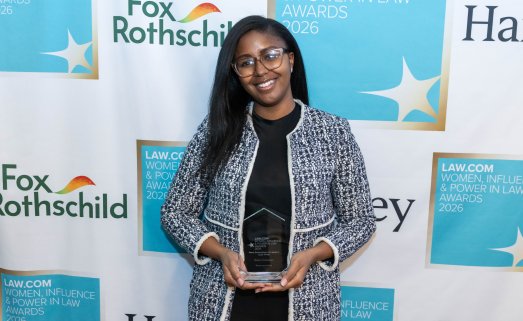

Robinson+Cole lawyers Virginia McGarrity and Mallori Thompson and Chief Talent Officer Catherine Duke were selected for recognition at this year's Women, Influence & Power in Law (WIPL) Awards, presented by Corporate Counsel in Chicago, IL, on April 14, 2026. The Awards recognize outstanding women in the legal industry who have made a remarkable impact across multiple categories, celebrating trailblazers, advocates, and leaders whose exceptional skill, dedication, and commitment continue to advance equality in the profession. Virginia won the “Law Firm Ally of the Year” award, reflecting her ability to listen with empathy and seek understanding from different perspectives and an unwavering commitment to diversity efforts within the firm. Virginia has paired legal excellence with a deeply rooted, values-driven commitment to inclusion and equity. As chair of Robinson+Cole’s Diversity, Equity, Inclusion + Belonging Committee and leader of the firm’s Employee Benefits + Compensation practice, she models allyship that is empathetic, visible, vocal, and effective. Virginia approaches inclusion not as an initiative, but as the operating system for how the firm works—an approach reflected in R+C’s sixth consecutive Mansfield Certification Plus and recognition as a 2025 Top Inclusive Workplace. She has cultivated trusted, firmwide spaces for dialogue and learning through Town Halls that elevate voices and translate insight into action. Her mentorship of students and attorneys alike is grounded in honesty, care, and a deep understanding of professional growth. Beyond the firm, Virginia advances equity through leadership roles in community organizations dedicated to dialogue and social justice. Her impact has been recognized by numerous legal and business honors and is felt in the careers she has shaped, the communities she has strengthened, and the inclusive culture she continues to build at R+C. Mallori was named a “Next Generation of Leaders (Law Firm)” winner, which reflects her meaningful advancements in service, public or societal interest, and other initiatives she has engaged with to improve the legal profession and surrounding community. Mallori handles complex business disputes and internal investigations with rigor shaped by her experiences in appellate advocacy and prestigious federal and state judicial clerkships. She is also equally committed to developing others by supporting the next generation of lawyers through mentorship and leadership roles, including serving as one of R+C’s summer associate coordinators. Her dedication to the access of justice is reflected in her Community Justice Fellowship at Greater Hartford Legal Aid, her hands-on work addressing family violence, and determined focus on equity in the legal system. Mallori strengthens the profession through inclusive leadership as Past President of the George W. Crawford Black Bar Association and Co-Chair of the Connecticut Bar Association’s DEI Committee. Her impact has been recognized through numerous honors, including R+C’s DEI+B Award and National Black Lawyers’ Top 40 Under 40. Catherine Duke was named a finalist in the “Talent Management” category, which focuses on exceptional women who build firm culture to help grow and retain talent across their organization. Cathy’s visionary approach has reshaped how R+C recruits, develops, and retains its people. Drawing on her experience as a former practicing attorney, Cathy has built a forward-thinking Talent team focused on creating an inclusive environment where diverse professionals can grow and thrive. Under her leadership, the firm has introduced innovative initiatives spanning career development, mentoring, wellbeing, and equitable parental and caregiver benefits. Cathy has also championed data-driven programs like Stay Interviews and firmwide training on implicit bias and microaggressions, reinforcing a culture of belonging and respect. The impact of her leadership is reflected in consistent national recognition for inclusion, culture, and talent development, including six consecutive years of Mansfield Rule certifications (three consecutive years with the “Plus” annotation) and top Vault rankings. Beyond the firm, Cathy is a respected voice in the legal industry, contributing to national organizations and advisory groups focused on professional development and diversity. Together, her work exemplifies a sustained commitment to people-first leadership and the future of the legal profession.

Insurance + Reinsurance group chair Erica J. Kerstein was featured in a Law.com column titled, “How I Made Practice Group Chair,” published on April 15, 2026. In the article, Erica discusses her new role as a practice group chair and how it has expanded her insight into not only the firm’s strategic vision and goals, but the reality of running a business and ensuring that current planning aligns with future goals. “The role provides a window into how individual practices fit into the firm’s overall strategy,” said Erica. “You’re thinking not just about today’s matters, but about where clients are headed, how the industry is changing, and how the firm positions itself to meet those needs.” In addition, Erica also identified “…strengthening client relationships, investing in our people, and staying ahead of emerging issues—particularly around technology and artificial intelligence in the insurance space…” as key priorities for the practice. Read the article.
Robinson+Cole announced New York Partner Erica J. Kerstein has been named Chair of its Insurance + Reinsurance group, effective January 1, 2026. She succeeds Gregory P. Varga, who chaired the group since 2019. The strategic change to the leadership reinforces the firm’s thoughtful growth plan beyond its founding roots in Hartford and its commitment to providing exceptional client-focused service. “It’s a privilege to lead the firm’s nationally-recognized Insurance + Reinsurance group, a practice that has helped shape the insurance industry and this firm for generations,” said Kerstein. “Building on Greg’s leadership, I’m honored to carry this work forward and to do so as part of a team whose diversity and depth are a competitive advantage for our clients and their evolving needs navigating complex insurance coverage issues.” Celebrating over 180 years of practice, Robinson+Cole’s legacy in insurance law began alongside the establishment of leading insurance companies in the 19th century. The firm’s work was closely tied to these institutions, helping shape the legal landscape of the insurance industry from its earliest days. Over the decades, the firm’s lawyers have built a tradition of excellence and enduring relationships with leading insurers—a legacy now carried forward by more than 40 Insurance + Reinsurance lawyers practicing across six of Robinson+Cole’s office locations. Insurance + Reinsurance group lawyers are helping to shape the insurance industry, representing and advising clients in disputes nationally and internationally involving cutting-edge issues, including on how to navigate the rapid evolution of artificial intelligence across the insurance ecosystem. As insurers accelerate their investment in artificial intelligence to address risk, efficiency, and regulatory complexity, Robinson+Cole has likewise made focused investments in AI‑enabled capabilities that enhance how its lawyers analyze data, manage complex matters, and deliver advice. Driven by client demand—including insurers seeking guidance on responsible, effective use of AI in claims, coverage, and litigation—the firm is integrating these technologies thoughtfully into its legal services while maintaining rigorous professional judgment, transparency, data security, and client confidentiality. Kerstein’s incisive, efficient, and responsive approach has enabled her to successfully litigate and arbitrate complex insurance matters—particularly in financial lines and commercial general liability, both domestically and internationally. Her experience also encompasses providing strategic counsel to clients in high-profile matters. Kerstein represents national and global insurers and reinsurers in state and federal courts across the United States, handling a wide range of complex coverage and bad faith disputes. Beyond her legal practice, Kerstein is an active member of The Bridge, an organization supporting the development of female talent in financial lines. “Greg Varga’s tenure as Chair of the firm’s Insurance practice has been exceptionally successful,” said Rhonda J. Tobin, Managing Partner at Robinson+Cole. “His vision, leadership, and experience not only elevated the practice and garnered national recognition, but it also opened new avenues for the firm’s growth and provides a strong foundation for Erica to carry forward.” Drawing on three decades of experience, Varga represents insurance companies in complex coverage and bad faith litigation, as well as arbitrations and appraisals. He chaired Robinson+Cole’s Insurance practice for 14 years over two terms, leading a team of more than 40 lawyers firmwide. Under his leadership, the group earned national recognition for its client-focused approach and became a thought leader in multiple areas of insurance law. “With Erica at the helm, our Insurance + Reinsurance group is poised to meet clients where they operate, extending our national and international reach,” said Varga. “Through working alongside her and leading the practice with her for the last few years, I am supremely confident that the group will continue to grow and thrive in the years to come as we continue to provide exceptional service to our valued clients. She will invest in data‑informed strategies, trial‑tested advocacy, and collaborative problem solving to keep our firm at the forefront of insurance law and practice.”
Robinson+Cole has expanded its firmwide artificial intelligence (AI) capabilities by integrating Thomson Reuters’ Deep Research directly into Newcode.ai, the agentic AI platform implemented last year by the firm to support legal workflows across practices. With this integration, Robinson+Cole is one of only two law firms with direct access to the Deep Research API—and the only firm deploying it through Newcode.ai. Building on its 2025 partnership with Newcode.ai —making Robinson+Cole the first Am Law 200 firm to adopt the platform—the firm has continued to expand its AI capabilities as part of a broader strategy focused on secure deployment, ethical use, and seamless integration into daily legal work. The integration enables Robinson+Cole attorneys to conduct complex, multi‑step legal research and receive verifiable, citation‑backed responses grounded in trusted Thomson Reuters content. By embedding Deep Research into Newcode.ai, Robinson+Cole continues to build on its deliberate, governance‑first approach to AI adoption while delivering meaningful, practice‑ready innovation for its lawyers and clients. “Innovation at Robinson+Cole is grounded in client service, security, and practicality,” said J. Michael Wirvin, Managing Partner of Robinson+Cole. “By incorporating Thomson Reuters’ Deep Research directly into Newcode.ai, we are providing our lawyers with advanced research capabilities in a secure environment fully controlled by the firm that aligns with our standards for data governance, accuracy, and responsible AI use. This integration reflects our continued focus on adopting technology thoughtfully to support our attorneys and deliver value to our clients.” The addition of Deep Research allows attorneys to: Perform sophisticated legal research using agentic workflows that mirror real‑world legal reasoning Receive structured, verifiable responses grounded in Thomson Reuters data Streamline research processes while maintaining rigorous quality and accuracy standards Work entirely within Robinson+Cole’s firm‑controlled AI environment “Our integration of the Thomson Reuters’ Deep Research API with Newcode represents a defining moment in our AI strategy,” said Chief Data Officer Jim Merrifield. "We are incredibly proud to be the first firm to bring this capability to life—unlocking the power of trusted legal data directly within the workflows our lawyers and business professionals rely on every day. This is exactly how we maximize our technology investments: by connecting best-in-class data sources through APIs into a unified platform, so the technology meets our people where they work, enhances their judgment, and accelerates better outcomes for our clients.” Robinson+Cole’s AI program is guided by firmwide policies, mandatory training, and ongoing oversight to ensure responsible use of emerging technologies. The firm’s approach emphasizes measured adoption, strong information governance, and alignment with client expectations, rather than one‑off experimentation. This latest enhancement underscores Robinson+Cole’s commitment to remaining forward‑thinking in its use of technology, while ensuring that innovation serves the firm’s clients, lawyers, and long‑term strategic goals.

Robinson+Cole’s partnership has elected Boston Business Transactions Partner J. Michael Wirvin as its next Managing Partner, marking a pivotal moment in the firm’s 180-year history. Effective March 1, Wirvin will become the firm’s first Managing Partner based outside of Hartford, CT, reflecting Robinson+Cole’s continued evolution and expanding geographic footprint. His election underscores the firm’s deliberate, forward‑looking approach to leadership succession and long‑term strategic growth. Wirvin has served on Robinson+Cole’s Managing Committee since 2014, where he has played a central role in firm governance, strategic planning, and leadership succession, working closely with three managing partners through periods of unprecedented growth, market expansion, and changes in the legal industry. He is widely recognized for advising clients on complex domestic and cross‑border mergers and acquisitions, financings, and corporate structuring matters, with a particular focus on assisting U.S. and offshore companies navigate the legal, commercial, and cultural complexities of operating across jurisdictions. Wirvin also co‑chairs the firm’s International team. Wirvin has served as partner-in-charge of Robinson+Cole’s Boston office since 2014, reinforcing the firm’s culture, mentoring lawyers at all stages of their careers, and fostering cross‑disciplinary teamwork that strengthens client service. He recently helped lead the relocation of Robinson+Cole’s Boston office to 53 State Street, a premier downtown tower, creating a modern, light‑filled space designed to support employee well‑being with an energizing environment along with enhanced technology and workspaces that facilitate seamless remote and on-site collaboration and team building, while also promoting focused work. “It is a profound honor to be elected by my partners to serve as Managing Partner and lead this extraordinary team of lawyers and business professionals who raise the bar every day,” said Wirvin. “Our 180-year history is defined not merely by longevity, but by the trust we have earned, the results we have delivered, and the professionalism, mutual respect, and collegiality that have long defined our culture. As Managing Partner, I aim to build on that foundation—bringing strategic clarity and disciplined growth to our priorities, strengthening our national and international profile, investing in our people, and ensuring Robinson+Cole remains agile, cohesive, and well positioned to deliver practical, business‑minded solutions for clients in an increasingly complex and competitive environment.” Wirvin succeeds Rhonda J. Tobin, the firm’s first female Managing Partner, who led Robinson+Cole since 2021 and guided the firm through a period of significant transformation, growth, and innovation. Elected during the height of the COVID‑19 pandemic, Tobin brought to the role more than a decade of firm leadership experience, including service on the Managing Committee for 17 years and leadership of the firm’s Litigation Section for 14 years. During Tobin’s five-year tenure, Robinson+Cole successfully advanced and executed on a new Strategic Plan, improving profitability; expanding the firm’s New York, Boston, and Philadelphia offices; opening and growing offices in Washington, DC, and Austin, TX; and deepening leading national practices in affordable housing finance, bankruptcy, business transactions, capital markets and securities, intellectual property and technology, health care, managed care litigation, immigration, insurance, public finance, and real estate and development. Under Tobin’s leadership, the firm also strengthened its commitment to collaboration, inclusion, and talent development; launched meaningful DEIB initiatives; and made significant investments in technology, information governance, and workplace innovation. Additionally, the firm achieved top national rankings in Vault’s Best Law Firms to Work For six consecutive years. Robinson+Cole became the first Am Law 200 firm to strategically partner with agentic AI builder Newcode.ai and the first law firm in the United States to earn ARMA’s Verified Organization status, further reinforcing its position as an industry leader in innovation and information governance. Tobin’s leadership has been widely recognized, including being named Regional Managing Partner of the Year in Law.com’s 2025 New England Legal Awards and Managing Partner of the Year in the 2022 Women, Influence & Power in Law Awards. She will continue to serve as chair of the firm’s lateral growth committee and will continue her leadership roles and active involvement in Connecticut’s non-profit community and as Chairperson of the Connecticut Judicial Review Council. Commenting on Wirvin’s election, Tobin stated, “Mike’s deeply rooted presence and extensive leadership experience at Robinson+Cole make him an outstanding choice to lead our firm. I have known and worked closely with Mike for more than two decades, and there is no question that he is the right person to guide us forward as technological advancements and an evolving professional landscape present new opportunities. Mike is an exceptionally talented and experienced lawyer, and a trusted confidant whose insight I consistently relied on when facing strategic decisions. He is deeply respected by our lawyers and business professionals and brings a thoughtful, strategic perspective that will greatly benefit the firm. I look forward to the firm’s continued growth and success under his leadership.” Robinson+Cole also announced several additional leadership updates reflecting the firm’s continued focus on thoughtful succession planning, geographic expansion, and strategic growth. Davis Lee Wright, who is based in the firm’s Wilmington office, has been elected to the Managing Committee, joining Britt‑Marie K. Cole‑Johnson and Edward J. Heath who are resident in the Hartford office, Eric M. Kogan in Stamford, and Charles F. Martin III in Miami. The firm recently named New York partner Erica J. Kerstein as chair of its Insurance + Reinsurance group, Stamford partner Patrick W. Begos co-chair of its Managed Care + ERISA Litigation group, and Hartford partners Conor O. Duffy and Robert S. Melvin and as Health Law group co-chair and Land Law Section co-chair, respectively. In addition, Kendra L. Berardi will succeed Wirvin as partner in charge of the Boston office.
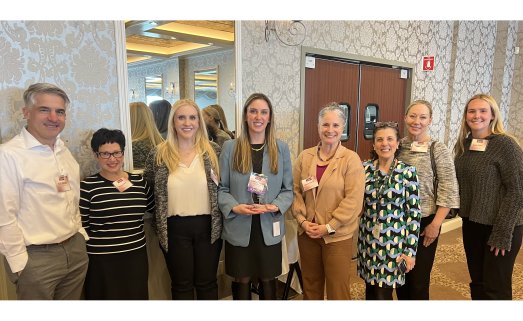
Bankruptcy + Reorganizations group co-chair Natalie Ramsey was recognized as the 2026 David T. Sykes Award recipient at the Eastern District of Pennsylvania Bankruptcy Conference’s (EDPABC) 36th Annual Forum on February 26, 2026. The award, which was co-presented by the EDPABC and the Consumer Bankruptcy Assistance Project (CBAP), is named after renowned bankruptcy attorney David T. Sykes and reflects Natalie’s excellence and integrity as a bankruptcy attorney, unsurpassed professionalism, mentorship of younger professionals, upholding of the reputation of the local bankruptcy bar, unwavering dedication to the bankruptcy community and the less fortunate in Philadelphia, and courtesy and respect for all. Natalie has been a member of the EDPABC since 1991 and served on its Board of Directors from 1999 - 2006, including as Chair in 2006. In addition, she has also been a member of the CBAP since 1993 and served as its President from 2012 - 2013.
Insurance + Reinsurance group chair Erica J. Kerstein was featured in a Law.com column titled, “How I Made Practice Group Chair,” published on April 15, 2026. In the article, Erica discusses her new role as a practice group chair and how it has expanded her insight into not only the firm’s strategic vision and goals, but the reality of running a business and ensuring that current planning aligns with future goals. “The role provides a window into how individual practices fit into the firm’s overall strategy,” said Erica. “You’re thinking not just about today’s matters, but about where clients are headed, how the industry is changing, and how the firm positions itself to meet those needs.” In addition, Erica also identified “…strengthening client relationships, investing in our people, and staying ahead of emerging issues—particularly around technology and artificial intelligence in the insurance space…” as key priorities for the practice. Read the article.
Robinson+Cole announced New York Partner Erica J. Kerstein has been named Chair of its Insurance + Reinsurance group, effective January 1, 2026. She succeeds Gregory P. Varga, who chaired the group since 2019. The strategic change to the leadership reinforces the firm’s thoughtful growth plan beyond its founding roots in Hartford and its commitment to providing exceptional client-focused service. “It’s a privilege to lead the firm’s nationally-recognized Insurance + Reinsurance group, a practice that has helped shape the insurance industry and this firm for generations,” said Kerstein. “Building on Greg’s leadership, I’m honored to carry this work forward and to do so as part of a team whose diversity and depth are a competitive advantage for our clients and their evolving needs navigating complex insurance coverage issues.” Celebrating over 180 years of practice, Robinson+Cole’s legacy in insurance law began alongside the establishment of leading insurance companies in the 19th century. The firm’s work was closely tied to these institutions, helping shape the legal landscape of the insurance industry from its earliest days. Over the decades, the firm’s lawyers have built a tradition of excellence and enduring relationships with leading insurers—a legacy now carried forward by more than 40 Insurance + Reinsurance lawyers practicing across six of Robinson+Cole’s office locations. Insurance + Reinsurance group lawyers are helping to shape the insurance industry, representing and advising clients in disputes nationally and internationally involving cutting-edge issues, including on how to navigate the rapid evolution of artificial intelligence across the insurance ecosystem. As insurers accelerate their investment in artificial intelligence to address risk, efficiency, and regulatory complexity, Robinson+Cole has likewise made focused investments in AI‑enabled capabilities that enhance how its lawyers analyze data, manage complex matters, and deliver advice. Driven by client demand—including insurers seeking guidance on responsible, effective use of AI in claims, coverage, and litigation—the firm is integrating these technologies thoughtfully into its legal services while maintaining rigorous professional judgment, transparency, data security, and client confidentiality. Kerstein’s incisive, efficient, and responsive approach has enabled her to successfully litigate and arbitrate complex insurance matters—particularly in financial lines and commercial general liability, both domestically and internationally. Her experience also encompasses providing strategic counsel to clients in high-profile matters. Kerstein represents national and global insurers and reinsurers in state and federal courts across the United States, handling a wide range of complex coverage and bad faith disputes. Beyond her legal practice, Kerstein is an active member of The Bridge, an organization supporting the development of female talent in financial lines. “Greg Varga’s tenure as Chair of the firm’s Insurance practice has been exceptionally successful,” said Rhonda J. Tobin, Managing Partner at Robinson+Cole. “His vision, leadership, and experience not only elevated the practice and garnered national recognition, but it also opened new avenues for the firm’s growth and provides a strong foundation for Erica to carry forward.” Drawing on three decades of experience, Varga represents insurance companies in complex coverage and bad faith litigation, as well as arbitrations and appraisals. He chaired Robinson+Cole’s Insurance practice for 14 years over two terms, leading a team of more than 40 lawyers firmwide. Under his leadership, the group earned national recognition for its client-focused approach and became a thought leader in multiple areas of insurance law. “With Erica at the helm, our Insurance + Reinsurance group is poised to meet clients where they operate, extending our national and international reach,” said Varga. “Through working alongside her and leading the practice with her for the last few years, I am supremely confident that the group will continue to grow and thrive in the years to come as we continue to provide exceptional service to our valued clients. She will invest in data‑informed strategies, trial‑tested advocacy, and collaborative problem solving to keep our firm at the forefront of insurance law and practice.”
Robinson+Cole has expanded its firmwide artificial intelligence (AI) capabilities by integrating Thomson Reuters’ Deep Research directly into Newcode.ai, the agentic AI platform implemented last year by the firm to support legal workflows across practices. With this integration, Robinson+Cole is one of only two law firms with direct access to the Deep Research API—and the only firm deploying it through Newcode.ai. Building on its 2025 partnership with Newcode.ai —making Robinson+Cole the first Am Law 200 firm to adopt the platform—the firm has continued to expand its AI capabilities as part of a broader strategy focused on secure deployment, ethical use, and seamless integration into daily legal work. The integration enables Robinson+Cole attorneys to conduct complex, multi‑step legal research and receive verifiable, citation‑backed responses grounded in trusted Thomson Reuters content. By embedding Deep Research into Newcode.ai, Robinson+Cole continues to build on its deliberate, governance‑first approach to AI adoption while delivering meaningful, practice‑ready innovation for its lawyers and clients. “Innovation at Robinson+Cole is grounded in client service, security, and practicality,” said J. Michael Wirvin, Managing Partner of Robinson+Cole. “By incorporating Thomson Reuters’ Deep Research directly into Newcode.ai, we are providing our lawyers with advanced research capabilities in a secure environment fully controlled by the firm that aligns with our standards for data governance, accuracy, and responsible AI use. This integration reflects our continued focus on adopting technology thoughtfully to support our attorneys and deliver value to our clients.” The addition of Deep Research allows attorneys to: Perform sophisticated legal research using agentic workflows that mirror real‑world legal reasoning Receive structured, verifiable responses grounded in Thomson Reuters data Streamline research processes while maintaining rigorous quality and accuracy standards Work entirely within Robinson+Cole’s firm‑controlled AI environment “Our integration of the Thomson Reuters’ Deep Research API with Newcode represents a defining moment in our AI strategy,” said Chief Data Officer Jim Merrifield. "We are incredibly proud to be the first firm to bring this capability to life—unlocking the power of trusted legal data directly within the workflows our lawyers and business professionals rely on every day. This is exactly how we maximize our technology investments: by connecting best-in-class data sources through APIs into a unified platform, so the technology meets our people where they work, enhances their judgment, and accelerates better outcomes for our clients.” Robinson+Cole’s AI program is guided by firmwide policies, mandatory training, and ongoing oversight to ensure responsible use of emerging technologies. The firm’s approach emphasizes measured adoption, strong information governance, and alignment with client expectations, rather than one‑off experimentation. This latest enhancement underscores Robinson+Cole’s commitment to remaining forward‑thinking in its use of technology, while ensuring that innovation serves the firm’s clients, lawyers, and long‑term strategic goals.
Robinson+Cole’s partnership has elected Boston Business Transactions Partner J. Michael Wirvin as its next Managing Partner, marking a pivotal moment in the firm’s 180-year history. Effective March 1, Wirvin will become the firm’s first Managing Partner based outside of Hartford, CT, reflecting Robinson+Cole’s continued evolution and expanding geographic footprint. His election underscores the firm’s deliberate, forward‑looking approach to leadership succession and long‑term strategic growth. Wirvin has served on Robinson+Cole’s Managing Committee since 2014, where he has played a central role in firm governance, strategic planning, and leadership succession, working closely with three managing partners through periods of unprecedented growth, market expansion, and changes in the legal industry. He is widely recognized for advising clients on complex domestic and cross‑border mergers and acquisitions, financings, and corporate structuring matters, with a particular focus on assisting U.S. and offshore companies navigate the legal, commercial, and cultural complexities of operating across jurisdictions. Wirvin also co‑chairs the firm’s International team. Wirvin has served as partner-in-charge of Robinson+Cole’s Boston office since 2014, reinforcing the firm’s culture, mentoring lawyers at all stages of their careers, and fostering cross‑disciplinary teamwork that strengthens client service. He recently helped lead the relocation of Robinson+Cole’s Boston office to 53 State Street, a premier downtown tower, creating a modern, light‑filled space designed to support employee well‑being with an energizing environment along with enhanced technology and workspaces that facilitate seamless remote and on-site collaboration and team building, while also promoting focused work. “It is a profound honor to be elected by my partners to serve as Managing Partner and lead this extraordinary team of lawyers and business professionals who raise the bar every day,” said Wirvin. “Our 180-year history is defined not merely by longevity, but by the trust we have earned, the results we have delivered, and the professionalism, mutual respect, and collegiality that have long defined our culture. As Managing Partner, I aim to build on that foundation—bringing strategic clarity and disciplined growth to our priorities, strengthening our national and international profile, investing in our people, and ensuring Robinson+Cole remains agile, cohesive, and well positioned to deliver practical, business‑minded solutions for clients in an increasingly complex and competitive environment.” Wirvin succeeds Rhonda J. Tobin, the firm’s first female Managing Partner, who led Robinson+Cole since 2021 and guided the firm through a period of significant transformation, growth, and innovation. Elected during the height of the COVID‑19 pandemic, Tobin brought to the role more than a decade of firm leadership experience, including service on the Managing Committee for 17 years and leadership of the firm’s Litigation Section for 14 years. During Tobin’s five-year tenure, Robinson+Cole successfully advanced and executed on a new Strategic Plan, improving profitability; expanding the firm’s New York, Boston, and Philadelphia offices; opening and growing offices in Washington, DC, and Austin, TX; and deepening leading national practices in affordable housing finance, bankruptcy, business transactions, capital markets and securities, intellectual property and technology, health care, managed care litigation, immigration, insurance, public finance, and real estate and development. Under Tobin’s leadership, the firm also strengthened its commitment to collaboration, inclusion, and talent development; launched meaningful DEIB initiatives; and made significant investments in technology, information governance, and workplace innovation. Additionally, the firm achieved top national rankings in Vault’s Best Law Firms to Work For six consecutive years. Robinson+Cole became the first Am Law 200 firm to strategically partner with agentic AI builder Newcode.ai and the first law firm in the United States to earn ARMA’s Verified Organization status, further reinforcing its position as an industry leader in innovation and information governance. Tobin’s leadership has been widely recognized, including being named Regional Managing Partner of the Year in Law.com’s 2025 New England Legal Awards and Managing Partner of the Year in the 2022 Women, Influence & Power in Law Awards. She will continue to serve as chair of the firm’s lateral growth committee and will continue her leadership roles and active involvement in Connecticut’s non-profit community and as Chairperson of the Connecticut Judicial Review Council. Commenting on Wirvin’s election, Tobin stated, “Mike’s deeply rooted presence and extensive leadership experience at Robinson+Cole make him an outstanding choice to lead our firm. I have known and worked closely with Mike for more than two decades, and there is no question that he is the right person to guide us forward as technological advancements and an evolving professional landscape present new opportunities. Mike is an exceptionally talented and experienced lawyer, and a trusted confidant whose insight I consistently relied on when facing strategic decisions. He is deeply respected by our lawyers and business professionals and brings a thoughtful, strategic perspective that will greatly benefit the firm. I look forward to the firm’s continued growth and success under his leadership.” Robinson+Cole also announced several additional leadership updates reflecting the firm’s continued focus on thoughtful succession planning, geographic expansion, and strategic growth. Davis Lee Wright, who is based in the firm’s Wilmington office, has been elected to the Managing Committee, joining Britt‑Marie K. Cole‑Johnson and Edward J. Heath who are resident in the Hartford office, Eric M. Kogan in Stamford, and Charles F. Martin III in Miami. The firm recently named New York partner Erica J. Kerstein as chair of its Insurance + Reinsurance group, Stamford partner Patrick W. Begos co-chair of its Managed Care + ERISA Litigation group, and Hartford partners Conor O. Duffy and Robert S. Melvin and as Health Law group co-chair and Land Law Section co-chair, respectively. In addition, Kendra L. Berardi will succeed Wirvin as partner in charge of the Boston office.
Bankruptcy + Reorganizations group co-chair Natalie Ramsey was recognized as the 2026 David T. Sykes Award recipient at the Eastern District of Pennsylvania Bankruptcy Conference’s (EDPABC) 36th Annual Forum on February 26, 2026. The award, which was co-presented by the EDPABC and the Consumer Bankruptcy Assistance Project (CBAP), is named after renowned bankruptcy attorney David T. Sykes and reflects Natalie’s excellence and integrity as a bankruptcy attorney, unsurpassed professionalism, mentorship of younger professionals, upholding of the reputation of the local bankruptcy bar, unwavering dedication to the bankruptcy community and the less fortunate in Philadelphia, and courtesy and respect for all. Natalie has been a member of the EDPABC since 1991 and served on its Board of Directors from 1999 - 2006, including as Chair in 2006. In addition, she has also been a member of the CBAP since 1993 and served as its President from 2012 - 2013.
Insurance + Reinsurance group chair Erica J. Kerstein was featured in a Law.com column titled, “How I Made Practice Group Chair,” published on April 15, 2026. In the article, Erica discusses her new role as a practice group chair and how it has expanded her insight into not only the firm’s strategic vision and goals, but the reality of running a business and ensuring that current planning aligns with future goals. “The role provides a window into how individual practices fit into the firm’s overall strategy,” said Erica. “You’re thinking not just about today’s matters, but about where clients are headed, how the industry is changing, and how the firm positions itself to meet those needs.” In addition, Erica also identified “…strengthening client relationships, investing in our people, and staying ahead of emerging issues—particularly around technology and artificial intelligence in the insurance space…” as key priorities for the practice. Read the article.
Robinson+Cole announced New York Partner Erica J. Kerstein has been named Chair of its Insurance + Reinsurance group, effective January 1, 2026. She succeeds Gregory P. Varga, who chaired the group since 2019. The strategic change to the leadership reinforces the firm’s thoughtful growth plan beyond its founding roots in Hartford and its commitment to providing exceptional client-focused service. “It’s a privilege to lead the firm’s nationally-recognized Insurance + Reinsurance group, a practice that has helped shape the insurance industry and this firm for generations,” said Kerstein. “Building on Greg’s leadership, I’m honored to carry this work forward and to do so as part of a team whose diversity and depth are a competitive advantage for our clients and their evolving needs navigating complex insurance coverage issues.” Celebrating over 180 years of practice, Robinson+Cole’s legacy in insurance law began alongside the establishment of leading insurance companies in the 19th century. The firm’s work was closely tied to these institutions, helping shape the legal landscape of the insurance industry from its earliest days. Over the decades, the firm’s lawyers have built a tradition of excellence and enduring relationships with leading insurers—a legacy now carried forward by more than 40 Insurance + Reinsurance lawyers practicing across six of Robinson+Cole’s office locations. Insurance + Reinsurance group lawyers are helping to shape the insurance industry, representing and advising clients in disputes nationally and internationally involving cutting-edge issues, including on how to navigate the rapid evolution of artificial intelligence across the insurance ecosystem. As insurers accelerate their investment in artificial intelligence to address risk, efficiency, and regulatory complexity, Robinson+Cole has likewise made focused investments in AI‑enabled capabilities that enhance how its lawyers analyze data, manage complex matters, and deliver advice. Driven by client demand—including insurers seeking guidance on responsible, effective use of AI in claims, coverage, and litigation—the firm is integrating these technologies thoughtfully into its legal services while maintaining rigorous professional judgment, transparency, data security, and client confidentiality. Kerstein’s incisive, efficient, and responsive approach has enabled her to successfully litigate and arbitrate complex insurance matters—particularly in financial lines and commercial general liability, both domestically and internationally. Her experience also encompasses providing strategic counsel to clients in high-profile matters. Kerstein represents national and global insurers and reinsurers in state and federal courts across the United States, handling a wide range of complex coverage and bad faith disputes. Beyond her legal practice, Kerstein is an active member of The Bridge, an organization supporting the development of female talent in financial lines. “Greg Varga’s tenure as Chair of the firm’s Insurance practice has been exceptionally successful,” said Rhonda J. Tobin, Managing Partner at Robinson+Cole. “His vision, leadership, and experience not only elevated the practice and garnered national recognition, but it also opened new avenues for the firm’s growth and provides a strong foundation for Erica to carry forward.” Drawing on three decades of experience, Varga represents insurance companies in complex coverage and bad faith litigation, as well as arbitrations and appraisals. He chaired Robinson+Cole’s Insurance practice for 14 years over two terms, leading a team of more than 40 lawyers firmwide. Under his leadership, the group earned national recognition for its client-focused approach and became a thought leader in multiple areas of insurance law. “With Erica at the helm, our Insurance + Reinsurance group is poised to meet clients where they operate, extending our national and international reach,” said Varga. “Through working alongside her and leading the practice with her for the last few years, I am supremely confident that the group will continue to grow and thrive in the years to come as we continue to provide exceptional service to our valued clients. She will invest in data‑informed strategies, trial‑tested advocacy, and collaborative problem solving to keep our firm at the forefront of insurance law and practice.”
Robinson+Cole has expanded its firmwide artificial intelligence (AI) capabilities by integrating Thomson Reuters’ Deep Research directly into Newcode.ai, the agentic AI platform implemented last year by the firm to support legal workflows across practices. With this integration, Robinson+Cole is one of only two law firms with direct access to the Deep Research API—and the only firm deploying it through Newcode.ai. Building on its 2025 partnership with Newcode.ai —making Robinson+Cole the first Am Law 200 firm to adopt the platform—the firm has continued to expand its AI capabilities as part of a broader strategy focused on secure deployment, ethical use, and seamless integration into daily legal work. The integration enables Robinson+Cole attorneys to conduct complex, multi‑step legal research and receive verifiable, citation‑backed responses grounded in trusted Thomson Reuters content. By embedding Deep Research into Newcode.ai, Robinson+Cole continues to build on its deliberate, governance‑first approach to AI adoption while delivering meaningful, practice‑ready innovation for its lawyers and clients. “Innovation at Robinson+Cole is grounded in client service, security, and practicality,” said J. Michael Wirvin, Managing Partner of Robinson+Cole. “By incorporating Thomson Reuters’ Deep Research directly into Newcode.ai, we are providing our lawyers with advanced research capabilities in a secure environment fully controlled by the firm that aligns with our standards for data governance, accuracy, and responsible AI use. This integration reflects our continued focus on adopting technology thoughtfully to support our attorneys and deliver value to our clients.” The addition of Deep Research allows attorneys to: Perform sophisticated legal research using agentic workflows that mirror real‑world legal reasoning Receive structured, verifiable responses grounded in Thomson Reuters data Streamline research processes while maintaining rigorous quality and accuracy standards Work entirely within Robinson+Cole’s firm‑controlled AI environment “Our integration of the Thomson Reuters’ Deep Research API with Newcode represents a defining moment in our AI strategy,” said Chief Data Officer Jim Merrifield. "We are incredibly proud to be the first firm to bring this capability to life—unlocking the power of trusted legal data directly within the workflows our lawyers and business professionals rely on every day. This is exactly how we maximize our technology investments: by connecting best-in-class data sources through APIs into a unified platform, so the technology meets our people where they work, enhances their judgment, and accelerates better outcomes for our clients.” Robinson+Cole’s AI program is guided by firmwide policies, mandatory training, and ongoing oversight to ensure responsible use of emerging technologies. The firm’s approach emphasizes measured adoption, strong information governance, and alignment with client expectations, rather than one‑off experimentation. This latest enhancement underscores Robinson+Cole’s commitment to remaining forward‑thinking in its use of technology, while ensuring that innovation serves the firm’s clients, lawyers, and long‑term strategic goals.